
Mokka Milk Ice Bar: When Berlin's legend meets the modern elegance of steel

04.06.2026 11:00
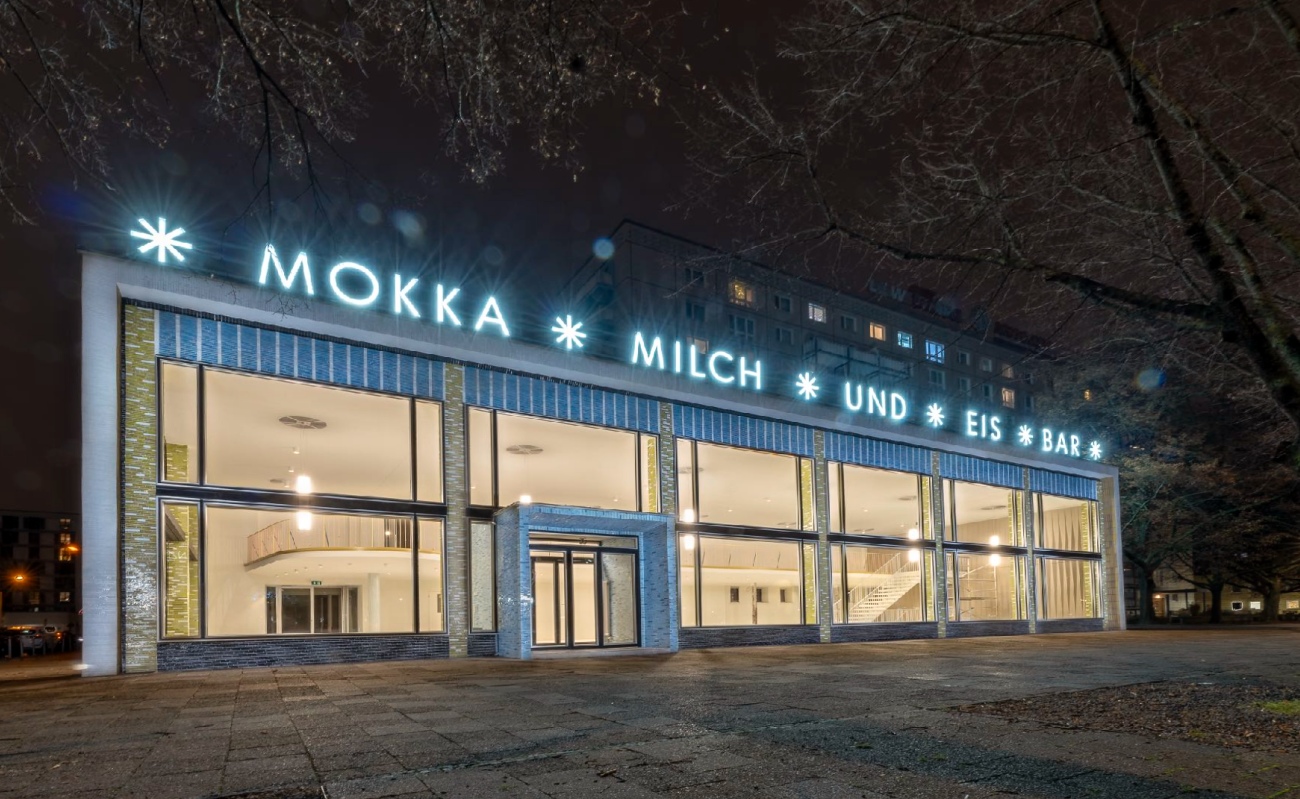 |
There are buildings that are not just made of concrete and glass. They are composed of memories of Sunday afternoons, the smell of coffee, and the atmosphere of an era that shaped the visual appearance of cities. One such place is the Mokka-Milch-Eisbar pavilion in Berlin on Karl-Marx-Allee. However, during its recent renovation, a fundamental issue arose – the building is registered as a heritage site and had to look exactly as it did in the 1960s from the street, with no significant changes allowed on the exterior. At the same time, it was necessary to create a space that would meet all the demanding requirements for contemporary technical and energy standards.
With Steel Design's steel constructions from DOORNITE, it was ultimately possible to successfully combine the demands for thermal insulation, fire protection, and safe static performance of the structure with the requirements of heritage conservation.
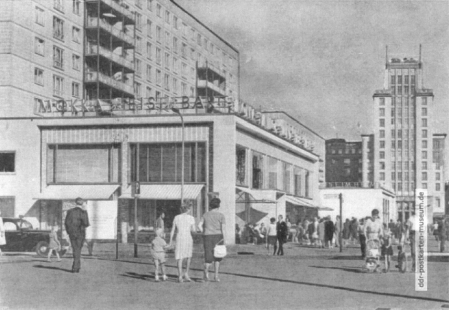
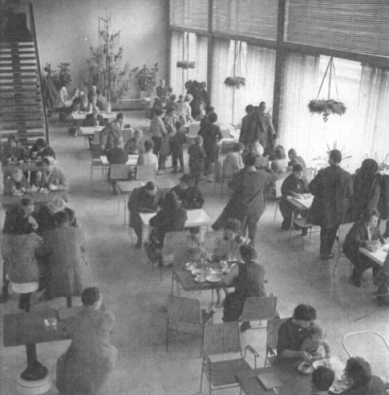
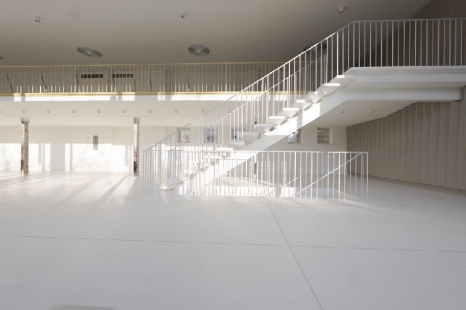
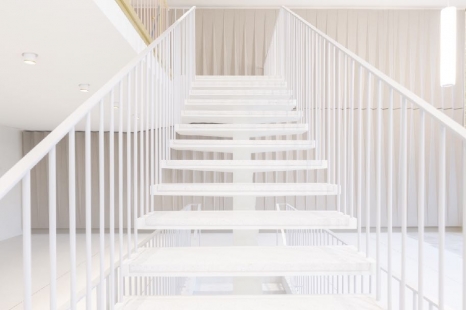
The pavilion was built between 1961-1962 based on the designs of architect Walter Franek and represents one of the most significant complexes of post-war modernism in Europe. The architect's intention was to create a space that visually communicates with the surrounding environment through its delicacy and generous glazing.
Invisible Innovation Behind the Glass Facade
The minimalist approach to window frames was the key element that often disappears with modern materials. The original construction envelope no longer met today's standards, but finding an adequate replacement was not easy.A standard modern steel profile with thermal insulation is simply too wide to resemble the original, while a standard historical profile does not allow for the use of modern insulating glazing.
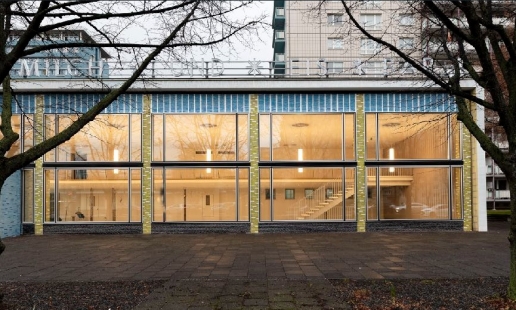
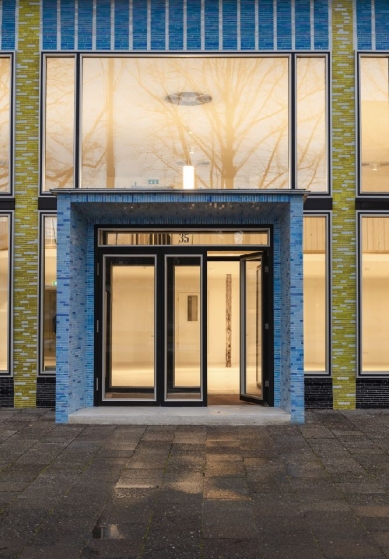
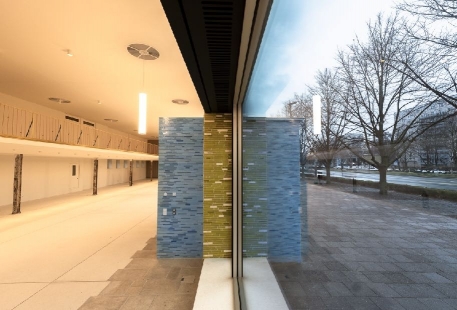
"Given that the building is registered as a heritage site, the challenge of this project was clear from the very beginning: to preserve the appearance while completely improving functionality inside," explains Małgorzata Pietralik, director of Steel Design. She adds that for this renovation, they had to create a number of new elements: "There was no standard solution for this project. Many steel profiles, glazing details, and facade connections had to be developed specifically for this building."
The systems from Steel Design allow for working with profiles with a visible width of only 40 mm, which is crucial for preserving Franek's signature style. While aluminum or plastic systems would require bulkier frames, steel allowed for the retention of the delicate proportions of the building while integrating modern insulating triple glazing and seals. Almost everything behind the visible architecture had to be completely redesigned.
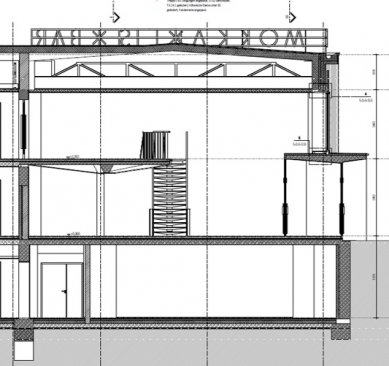
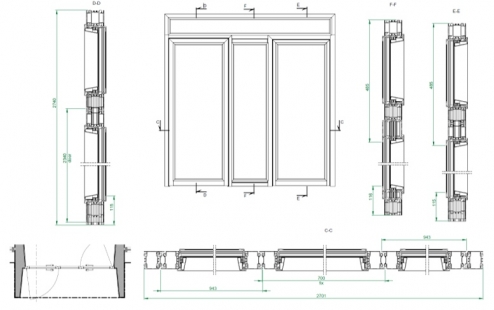
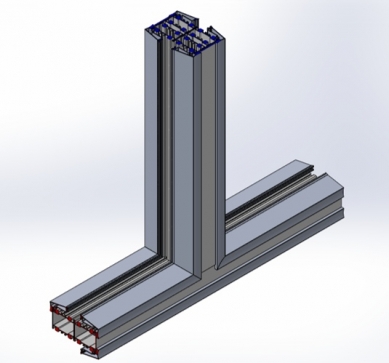
The Exceptionally Challenging Engineering Task primarily lay in dimensional tolerances. The horizontal steel load-bearing profile connecting the upper and lower window panels across several openings had to be aligned with millimeter precision, leaving almost no room for deviations. Given the sixty-year age of the original structure, this was a demanding challenge. "For us, this project was particularly interesting due to the constant balance between preserving the original state and innovation," adds Pietralik.
Hidden Functionality in the Interior
The uniqueness of the Steel Design system is fully manifested in the interior, where a series of slim doors with steel frames unify the space. Fire doors usually feature bulkier frames and more pronounced fittings, which would disrupt this delicate concept.However, here the technical parameters were perfectly concealed – both fire (EI 30) and regular doors are visually indistinguishable and blend into a calm whole in a light gray cool tone (RAL 7047) with anodized handles in the color of new silver.
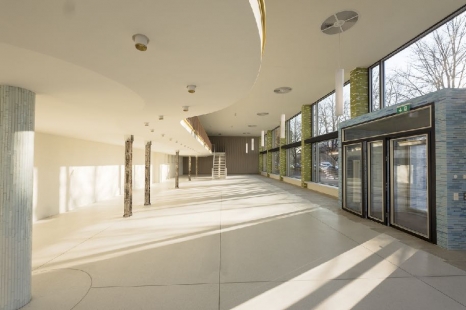
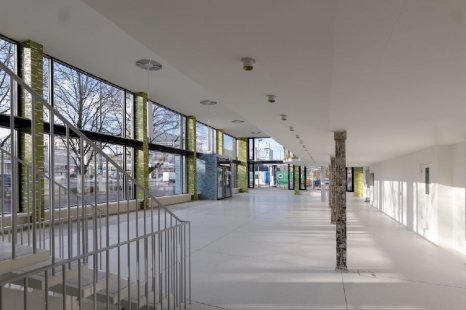
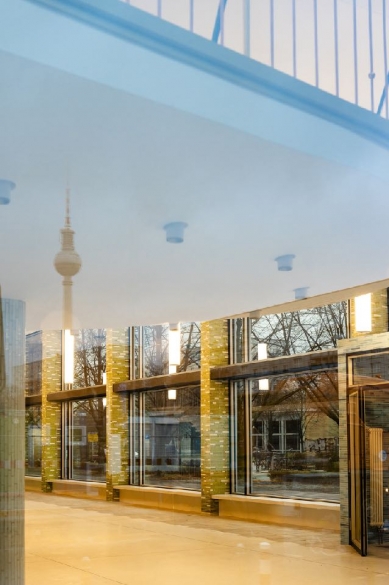
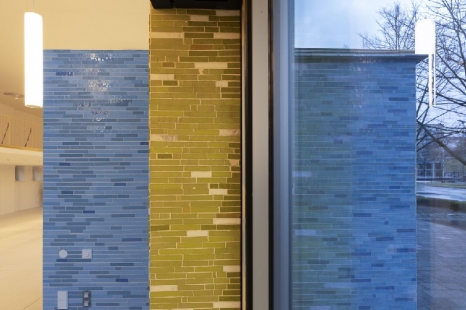
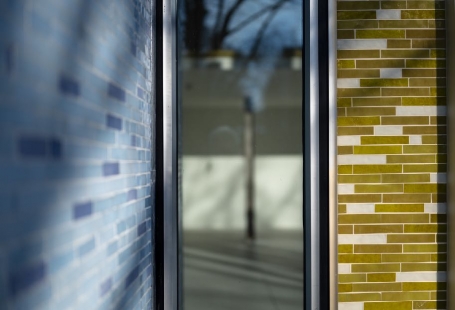
Facade profiles and external doors were coated with a matte to silk-matte powder coating (RAL 7021). The outer layer of the triple glazing has a special coating that protects against solar radiation without disrupting color neutrality. Heritage conservation completely excluded common sun-control glasses with significant reflection.
Balance Between Historical Detail and Modern Functionality
The search for a balance between historical detail and modern functionality is a theme that resonates strongly in Czech architecture. The company Doornite s.r.o., the largest Czech door manufacturer, is the exclusive supplier of Steel Design systems for the domestic market. Steel glazed doors and partitions offer architects freedom in designing new interiors and renovations, as everything is custom-made for specific projects. They are an ideal solution where subtlety and material authenticity are priorities. The possibilities of this system were also one of the expert topics at this year's Living Forum.More about the Steel Design systems provided by DOORNITE can be found here.
Project Overview and Timeline
- Object and History: The Mokka-Milch-Eisbar Pavilion on Karl-Marx-Allee in Berlin, built between 1961-1962 according to the designs of architect Walter Franek. Along with Kino International, Café Moskau, and bar Babette, it forms a significant complex of post-war modernism in Europe.
- Year 2019: Closure of the building and commencement of demanding design work.
- December 2023: After detailed design, production of precise samples, and careful coordination, the actual assembly and construction work directly on the construction site began.
- June 2025: The project was successfully completed and handed over. The implementation on site lasted approximately 18 months.
Used Construction Solutions and Technical Parameters
Facade and Exterior Systems
- Surface Treatments: Facade profiles and external doors are made of steel coated with a matte to silk-matte powder coating in the RAL 7021 (black-gray) shade. The entrance doors to the foyer are complemented by a powder coating in the shade RAL 7047 (telegrey 4). Sealing strips are made of extruded aluminum, and fittings are anodized in the color of new silver (neusilberfarbig 0205). FSB window handles type 34 1005 09030 are used.
- Window Elements (Fixed and Openable): Slim steel system with thermal insulation Jansen ISO fineline 70 plus. Narrow widths of visible fronts are complemented by internal polyamide thermal insulation and sophisticated chamber geometry.
- External Doors: Installed steel system Jansen Hermetic 70 for higher thermal insulation and airtight properties.
- Security: The main foyer doors are equipped with a self-locking multi-point panic lock Dorma Kaba M-SVP 3500 with motorized unlocking, which remains completely hidden inside the historic profile.
- Construction Details: Joints with the historic structure are completely filled with mineral wool and sealed on both sides with EPDM membranes. Horizontal steel load-bearing profiles were treated with hot-dip galvanization against surface condensation.
- Awnings: Folding awnings on the southern facade made of red-white striped fabric, manufactured exactly according to original photographic documentation.
- Outer Layer: Laminated glass (2 × 4 mm with an interlayer of 0.76 mm) with Combi Neutral 61/32 coating, which protects against solar radiation without disrupting color neutrality. Heritage conservation completely excluded common sun-control glasses with significant reflection.
- Intermediate Space: 16mm intermediate space with a warm spacer Super Spacer.
- Inner Layer: 6mm tempered glass Opti white with a low iron content, which removes the natural green tint of float glass and guarantees a neutral view.
- Coefficient Ug: 0.8 W/m²K – meets current demanding requirements for thermal insulation (verified according to standard DIN EN 410).
- Transmittance: The total energy transmittance ($g$) is 0.34. Light transmittance reaches 61% to maintain the bright character of the interior.
The English translation is powered by AI tool. Switch to Czech to view the original text source.
0 comments
add comment