
NATURAL POOL SMALL POOL as part of garden architecture

Publisher
Tisková zpráva
25.05.2026 16:10
Tisková zpráva
25.05.2026 16:10
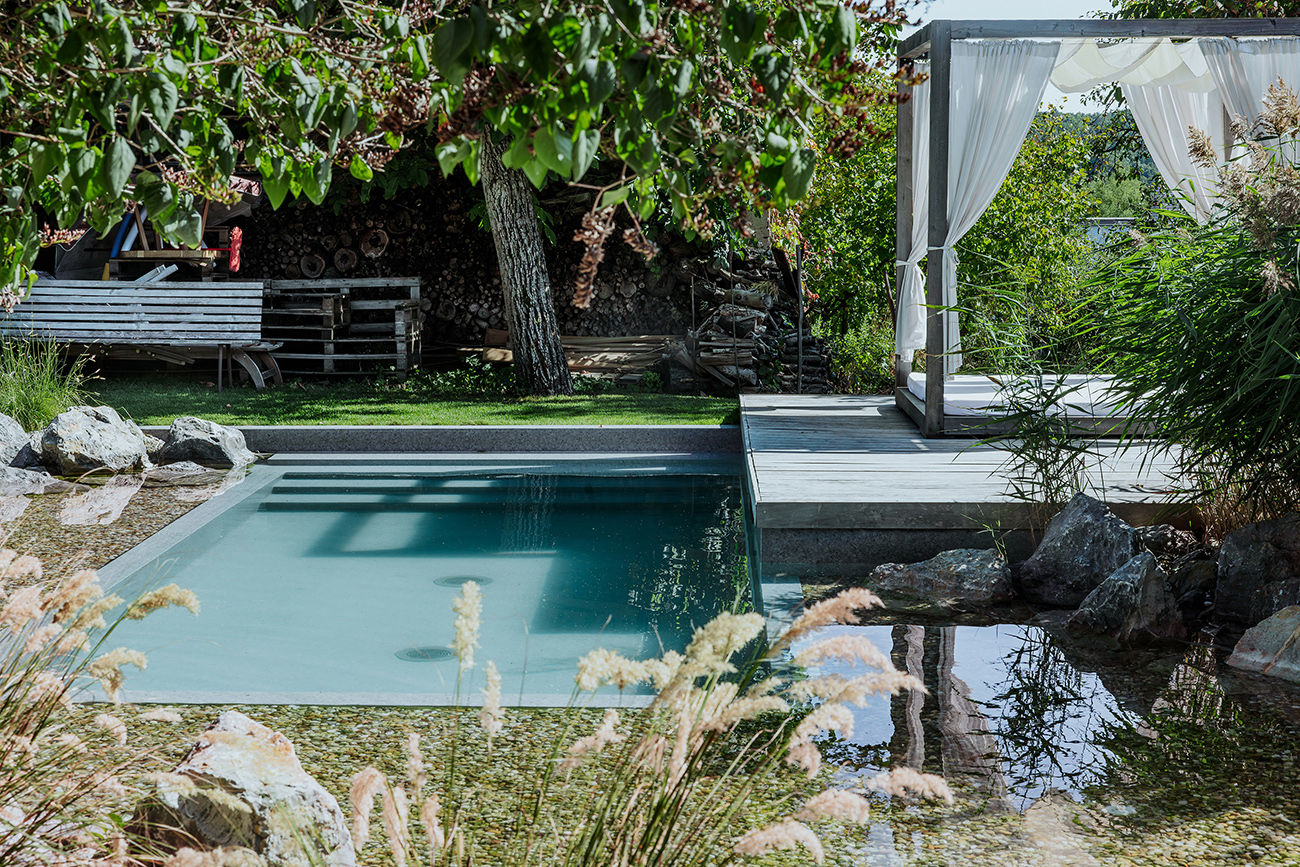
An outdoor pool no longer has to be a separate technical structure that simply needs to be "placed somewhere". It can be thought of differently – as a natural part of the garden, which also complements the architecture of the house. Not just as an accessory, but as an equal and carefully considered architectural element.
 |
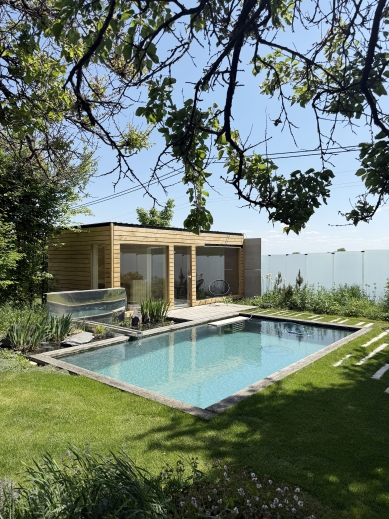
A classic pool is typically placed next to a house as a standalone object that stands out from the surrounding space, if not disrupts it. It has a clearly defined edge, adjacent paved areas, and often even a covering, which – despite its practical benefits – remains a problematic element from a visual perspective. Thus, architects often strive to hide it as effectively as possible in the garden.
In the case of a natural pool small pool, which does not have a clearly defined shape, the question arises of how to connect it with the surrounding terrain so that it does not remain an isolated element but becomes a natural part of the space, a continuation of the landscape or terrace.
The small pool resembles a natural pond but technically operates as a pool – it is equipped with filtration, offers stable water quality, and requires minimal maintenance. The difference between it and a classic pool also lies in their use. While a pool is mainly used for swimming, the small pool functions as a space where one wants to spend time even outside the water – observing the water surface, the vegetation, appreciating natural beauty, and relaxing – just like at a lake or pond. For architects, this means one thing: to use the water element as a tool to enhance the quality of the living space, not just as a way to expand it with an additional function.

Blurring Boundaries
At first glance, a small pool may seem just a more organic variant of a classic pool. In reality, however, its implementation is conditioned by a very precisely defined structural solution and sensitive terrain modeling. The bathing area itself is usually designed as a precise construction structure – a masonry or concrete basin with a smooth surface that allows not only comfortable use but also maintenance. "Natural" areas follow in the form of stone, gravel, or planting, where the detail of the edge is key – the place where the water meets the garden. If this is well managed, the boundaries disappear, and the whole feels natural.Between Nature and Comfort
One of the common arguments in favor of classic pools is comfort – primarily higher water temperature and ease of maintenance. However, natural pools can offer a comparable user standard without compromising on the visual quality of the water. Unlike purely biological systems, which have their limits, the small pool combines a natural character with controlled water treatment. Heat pumps, often powered by excess from photovoltaics, serve to heat the water. The result is stable operation and comfortable swimming not only in summer but also in spring and autumn."From our long-term practice, it appears that clients who choose to implement a small pool or renovate an existing pool are ultimately more satisfied than with a classic solution. This trend is confirmed not only by positive feedback but also by the fact that the small pool provides a harmonious connection of aesthetic value and user comfort, which classic pools often lack," says Jan Sýkora from the company Small lake, which has been active in the market since 2006 and has realized hundreds of projects in the Czech Republic, Slovakia, and Austria over two decades. It focuses on garden ponds, natural pools, renovations of water surfaces, technical solutions, and subsequent servicing. Thanks to the integration of design, implementation, and long-term care, it approaches water elements as a whole that must function not only upon completion of the construction but also after years of operation.
The English translation is powered by AI tool. Switch to Czech to view the original text source.
0 comments
add comment