
The Ministry of Culture will likely be led by former priest Daniel Herman
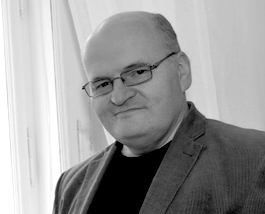 |
| Mgr. Daniel Herman Born April 28, 1963 in České Budějovice Education: Faculty of Education in České Budějovice (1982-83), Cyril and Methodius Faculty of Theology Charles University in Litoměřice (1984-89), in the years 1995-96 studied public relations in Germany and the USA. Political activity: became a member of KDU-ČSL this past May, in the October elections he was elected to the Chamber of Deputies as the leader of the KDU-ČSL candidate list from Prague; in the Chamber he is, among other things, the deputy chairman of the electoral committee. Experience: auxiliary worker in South Bohemian bakeries in České Budějovice (1983-84), spiritual administration in Tábor and its surroundings (1989-90), secretary of the bishop of České Budějovice (1990-91), head of the secretariat of the Archbishop of Prague (1991-95), press spokesman and head of the press department of the Czech Bishops' Conference (1996-2005, at the turn of 2004-05 he was entrusted with leading the secretariat of the CBK), assisted police officers at the police presidium in Prague (2005-07), head of the Information Office of the Ministry of Culture of the Czech Republic (2007-08), head of the Prague office of economist Jan Švejnar (2008-2010), director of the Institute for the Study of Totalitarian Regimes (ÚSTR) (2010-2013). Membership in organizations: until 2007 he was a member (canon) of the Royal Collegiate Chapter of St. Peter and St. Paul at Vyšehrad; former member of the presidium of the Ackermann-Gemeinde Association, he is a member of the Council of the Czech-German Discussion Forum, member of the board of the Central European Academy based in Bad Kissingen, Germany. Others: Recently, Herman came to the forefront of media interest after being dismissed from the position of director of the Institute for the Study of Totalitarian Regimes (ÚSTR) by the council of ÚSTR, elected by the left-wing Senate, and replaced by Pavla Foglová. Critics of Herman's dismissal accused the Social Democracy party and the council of seeking to destabilize him and attempting to control the archive of communist security forces in front of the future government with the Communist Party of Bohemia and Moravia (the cooperation of the ČSSD with the KSČM was considered one of the possible outcomes of the upcoming parliamentary elections before October's elections). The Social Democracy party sharply rejected this claim, instead accusing the ODS of politicizing the issue. |
After long negotiations, the Ministry of Culture is assigned to the emerging coalition government of the ČSSD, ANO movement, and the Christian Democrats, together with the Ministry of Agriculture, while the third Christian Democratic member of the government will be a minister without portfolio. In the past, the Christian Democrats have managed culture several times, for instance, through Pavel Tigrid, Jaromír Talíř, or Jindřich Kabát. Herman himself already worked in the ministry when Václav Jehlička was at the helm.
"I consider Mr. Herman to be a cultural, educated, principled, and empathetic person. This lays the groundwork for the consideration that his person could finally bring a truly prominent personality to the Ministry of Culture," said film producer and director Václav Marhoul to ČTK. Similarly, the former director of the National Theater, Ondřej Černý, looks hopefully into the future, as he will become the director of the Czech Center in Munich at the beginning of next year. "The personality of Daniel Herman inspires hope in me that the Ministry of Culture will finally receive cultivated management after years," he said.
"I am genuinely saddened by how Mr. Jurečka, on behalf of the KDU-ČSL negotiating team, commented on the Ministry of Culture in the media. It was evident that he considers it a 'residual ministry' that may only hold value for the Christian Democrats due to its oversight of church affairs. This is sad, and we can only hope that Mr. Daniel Herman will take on his role in all its breadth," stated Yvona Kreuzmannová, among others an expert on cultural policy and the non-profit sector in culture.
"Personally, I do not know Mr. Herman, but his past indicates that he has a close relationship with civil society and that he stands behind considerable efforts for transparent processes and respect for moral and cultural values. Therefore, it will be very important whether he can create a team of experts around him, as we have long wished for in the Ministry of Culture," she added.
"If Mr. Herman were to become Minister of Culture, I believe that the cultural level in the Czech and Moravian lands could rise after many years," said visual artist Jiří David to ČTK. However, according to him, a condition, and certainly not an easy one, will be that he must energetically and as soon as possible "with the help of new, intelligent deputies, department heads, and overall political support fundamentally change the basic structure of the Ministry of Culture."
The English translation is powered by AI tool. Switch to Czech to view the original text source.
0 comments
add comment