
Petr Kratochvíl: A Memory of the URBANITA 86 Exhibition
Exactly 40 years ago, the URBANITA 86 exhibition began at the Jaroslav Fragner Gallery, an unexpected event bringing deep reflection on the shape of urban space in the then-reconstructing Czechoslovakia. We bring a memory from Professor Petr Kratochvíl. We also invite you to current reflections in the upcoming issue of the magazine Architektúra & Urbanismus dedicated to the topic of "urbanity".
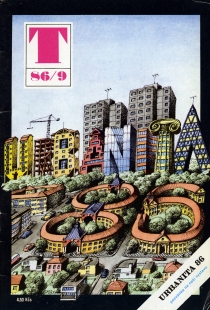
Forty years ago, the Urbanita 86 exhibition took place at the Jaroslav Fragner Gallery in Prague. Its initiator was Benjamin Fragner, then-editor of the magazine Technický magazín, which was at that time a more dynamic and open platform for non-conformist architectural opinions than the official magazines of the architect association. The exhibition, which built upon a year earlier’s exhibition Painted Architecture at the chateau in Roztoky, was preceded by a call in T magazine urging submissions for revitalizing monotonous housing estates.[1]
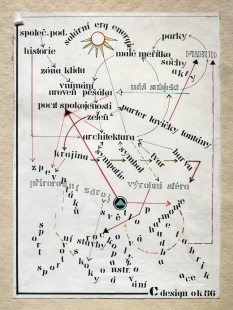
The motto accompanying the call stated the dual meaning of the word urbanity, referring to both the physical and social aspects of the city. And the exhibited designs indeed dealt not only with how to imprint a more interesting form onto rigid panel construction but also with the transformations of the residential environment as a place for living. Although at that time criticism of the low quality of housing estate construction was a generally shared lament among domestic architects, the exhibition exceeded the usual condemnation of the limits of prefabricated construction and bureaucratic norms with its provocativeness and originality of ideas. The eighty participating Czech and Slovak architects belonged to the middle and younger generations.
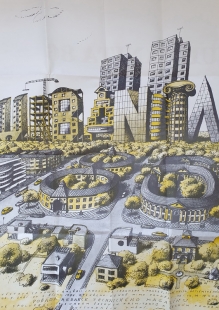
The designs were usually presented in a playful or collage-like form – after all, that was also the case with the exhibition poster by Michal Brix – but they contained serious concepts. They often attempted to evoke a more intimate environment of a classical city through various infill buildings in the open residential space – for example, the highest awarded design "Morphologies on the Theme of Housing Estate Nový Barrandov" by architects Zdeněk Hölzel and Jan Kere l, who were then trying to bring traditional streets and squares back into play within the construction of the real Nový Barrandov. Original was the concept by Jiří Kučera and Jaroslav Ouřecký, who projected the structure of the historical center of the old Most into the relaxed center of Nový Most, which had been demolished due to surface coal mining.
The renewed interest in historical architectural forms spurred by contemporary postmodern theories inspired some participants to perform provocative infill or redevelopment of panel buildings, or at least to confront stereotypical typified houses with the diversity of older architecture. A serious proposal for improving the comfort and appearance of panel buildings was suggested by Václav Králíček, who proposed that apartments could expand beyond the volume of the building (For a similar approach to the reconstruction of panel buildings in Bordeaux, Lacaton & Vassal received the Mies van der Rohe Award in 2019).
Alongside these seriously or ironically intended proposals for improving existing housing estates, there was also a fundamental rejection of them. As Benjamin Fragner wrote in a later (post-November) retrospective on Urbanita 86: "There is also an increase in radical rejections of compromise, panel buildings end up in ruins..., the reality of the residential environment is the reality of society."[2] The Dadaist project Re-solution of Jižní Město by Igor Dřevíkovský, Jan Hrubý, Martin Šarbort, and David Vávra from the group Dílna nejnovější architektury absurdly pushed the methods of bureaucratic planning to their limits. The air was already filled with the premonition of system collapse and expectations of societal changes.
The exhibition also featured a survey in which visitors answered the question of what they imagined under the term urbanity. One of them stated: "Urbanity is a concept that had to be rediscovered for theory after its meaning vanished from practice."[3]
Must it be rediscovered now as well? Perhaps the upcoming issue of the magazine Architektúra & Urbanizmus will answer that.
[1] Urbanita 86, Technický magazín, 1986, 1, p. 10.
[2] Benjamin Fragner, Communication on the Border: Urbanity, in: Zdeněk Hölzel (ed.), Czech Architecture 1945-1995., Prague 1995, p. 95.
[3] Benjamin Fragner, Report on the Exhibition, Technický magazín, 1987, 1, p. 3.
More information >
Forty years ago, the Urbanita 86 exhibition took place at the Jaroslav Fragner Gallery in Prague. Its initiator was Benjamin Fragner, then-editor of the magazine Technický magazín, which was at that time a more dynamic and open platform for non-conformist architectural opinions than the official magazines of the architect association. The exhibition, which built upon a year earlier’s exhibition Painted Architecture at the chateau in Roztoky, was preceded by a call in T magazine urging submissions for revitalizing monotonous housing estates.[1]
The motto accompanying the call stated the dual meaning of the word urbanity, referring to both the physical and social aspects of the city. And the exhibited designs indeed dealt not only with how to imprint a more interesting form onto rigid panel construction but also with the transformations of the residential environment as a place for living. Although at that time criticism of the low quality of housing estate construction was a generally shared lament among domestic architects, the exhibition exceeded the usual condemnation of the limits of prefabricated construction and bureaucratic norms with its provocativeness and originality of ideas. The eighty participating Czech and Slovak architects belonged to the middle and younger generations.
The designs were usually presented in a playful or collage-like form – after all, that was also the case with the exhibition poster by Michal Brix – but they contained serious concepts. They often attempted to evoke a more intimate environment of a classical city through various infill buildings in the open residential space – for example, the highest awarded design "Morphologies on the Theme of Housing Estate Nový Barrandov" by architects Zdeněk Hölzel and Jan Kere l, who were then trying to bring traditional streets and squares back into play within the construction of the real Nový Barrandov. Original was the concept by Jiří Kučera and Jaroslav Ouřecký, who projected the structure of the historical center of the old Most into the relaxed center of Nový Most, which had been demolished due to surface coal mining.
The renewed interest in historical architectural forms spurred by contemporary postmodern theories inspired some participants to perform provocative infill or redevelopment of panel buildings, or at least to confront stereotypical typified houses with the diversity of older architecture. A serious proposal for improving the comfort and appearance of panel buildings was suggested by Václav Králíček, who proposed that apartments could expand beyond the volume of the building (For a similar approach to the reconstruction of panel buildings in Bordeaux, Lacaton & Vassal received the Mies van der Rohe Award in 2019).
Alongside these seriously or ironically intended proposals for improving existing housing estates, there was also a fundamental rejection of them. As Benjamin Fragner wrote in a later (post-November) retrospective on Urbanita 86: "There is also an increase in radical rejections of compromise, panel buildings end up in ruins..., the reality of the residential environment is the reality of society."[2] The Dadaist project Re-solution of Jižní Město by Igor Dřevíkovský, Jan Hrubý, Martin Šarbort, and David Vávra from the group Dílna nejnovější architektury absurdly pushed the methods of bureaucratic planning to their limits. The air was already filled with the premonition of system collapse and expectations of societal changes.
The exhibition also featured a survey in which visitors answered the question of what they imagined under the term urbanity. One of them stated: "Urbanity is a concept that had to be rediscovered for theory after its meaning vanished from practice."[3]
Must it be rediscovered now as well? Perhaps the upcoming issue of the magazine Architektúra & Urbanizmus will answer that.
[1] Urbanita 86, Technický magazín, 1986, 1, p. 10.
[2] Benjamin Fragner, Communication on the Border: Urbanity, in: Zdeněk Hölzel (ed.), Czech Architecture 1945-1995., Prague 1995, p. 95.
[3] Benjamin Fragner, Report on the Exhibition, Technický magazín, 1987, 1, p. 3.
More information >
The English translation is powered by AI tool. Switch to Czech to view the original text source.
0 comments
add comment