
Italian Way

Publisher
Jan Kratochvíl
30.08.2010 00:10
Jan Kratochvíl
30.08.2010 00:10
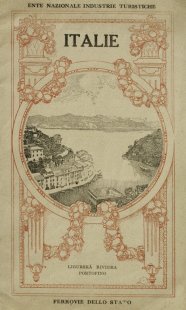
“The journey to Italy has always been a desired destination for those with an appreciation for art, even when traveling was uncomfortable and fraught with danger. Great poets crossed the Alps to delight in the Italian sky, the Italian sea, and the Italian landscape, which they later celebrated in their immortal works,” states an advertisement brochure from the Italian State Tourist Office from 1924.
The journey is one of the fundamental archetypal symbols and a possible way to address personal and creative crises. Such was, according to W. H. Auden, the Italian journey of Johann Wolfgang Goethe, who in 1786, shortly after his thirty-seventh birthday, set off from Karlovy Vary towards the Brenner Pass, not only to enjoy the Italian sky, sea, and landscape, but also to seek inspiration in the rich artistic and philosophical tradition and to explore the intriguing Mediterranean vegetation. The stylized travel diary Italian Journey was published by Goethe twenty years later, in 1816, and since then, other artists have followed in his footsteps.
gardenpanorama.cz is a place for everyone who perceives the garden as a changing space where nature meets human activity and culture, where botany intertwines with architecture, history, mythology, philosophy, art and entertainment
gardenpanorama.cz is a guide to the paths that significant and less significant personalities have left in gardens, and to the paths that gardens have left in their lives and work
gardenpanorama.cz is a place for everyone who considers Czech gardens to be a part of European and world cultural heritage
gardenpanorama.cz is a guide for everyone who likes to travel not only to well-known monuments but also to less visited places
gardenpanorama.cz is a guide for wanderings through gardens that have inspired works of art
gardenpanorama.cz is a small project of several people who love gardens
gardenpanorama.cz is a garden on the web, a space for rest and inspiration
gardenpanorama.cz is a place for garden lovers
Among Czech writers who embarked on a personally significant pilgrimage to Italy, let us at least mention Karel Hynek Mácha, who in 1834 undertook the legendary walk to Venice. Karel Čapek visited Goethe’s and other places, and in Italian Letters, in addition to numerous admiring descriptions of Italian art and landscape with subtle humor, he points out: “Allow me to now say everything bad about the land of walnuts: that it is too hot and too expensive, with too many con artists and fleas, dreadful noise, baroque all around, bandit cab drivers, malaria, earthquakes, and even worse evils.” This is largely applicable today as well, although it should be noted that it is not only in the land of walnuts, but – perhaps aside from malaria and earthquakes – also at home in the Czech lands.
English artists and aristocrats were primarily attracted to the western coast – Tuscany, Rome, Naples, and Amalfi – in addition to the artistic and architectural gems of Venice and Palladian Vicenza. English romantic poets particularly favored the Gulf of Liguria in northwest Italy. They came here not only for inspiration but also to escape scandals, misunderstandings, and problems at home. In the early 20th century, other English-language authors, such as D. H. Lawrence and W. B. Yeats, visited for the same reasons. French and Italian writers were drawn here too – George Sand and Alfred de Musset, Giosuè Carducci and Annie Vivanti, or Sem Benelli, who was the first to rename the place to Golfo dei Poeti, the Gulf of Poets.
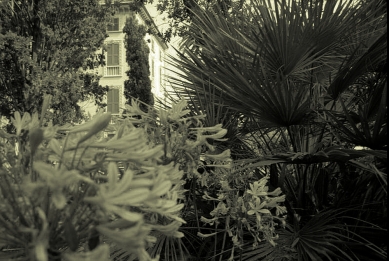
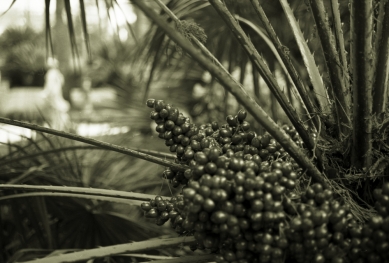
Even today, one can understand what makes this area so alluring: romantic views of the sea, steep cliffs adorned with Mediterranean vegetation that slope down to sheltered small beaches, historical buildings, and air filled with the scents of citrus oils, pines, and southern herbs.
The English romantic poet Percy Bysshe Shelley (1792–1822) spent the early summer of 1822 in Lerici with his wife Mary Godwin-Shelley (the author of the famous Frankenstein). Although he could not swim, he decided to sail alone from there to Livorno. Byron named his small boat Don Juan, but Shelley renamed it Ariel. On July 7, 1822, he drowned in a storm at sea. After a few days, his body was found, unrecognizable and torn by sharks, but the bundles of poems in the pockets of his clothing left no one in doubt that it was the famous poet.
Shelley’s tragic fate and his Promethean nature, disregarding conventions, captivated not only many readers but also inspired other poets – to create and to embark on a journey of (self)discovery and inspiration:
Today, July 8, 1922 at noon,
you will call me,
that for five minutes you will leave the typewriter,
that for five minutes you will take a break,
so that I too may put down my files and pen
and with you, my dear, set off on a sad trip
to Spezia in Italy.
As the roar of the sea in a shell
that storm rumbles in our hearts across the distance of a hundred years:
our faithful friend,
Prometheus, never bound,
Percy Bysshe Shelley is drowning!
We will go and remember also
Jaroslav Vrchlický.
(Jindřich Hořejší, “Hello, 2501!”, 1923)
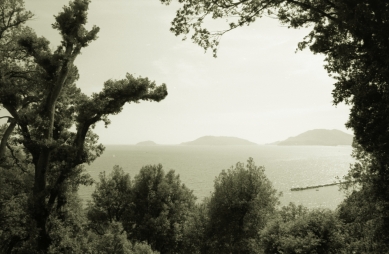
Jindřich Hořejší wrote this poem a hundred years after Shelley’s death. We happened to arrive in Lerici on July 7, 181 years later. On journeys, it often happens that the original intention does not come to fruition, but eventually another, equally interesting opportunity arises. Shelley and his friends, the Williams couple, stayed at Villa Magni, where Shelley's memorial plaque is now located. Villa Magni resembles a white ship sailing on the sea and is surrounded by a pine grove. By fate's design, we completely missed it and found ourselves nearby at another place – Villa Marigola. Some sources also mention it as a place of Shelley’s stay, but today it mainly remains the place where the Swiss Symbolist painter Arnold Böcklin resided. And a place with a remarkable garden and equally remarkable viewpoint.
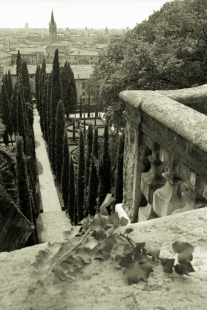
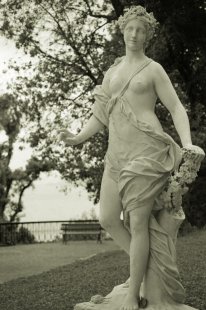
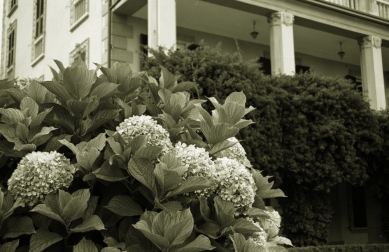
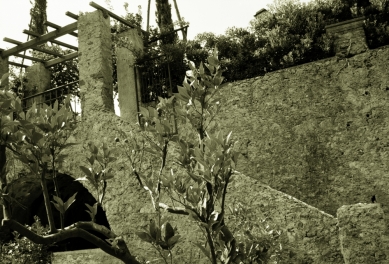
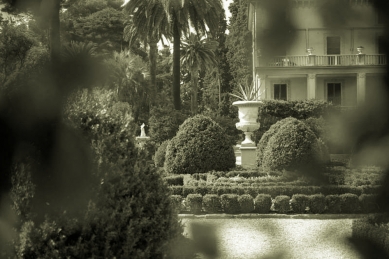
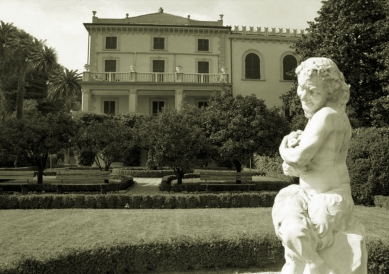
Villa Marigola and its gardens stretching at the top overlooking Lerici harbor are the extracted essence of all the advantages of this region. The Ollandini family commissioned its construction as a summer residence in the late 18th century. Only citrus trees, olive trees, and vines comprised the garden at that time. The subsequent owners, the Marquesses Alli Maccarani, transformed the villa into a site for important social gatherings and, in the spirit of contemporary fashion, turned the surrounding gardens into a landscape park. The English banker Reginald Jenkins, who owned the villa from 1888, hosted distinguished guests here, including Victoria, the wife of German Emperor Frederick III, and the painter Arnold Böcklin (1827–1901), in whose honor part of the park was transformed according to the themes of his paintings into a mysterious grove with a statue of the god Pan, who was his favorite subject. The dark areas evoke Böcklin's famous painting The Island of the Dead, while the illuminated sections resemble the image of a sacred grove.
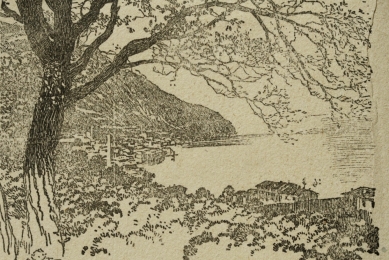
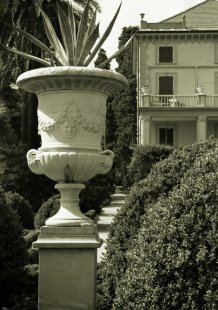
In the early 20th century, the Florentine playwright Sem Benelli spent an extended period at Villa Marigola, where he wrote his most famous work The Supper of Buffoons. In 1926, the villa was purchased by local shipowner and senator Giovanni Bibolini. At his request, architect Franco Oliva transformed the citrus grove near the house into a geometric garden with laurel and boxwood hedges, sculptures, vases, and ornamental plantings. The citrus grove was planted further from the house, on the terrace under the pergola. From the Romantic period, probably only a few old trees remain, but the view of the Gulf of Lerici, which inspired Shelley’s famous poem Lines Written in the Gulf of Lerici, remains immortal in its beauty, unlike some translations that time slowly yet surely ages:
She left me in a quiet moment,
when the moon was already tired
on the azure path of heavenly plains
being as even as an albatross in sleep,
on wings of light she was swaying,
above the purple night she stood,
before she found her nest in the castle
somewhere on the shores of the west.
She left me, I remained here alone,
abandoned by all to the sounds of memories,
of which might have been mute to the ear,
but which pierced deeply into enchanted hearts
like legs in their perishing origin
sound in the echoes of mountains at every instant;
I felt – perhaps too much! –
the delicate touches when
that sweet hand trembled
as now around my forehead,
and thus, even though she long vanished
my memory returned everything to me
that imagery might desire.
My passions quenched even emotion
as she was here and I lived alone
in that time, which truly was granted to us,
the past, the future – in oblivion
like former and future dreams.
But scarcely did the Guardian angel arise
on its throne sat my demon in an instant
in my dear heart – hard to say,
what I thought, faint, despairing!
I turned my gaze behind the sails,
on the sea pursued them,
winged chariots of spirits were to me,
which with a pure element swiftness
towards a special, distant goal
even to the Elysian stars,
sailing for a remedy against torments
that sweet-bitter distress, like mine.
And the wind that drove them
blew from the land and was light
and the fragrance of winged flowers
and the freshness of dew-drenched hours
and the sweet warmth that the day left,
stretched into the sparkling gulf
and the fisherman with his lantern
crawled along the damp shore with a harpoon,
to catch in the low rocks the fish,
that came to see the deceiving light.
Oh, happy ones, to whom lasting pleasure
emotion, thought, took away regret,
already leaving always the whirl of festivities
taking life from them – yet not peace!
(translated by J. Vrchlický)

gardenpanorama.cz is a place for everyone who perceives the garden as a changing space where nature meets human activity and culture, where botany intertwines with architecture, history, mythology, philosophy, art and entertainment
gardenpanorama.cz is a guide to the paths that significant and less significant personalities have left in gardens, and to the paths that gardens have left in their lives and work
gardenpanorama.cz is a place for everyone who considers Czech gardens to be a part of European and world cultural heritage
gardenpanorama.cz is a guide for everyone who likes to travel not only to well-known monuments but also to less visited places
gardenpanorama.cz is a guide for wanderings through gardens that have inspired works of art
gardenpanorama.cz is a small project of several people who love gardens
gardenpanorama.cz is a garden on the web, a space for rest and inspiration
gardenpanorama.cz is a place for garden lovers
The English translation is powered by AI tool. Switch to Czech to view the original text source.
0 comments
add comment