“We build houses to provide a certain degree of intimacy to that part of the world - including objects, people, animals, plants, atmospheres, events, images, and memories - that enables the evocation of happiness.”
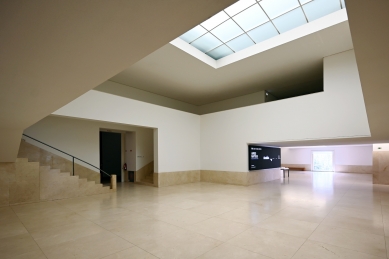
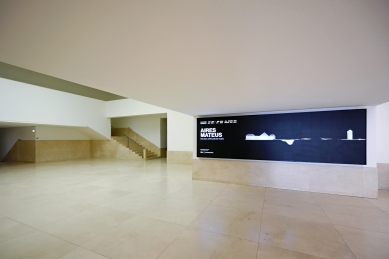
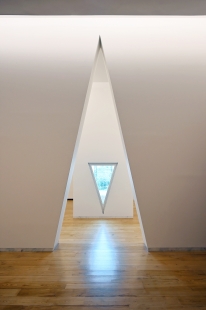
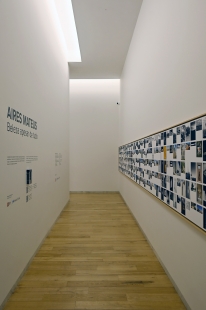
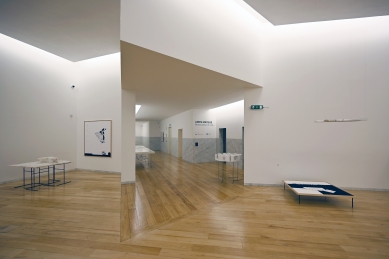
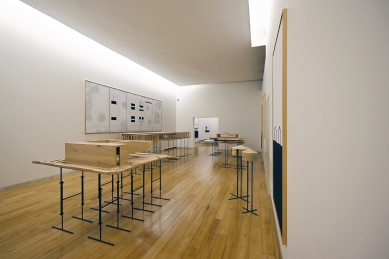
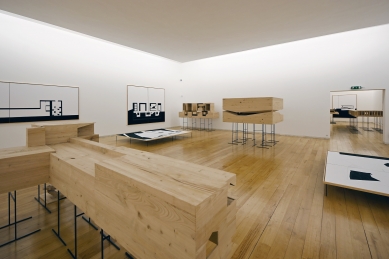
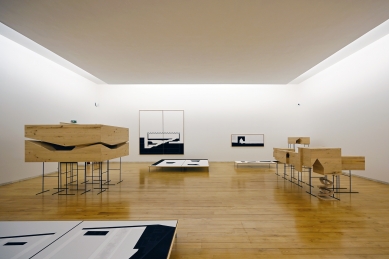
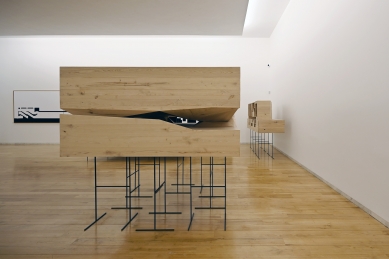
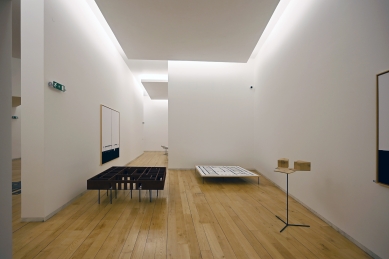
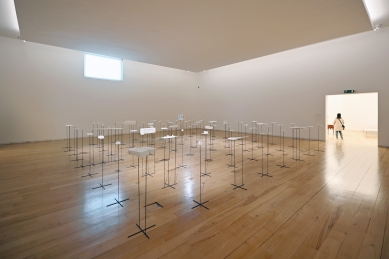
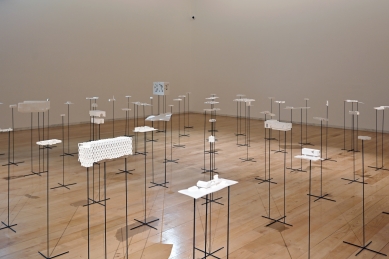
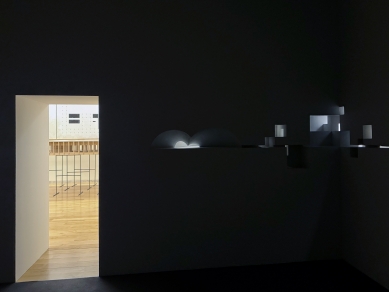
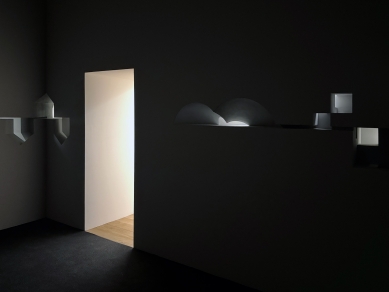
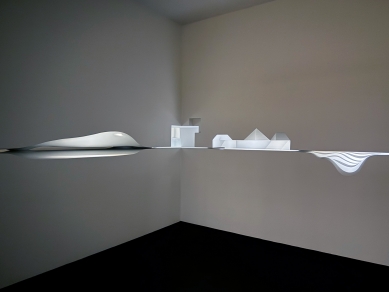
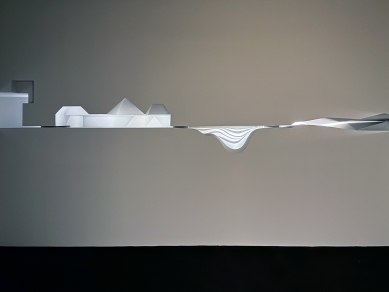
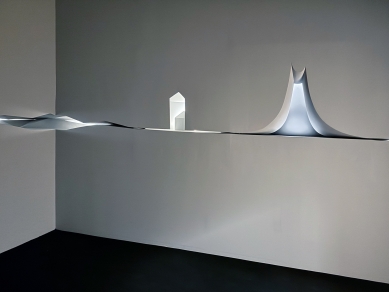
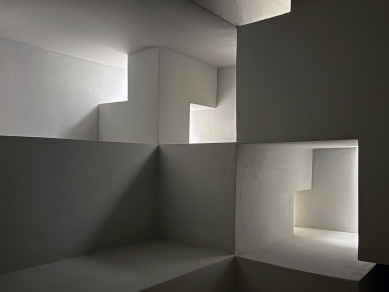
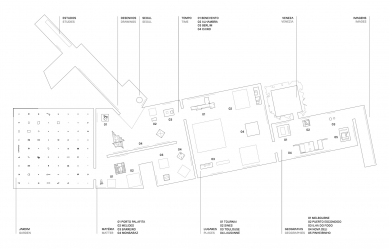
The mere visit to the building designed by Portuguese architect Álvaro Siza leaves a strong artistic experience. After the then ninety-year-old master completed the new wing of the Serralves Museum in the autumn of 2023, the empty structure was accessible for several months, allowing visitors to properly savor the spatial finesse before the exhibition halls were filled with exhibits. The first section of the extensive collection C.A.S.A. (Collection Álvaro Siza, Archive), which manages the legacy of this Portuguese legend, was presented in the Ala Álvaro Siza (Álvaro Siza Wing) in the spring of 2024. Aside from the sculpturally designed entrance, the rooms, predominantly lit artificially, do not pose any competition for the exhibited works, yet they remain a significant challenge for every artist and curator. At the end of last year, the opportunity to exhibit in the newly opened wing was taken on by the fraternal duo of architects Aires Mateus, who, with the help of curator Nuno Crespo, filled a substantial part of the lower floor with their works. Similar to Álvaro Siza, the Lisbon studio Aires Mateus is also characterized by the interplay of simple geometric shapes, on whose white surfaces shadows wander, giving the buildings a plastic expression. Unlike Siza's more classical approach, Manuel and Francisco Mateus venture into greater abstraction, unafraid to experiment with external shapes and delve into spatial adventures in their interiors. Another area that both brothers have long been engaged in is the question of beauty. Modernist architects attempted to push beauty to the sidelines, mainly focusing on functional aspects. For the Mateus brothers, beauty is not merely another layer that demonstrates the author's/investor's taste, but has the ability to penetrate, reveal, and express human desires. Their search for beauty unfolds through a familiar language (derived from the archetype and thus more easily acceptable) while also introducing unexpected elements (which help expand experiences and venture into uncharted territories). In their buildings, both of these oppositions exist side by side. Bold and monumental buildings can still possess a calm and human scale. Beauty is their way of combating banality and overcoming obsolescence. They do not overwhelm with excessive descriptiveness or complex theories. Their work is taciturn, the beauty within it hard to describe yet clearly felt. Eight years ago, Manuel and Francisco Mateus contemplated the questions of beauty, which each person perceives subjectively. They themselves received criticism for their buildings because they treated beauty in a somewhat banal manner, overusing aesthetics and masking a lack of internal content with spatial bombast. In response to the empty formalism, a wave of so-called "new ugliness" (neo-uglyism) emerged, which justifies its unappealing nature with sophisticated and socially responsible solutions. For Aires Mateus, beauty does not represent another layer demonstrating someone’s good taste, but the ability to capture and express human desires. Their language is far from merely a pleasant balm; rather, it is an inner strength that can penetrate and unveil the mysteries of the human condition. Both brothers have also been active at the USI Academy in Mendrisio, Switzerland, since 2011, where their teaching primarily involves testing concepts on physical models at the largest possible scale. Similarly, the Porto exhibition relies on models. The exhibition in the lower floor of Siza's wing is divided into several distinct parts. In four spacious halls, one intimate room, and several adjacent corridors, multiple exhibitions are concentrated simultaneously. The exhibition consists of five parts - garden, material, time, places, geography - which do not form a linear approach nor seek to faithfully represent a specific reality. Furthermore, it is not purely an anthology or retrospective exhibition but rather a presentation of twenty years of spatial experimentation. Visitors find themselves in the position of a researcher navigating a spatial laboratory. The exhibition, collectively titled “Beleza apesar de tudo” (Beauty despite everything), not only features newly arranged exhibits but also recalls previous events. In a smaller darkened room named “Venezia,” the exhibition “Fenda,” originally prepared for the 15th International Architecture Biennale in Venice in 2016, is again presented. Several spatial concepts from Aires Mateus' workshop, abstracted into a black-and-white spatial play of light and shadow, are positioned within a continuous horizontal crack at eye level. The wall of one of the access corridors is covered with small candid photographs of Aires Mateus’ buildings, as well as historical examples that inspired the architects. In the second access corridor, a glass table is set up with sketchbooks, in which they capture preliminary thoughts and refine early spatial concepts. In the room named “garden,” 71 white models are placed in a regular square grid on delicate metal legs, all at the same scale, allowing you to compare the breadth of the spectrum that the Aires Mateus studio works within. The models appear as fragile jewels, making you hesitant to step into this “garden” of luminous models on slender black stems. In the “time” hall, their designs respond to timeless historical examples. In the “places” and “geography” halls, oversized wooden models are accompanied by black-and-white drawings at the same scale (the floor plan of the ground level is placed on the floor, and a characteristic section is hung on the wall). Each exhibit serves a dual role. On one hand, it challenges traditional methods of exhibiting architecture (model, drawing, photo) and the ability of these means to express reality. Due to the non-transferability of a real building into museum space, we often have to deal with abstraction and the absence of certain elements. Together with Aldo Rossi, we learned that speaking accurately about architecture does not mean talking “about a school, a cemetery, a theater”, but rather “about life, death, fantasy” (Scientific Autobiography). Discussing life, death, and fantasy is also a great aspiration of these Portuguese architects. In their interpretation, the use of beauty can be perceived as a gesture towards the destruction that surrounds us from all sides. Beauty, which despite everything happening around us allows for life.