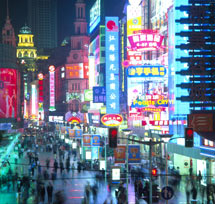
Shanghai is a true creation of the influence of globalization on cities and regions. The largest city in China has declined over the past 30 years, when the Chinese economy was isolated from any external influence and the country went through the political turmoil of the Cultural Revolution. All of this changed dramatically when China opened its market to the West in the 1980s, and Shanghai was given the green light to "become wealthy." Over the last 15 years, the city has transformed into a shining metropolis with 21 million residents, more skyscrapers than New York, and a public transportation system that - in terms of size - will soon rival London. The city has tripled its size, and its influence is spreading in the Yangtze River delta region, which is the wealthiest area in China. However, it is not just about size and the speed of transformation but also about its glowing economic success, which has captivated the attention of the whole world. The Shanghai area, including two neighboring provinces, accounts for 30% of Chinese exports and attracts 25% of all foreign investment in the country. The gross domestic product of the Shanghai region itself is 450 billion USD, which represents half of the entire economy of India. Over 500 multinational companies, from General Motors to Volkswagen, have their local headquarters in Shanghai. You can read more about this phenomenon in the full article by Steve Schifferes for BBC – here.
The English translation is powered by AI tool. Switch to Czech to view the original text source.