
Classic modern art Stanislav Kolíbal celebrated his hundredth birthday
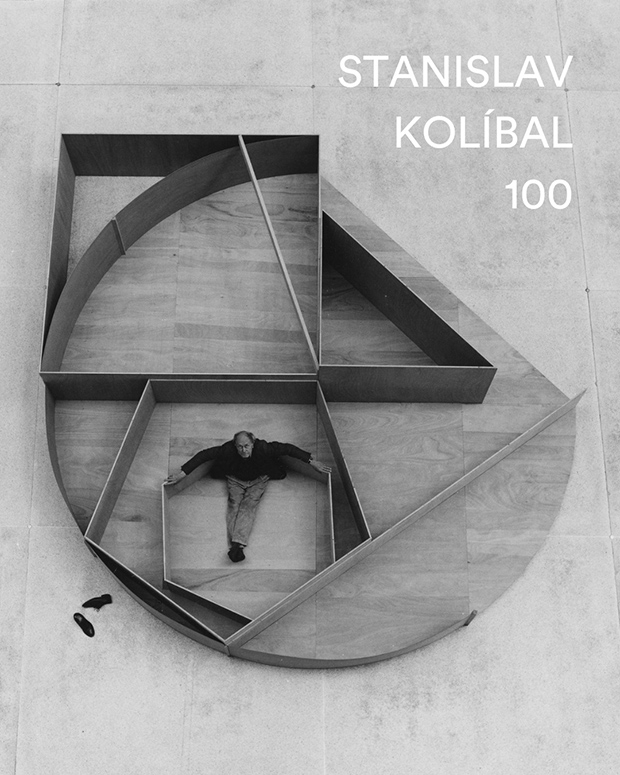 |
Kolíbal is one of the prominent representatives of Czech conceptual art and geometric abstraction. The Stanislav Kolíbal Foundation shows that his works are represented in 15 world art collections, including London's Tate Gallery, New York's Metropolitan Museum, and Paris's Centre Pompidou. In 2019, he represented the Czech Republic at the Venice Biennale of Contemporary Art, while also collaborating with the National Gallery in Prague for which he prepared the exhibition Echoes of the Venice Biennale. A year later, his design won the competition for the artistic representation of the Nové Dvory metro station on the new Line D, and the National Gallery held a major exhibition of his work at the Trade Fair Palace.
A native of Orlová, Kolíbal was influenced by the environment of mines and the uncertainties of war and post-war periods. "Respect for the ordinary has played a significant role in my life,” he once said. He has systematically engaged in sculpture since the mid-20th century. A crucial turning point in his artistic thinking occurred in 1963, after which Kolíbal began to uniquely connect the formal aspects of sculpture and space with the meaning aspects of the work. "He uses geometric and abstract forms, and in his own way, gradually touched upon the current issues of minimalism, installation, construction, and deconstruction, or most recently, neo-modernism,” said curator Martin Dostál.
In 1963, Kolíbal received an invitation to participate in a competition for artistic elements of the Czechoslovak embassy building in Brazil. Some of his most famous completed projects include the retaining walls of the Nusle Bridge in Prague (1964 to 1969), the relief wall of the Czechoslovak embassy in London (1968 to 1969), the Memorial to the Victims of Fascism in Prague (1969), the monument for the first transmission in Prague-Kbely (1973), or the installation for the Bonn exhibition Europa-Europa (1994).
During the normalization period, he was unable to exhibit for more than ten years, and his works reached major international showcases very complicatedly, but they achieved great success.
"Kolíbal turns to everyday experiences to discover geometry within them, exposing it from a new perspective and thus introducing it into often unanticipated contexts. That is also why he uses it in sculptural or graphic techniques, but just as much in ingenious installations approaching architecture. Although he is a sculptor, outline is often more important to him than volume. Kolíbal’s reliefs reveal the trained eye of a graphic artist, and many an architect might envy his three-dimensional constructions. Nonetheless, Kolíbal's geometric abstraction is not the work of a visionary or a mystic, but of a person who carefully observes the world around him and manages to capture the general uncertainty and immeasurability of the world in precisely non-objective forms," wrote legal philosopher Jiří Přibáň about him some time ago.
Kolíbal's work was greatly influenced by the American artist Alexander Calder, whose work he became familiar with in the late 1950s: "I was fascinated that his sculpture has no matter that can be cut or cast, that it can perhaps hang... This principle appealed to me and became close to me,” Kolíbal said. He considers it an honor that in 1994 he was selected by the Calder Foundation for a residency in his studio in Saché, France, and that a few years later he even had the opportunity to install his exhibition.
Kolíbal is associated with the Prague National Gallery during the leadership of Milan Knížák. His experiences working with space were utilized during the redesign of exhibitions from the Collection of Modern and Contemporary Art at the Trade Fair Palace. The artist is able to combine the roles of curator, architect, and exhibitor. Kolíbal also contributed to the education of young talents; from 1990 to 1993, he was a professor at the Academy of Art, Architecture and Design in Prague, where he led the Sculpture – Installation studio.
He was born on December 11, 1925, in Orlová in the Karviná district, and spent part of his life in Ostrava, which honored him with citizenship last year. He studied applied graphics at the Academy of Art, Architecture and Design in Prague (1950) under Antonín Strnadel and scenography at DAMU (1954).
He was never a communist. "But my proletarian origin saved me, because it would not have been fitting for a student from a working-class family, who briefly worked in a mine, to be expelled from his studies,” he recalled. He graduated from the Applied Arts School with illustrations of Chekhov's short stories and went on to study scenography at DAMU. "The theater was freer at that time than visual arts; on stage, it was not necessary to maintain the realism that dominated the visual arts,” he explained.
With Adriena Šimotová, Václav Boštík, and others, he founded the artistic group UB 12 in 1960, which was banned in 1970.
In 1965, Kolíbal achieved success when he was selected by the jury of the Guggenheim Museum in New York to participate in the exhibition Sculpture of 20 Nations; his works then appeared in Tokyo, at the Paris Centre Pompidou, and at the Museum of Modern Art in New York. From 1970, Kolíbal was unable to exhibit in his homeland for over ten years due to political reasons. He retreated to his studio and focused on installations. He presented a large exhibition, for example, in 2012 at the Riding School of Prague Castle.
Kolíbal is also known as a draftsman, having illustrated children's books such as Tales for Both Ears or Spanish Tales. His First and Second Trees of Tales from Around the World are known to generations of parents and children.
The artist lives and works in Prague. He has received numerous awards for his work in the Czech Republic and abroad. In 2004, he received the Michal Ranný Award for his distinctive contribution to visual art, and a year later, he was awarded the Medal of Merit by President Václav Klaus. In 2014, Kolíbal also received an award from the Ministry of Culture for his contributions to the visual arts.
He connected his life with sculptor Vlasta Prachatická, a student of Otakar Španiel, who passed away in April 2022 at the age of 92.
The English translation is powered by AI tool. Switch to Czech to view the original text source.
0 comments
add comment
Related articles
0
18.06.2025 | Almost a century-old Kolíbal exhibited his Vertical Structure in Prague
0
29.01.2019 | Stanislav Kolíbal prepared his retrospective for the biennale
0
01.10.2018 | Czech Republic will be represented at the biennale in Venice by Stanislav Kolíbal
0
01.06.2012 | Stanislav Kolíbal: Surface – Line – Space