
The exhibition at Prague's CAMP will bring the 90s metropolis closer
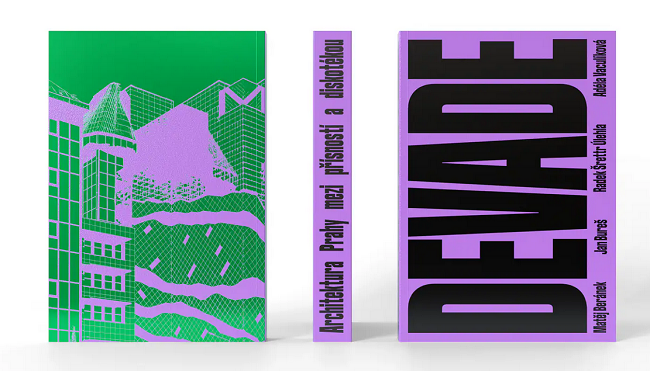 |
Prague - The exhibition at the Prague Center for Architecture and Urban Planning (CAMP) will bring visitors closer to the architecture of the 1990s starting Thursday. The exhibition titled DEVADE is based on a selection of 30 buildings and is supplemented by period documents, including a half-hour montage of footage from Czech Television. The exhibition, which will last until May 17, is associated with the release of a book by the same authors. The creators presented the exhibition at today's press conference.
According to architectural historian and co-author of the project Adéla Vaculíková, both the exhibition and the book are based on approximately three years of research. "The entire project aims at a wide audience," she said. Another author, Jan Bureš, added that the choice of buildings was intended to offer the most diverse selection of styles and functions. In the 1990s, he stated, architecture combined fashionable modesty with wilder postmodern influences that became available for use in designs after the regime changed.
Another aspect, according to co-author and editor of the book Matěj Beránek, is the effort to open the topic of "90s" architecture to avoid a repeat situation of removing valuable post-war buildings. "We want to kickstart a critical discussion about the architectural heritage of this era before it’s too late," he said. He added that the theme for the authors also included a certain stigma surrounding the aesthetics of the 90s.
The exhibition itself includes one wall made up of period advertisements and another that describes individual buildings and places them in the historical context. Visitors can view the buildings on a digital panel and find them on a map. The exhibition features a large-format projection of contemporary footage from Czech Television on a screening wall. People can sit on chairs designed by artist Bořek Šípek, borrowed from the Spanish Hall of Prague Castle. The exhibition is complemented by period photographs of buildings by Radek Štrettr Úlehly.
Among the buildings presented are, for example, the Dancing House, the Don Giovanni hotel, the Hilton hotel, the Prague Exhibition Grounds with the Křižík pavilions, Spiral, and the Pyramid Theater, the Rajská zahrada metro station, the Nový Smíchov shopping center, or the church of the Immaculate Conception of the Blessed Virgin Mary in Strašnice. Tactile models of selected buildings are available for the visually impaired. On selected days, the program also includes guided tours, activities for children, and a lecture with a discussion by the authors on Tuesday, February 10.
CAMP was opened by the city’s Institute for Planning and Development (IPR) in September 2017 in its headquarters located in the area of the Emmaus Monastery. It hosts exhibitions, educational events, and discussions, and provides information on major construction projects in the metropolis. The center attracts 120,000 visitors annually. The IPR headquarters, known as the Pragerovy cubes, is undergoing a three-year reconstruction, for which city planners will move to offices in Holešovice this year, and CAMP will be closed until the end of the work. During the reconstruction, the center will be expanded to the entire ground floor, and the ground floors of all cubes as well as a terrace with seating and a restaurant will be accessible to the public.
The English translation is powered by AI tool. Switch to Czech to view the original text source.
0 comments
add comment