
Art of Activism - Exhibition at GHMP
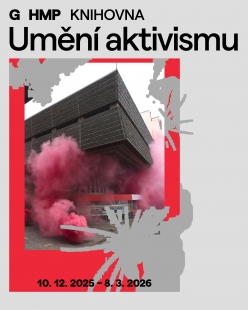
Galerie of the capital city of Prague presents the exhibition The Art of Activism, the first extensive showcase of activist and publicly engaged art in the Czech context. The Art of Activism features both Czech and international authors who respond in their work to themes shaping the societal debate of recent decades. Visitors will encounter strategies by which art enters into a dialogue about the role of public space, civic engagement, and transformations in democratic society through a wide range of forms from documentary photography and videos to installations and projects created specifically for public space. The exhibition was prepared by curator Jitka Hlaváčková, along with an international team, and will be accessible to the public in the GHMP Library from December 10, 2025, to March 8, 2026. For the first day of the exhibition, Wednesday, December 10, GHMP is also organizing a rich program at 4 PM in collaboration with Amnesty International and other partners to mark International Human Rights Day.
The Art of Activism addresses activist art across four areas: the right to housing, the right to identity, the right to asylum, and the right to a safe living environment. A significant role is played by the documentation of civic initiatives, performances, and collective actions that demonstrate how closely contemporary art is linked to the dynamics of urban environments and social life. “GHMP, as one of the first, provides an institutional basis for such an extensive compendium of significant events and manifestations of variously motivated activism. The open dialogue that these artists and their collaborators and supporters call for should be widely comprehensible in today’s tense global socio-political situation,” says Magdalena Juříková, director of the Gallery of the capital city of Prague.
Visitors to the exhibition will embark on a journey through various forms of activist creation. The introductory space outlines the atmosphere of global protests through projections, archival photographs, and visual records partly derived from the international exhibition Protest I Architecture, presented at the Deutsches Architekturmuseum in Frankfurt am Main (DAM, 2023) and at the Museum für angewandte Kunst in Vienna (MAK, 2024). “Abroad, activist art is commonly presented in broader social contexts, and it is important to offer a similar perspective here with us. We want to show that this work has its place in the art scene as well as in academic and public debate. I see activism as a way to collectively seek solutions to significant questions and urgent issues, with art having the ability to create broadly accessible and open platforms for these discussions,” explains Jitka Hlaváčková, the curatorial head of the exhibition.
In the section dedicated to the right to the city, interventions that took place directly in the streets appear. This includes motifs from Vladimir Turner's film Public Works, which reflects the transformation of urban environments under the pressure of advertising, car traffic, and development projects. The work of Pavel Karous, Beranidlo at the magistracy (2023), a symbolic action responding to the inaccessibility of housing and the growing frustration of the public, will also be highlighted. The exhibition also features creators who have fundamentally influenced the way we perceive the city as a political and symbolic organism. This includes authors who have long been working with its visual memory and informal layers, such as Epos 257 or Vladimir 518.
The following section of the exhibition connects personal testimonies and critical reflections on the stories of individuals and groups in difficult human rights and political situations. Works by Barbara Holub, who engages with the stories of migrants and contemporary asylum policies, or film essays by Tomáš Rafy, which have long documented clashes at borders, xenophobic tendencies, and community initiatives, will be presented. This section also includes a collective project for Alsu Kurmaševa, a Russian journalist imprisoned for her work thematizing persecution in contemporary Russia.
The exhibition also includes reflections on gender, embodiment, and the female experience through authorial approaches that sensitively work with the themes of intimacy and visibility. This includes the work of Kateřina Olivová, who explores the body as a space of shared experience and political significance through her long-term performative practice.
The conclusion of the exhibition relates to questions regarding the climate crisis. Projects by the significant British artist Gustav Metzger, a pioneer of environmental art, who highlighted the destructive impacts of human activity through radical public performances or projects created in collaboration with student initiatives, will be on view, among others. Additional participatory works reflecting contemporary ecological initiatives are also presented, such as installations by Barbara Benish, which publicly raise awareness of ocean pollution issues through fast food placemats, or the Court for Intergenerational Climate Crimes (2021) by activist Radha D'Souza and artist Jonas Staal.
The installation of the exhibition works with elements of protest architecture, recycled materials, and the visual language of activist movements. The gallery temporarily transforms into a space where art, public debate, and the experience of urban space intersect. The Art of Activism will be complemented by a publication of the same name published by GHMP in co-edition with the publishing house ArtMap.
Curator: Jitka Hlaváčková
Collaboration: Oliver Elser, Megan Hoetger, Barbara Holub, Tamara Moyzes, Vladimir Turner
Spatial solutions for the exhibition: Jan Tomšů / Omlouvámesepardón
Graphic design for the publication and the exhibition: Antianti
Visual style of GHMP: Anymade Studio
Represented artists: Akolektiv Helmut, Alessandra Svatek, ARA ART (David Tišer and Pavlína Matiová), Avanti Garda, Barbara Benish, Barbara Holub / Transparadiso, Barbora Šimková, Bolt958, Chto delat, Darina Alster, Epos 257, Extera XX. Erfurt Women Group, Fridays For Future CZ, Gustav Metzger, Ilona Němeth, Jakub Geltner, Jean-Christophe Couet, Ghazel Radpay, Jakub Hons, Janek Rous, Jezevky, Jáchym Holoubek, Johana Merta, Jonas Staal, Kateřina Olivová, Koza nostra, Lenka Tyrpeklová, Living Monument Budapest, Lidija Mirković, MAK (Kateřina Vídenová, Adam Wlazel), Martin Mareček, Martin Zetová, Matyáš Dynka, Maxmilian Aaron Mootz, Monika & Bohuš Kubinsky, Mothers Artlovers, Nová věčnost, Oskar Helcel, Oliver Hardt, P.R.A.K. collective, Pavel Karous, Petr Zewlakk Vrabec, Peter Watkins, Podebal, Mateusz Kowalczik – Office of Post-Art Services / Post-Art Services Office / Biuro Usług Postartystycznych, Punx23, Rafani, Romane Kale Panthera, Rufina Bazlova, Ruta Putramentaite, S.R.A.T., Stephan Mörsch, Tamara Moyzes & Shlomi Yaffe (ArtivistLab), Tomáš Rafa, Vladimir 518, Vladimir Turner, Yasmin Golshani & Alsu Kurmaševa Project
The Art of Activism addresses activist art across four areas: the right to housing, the right to identity, the right to asylum, and the right to a safe living environment. A significant role is played by the documentation of civic initiatives, performances, and collective actions that demonstrate how closely contemporary art is linked to the dynamics of urban environments and social life. “GHMP, as one of the first, provides an institutional basis for such an extensive compendium of significant events and manifestations of variously motivated activism. The open dialogue that these artists and their collaborators and supporters call for should be widely comprehensible in today’s tense global socio-political situation,” says Magdalena Juříková, director of the Gallery of the capital city of Prague.
Visitors to the exhibition will embark on a journey through various forms of activist creation. The introductory space outlines the atmosphere of global protests through projections, archival photographs, and visual records partly derived from the international exhibition Protest I Architecture, presented at the Deutsches Architekturmuseum in Frankfurt am Main (DAM, 2023) and at the Museum für angewandte Kunst in Vienna (MAK, 2024). “Abroad, activist art is commonly presented in broader social contexts, and it is important to offer a similar perspective here with us. We want to show that this work has its place in the art scene as well as in academic and public debate. I see activism as a way to collectively seek solutions to significant questions and urgent issues, with art having the ability to create broadly accessible and open platforms for these discussions,” explains Jitka Hlaváčková, the curatorial head of the exhibition.
In the section dedicated to the right to the city, interventions that took place directly in the streets appear. This includes motifs from Vladimir Turner's film Public Works, which reflects the transformation of urban environments under the pressure of advertising, car traffic, and development projects. The work of Pavel Karous, Beranidlo at the magistracy (2023), a symbolic action responding to the inaccessibility of housing and the growing frustration of the public, will also be highlighted. The exhibition also features creators who have fundamentally influenced the way we perceive the city as a political and symbolic organism. This includes authors who have long been working with its visual memory and informal layers, such as Epos 257 or Vladimir 518.
The following section of the exhibition connects personal testimonies and critical reflections on the stories of individuals and groups in difficult human rights and political situations. Works by Barbara Holub, who engages with the stories of migrants and contemporary asylum policies, or film essays by Tomáš Rafy, which have long documented clashes at borders, xenophobic tendencies, and community initiatives, will be presented. This section also includes a collective project for Alsu Kurmaševa, a Russian journalist imprisoned for her work thematizing persecution in contemporary Russia.
The exhibition also includes reflections on gender, embodiment, and the female experience through authorial approaches that sensitively work with the themes of intimacy and visibility. This includes the work of Kateřina Olivová, who explores the body as a space of shared experience and political significance through her long-term performative practice.
The conclusion of the exhibition relates to questions regarding the climate crisis. Projects by the significant British artist Gustav Metzger, a pioneer of environmental art, who highlighted the destructive impacts of human activity through radical public performances or projects created in collaboration with student initiatives, will be on view, among others. Additional participatory works reflecting contemporary ecological initiatives are also presented, such as installations by Barbara Benish, which publicly raise awareness of ocean pollution issues through fast food placemats, or the Court for Intergenerational Climate Crimes (2021) by activist Radha D'Souza and artist Jonas Staal.
The installation of the exhibition works with elements of protest architecture, recycled materials, and the visual language of activist movements. The gallery temporarily transforms into a space where art, public debate, and the experience of urban space intersect. The Art of Activism will be complemented by a publication of the same name published by GHMP in co-edition with the publishing house ArtMap.
Curator: Jitka Hlaváčková
Collaboration: Oliver Elser, Megan Hoetger, Barbara Holub, Tamara Moyzes, Vladimir Turner
Spatial solutions for the exhibition: Jan Tomšů / Omlouvámesepardón
Graphic design for the publication and the exhibition: Antianti
Visual style of GHMP: Anymade Studio
Represented artists: Akolektiv Helmut, Alessandra Svatek, ARA ART (David Tišer and Pavlína Matiová), Avanti Garda, Barbara Benish, Barbara Holub / Transparadiso, Barbora Šimková, Bolt958, Chto delat, Darina Alster, Epos 257, Extera XX. Erfurt Women Group, Fridays For Future CZ, Gustav Metzger, Ilona Němeth, Jakub Geltner, Jean-Christophe Couet, Ghazel Radpay, Jakub Hons, Janek Rous, Jezevky, Jáchym Holoubek, Johana Merta, Jonas Staal, Kateřina Olivová, Koza nostra, Lenka Tyrpeklová, Living Monument Budapest, Lidija Mirković, MAK (Kateřina Vídenová, Adam Wlazel), Martin Mareček, Martin Zetová, Matyáš Dynka, Maxmilian Aaron Mootz, Monika & Bohuš Kubinsky, Mothers Artlovers, Nová věčnost, Oskar Helcel, Oliver Hardt, P.R.A.K. collective, Pavel Karous, Petr Zewlakk Vrabec, Peter Watkins, Podebal, Mateusz Kowalczik – Office of Post-Art Services / Post-Art Services Office / Biuro Usług Postartystycznych, Punx23, Rafani, Romane Kale Panthera, Rufina Bazlova, Ruta Putramentaite, S.R.A.T., Stephan Mörsch, Tamara Moyzes & Shlomi Yaffe (ArtivistLab), Tomáš Rafa, Vladimir 518, Vladimir Turner, Yasmin Golshani & Alsu Kurmaševa Project
The English translation is powered by AI tool. Switch to Czech to view the original text source.
0 comments
add comment