
Ten years without Bořek Šípek: the architect who changed Czech design
 |
| photo: FUA TUL |
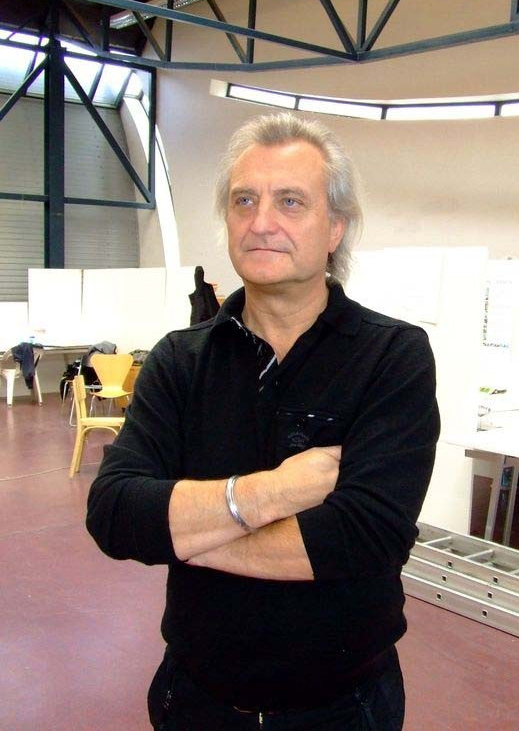
Šípek's unique design style, according to architecture historian Zdeněk Lukeš, fit into the new fashion of the 1970s and 1980s known as postmodernism. Because of this, he collaborated with world-famous fashion salons, designed interiors for fashion stores, jewelry, furniture, and various designer items. "At that time, he was among the absolute world elite,” emphasized Lukeš. Personalities of Czech culture remember him as a great companion and an unconventional person with great nobility.
Šípek was born on June 14, 1949; during his childhood, his father passed away, and in his teenage years, his mother also died. He studied furniture design at the Secondary School of Applied Arts in Prague. He completed his dream of studying architecture only after his emigration to Germany in 1968 in Hamburg. Later, he also studied philosophy, which influenced his architectural thinking, and he learned to speak five languages. He first drew attention to himself shortly after his thirties with a glass house in Hamburg. However, he found a more suitable environment for his ideas in the Netherlands, where he opened an architectural and design studio in 1983. He also married English dancer and choreographer Bambi Uden, who gave birth to their two sons, whom he wished to have Czech names, Milan and Dalibor.
"He lived very intensely, was rarely conflictual, but very precise and very strict," said cameraman and director Jaroslav Brabec about him. As a designer, Šípek became famous from the 1980s for his work with the Italian Driade, an icon of world design, but he also created for other significant companies such as Wittmann, Swarovski, Leitner, and Quartet in Austria, Swiss Vitra, and Sévres and Saint-Gobain in France.
After November 1989, he returned to Czechoslovakia, where he co-founded the glassworks Ajeto with glassmakers Petr Novotný and Libor Fafala in Lindava in the Česká Lípa region. Although glass was originally not his field, he learned how to make it so that the design sculptures, vases, and bowls produced in northern Bohemia soon sold worldwide. He taught at the Academy of Art, Architecture, and Design in Prague, at a university in Vienna, and later became a professor and dean of the Faculty of Art and Architecture at the Technical University of Liberec, where he contributed to the establishment of a new study program in environmental design.
Because Šípek was a great friend of Václav Havel, the then-president invited him to Prague Castle to serve as the court architect. He held this position for ten years, during which he met singer Leona Machálková, with whom he formed a couple, and the musical singer gave birth to their son Arthur in 2003.
The English translation is powered by AI tool. Switch to Czech to view the original text source.
0 comments
add comment