
New background for the Philharmonics: SAPELI at the Rudolfinum combined functionality and respect for history

Publisher
advertorial
12.12.2025 19:15
advertorial
12.12.2025 19:15
 |
| photo: Jaroslav Červinka |
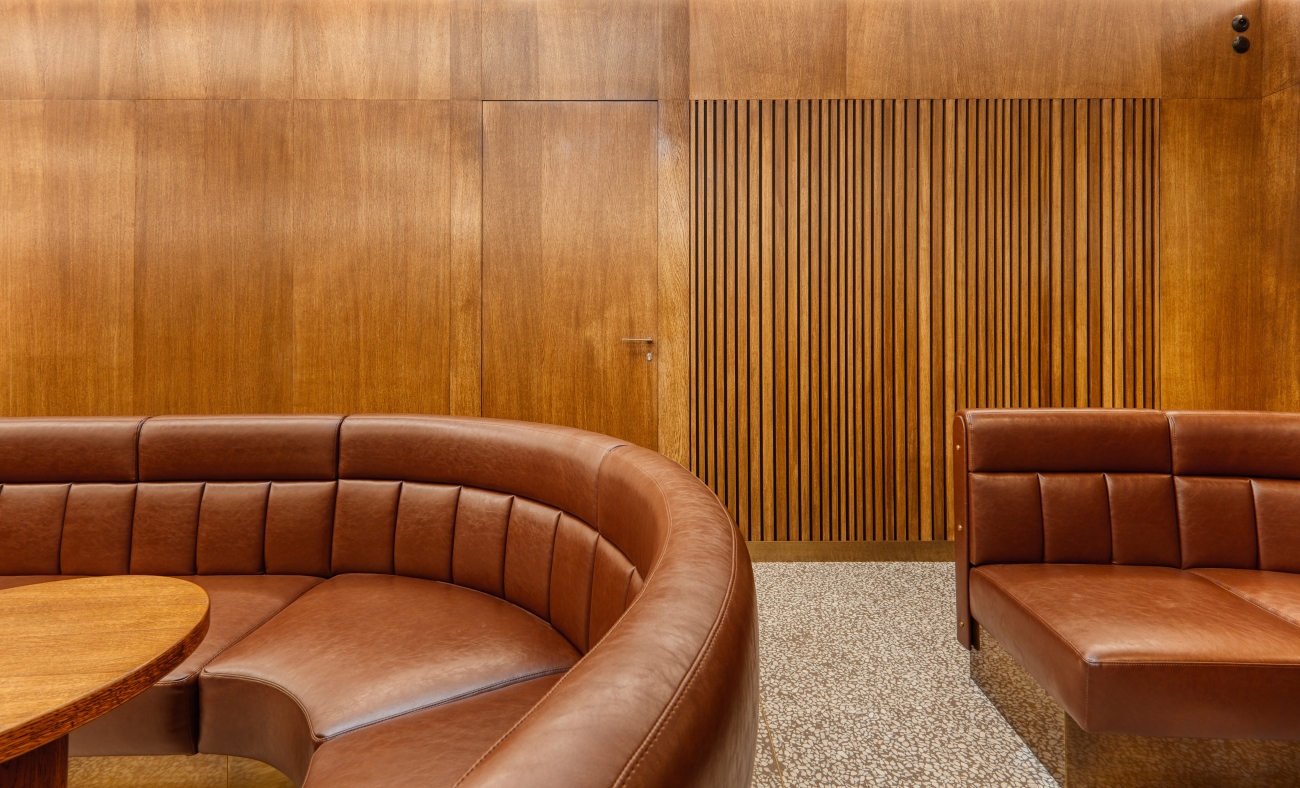
The representative spaces of the Rudolfinum, home of the Czech Philharmonic, have recently undergone significant transformation. The architectural studio of Lenka Míková reconstructed the staff facilities here, including the reception and club areas. In close cooperation with SAPELI, a space was created that meets the requirements of daily operations while respecting the historical legacy of the place.
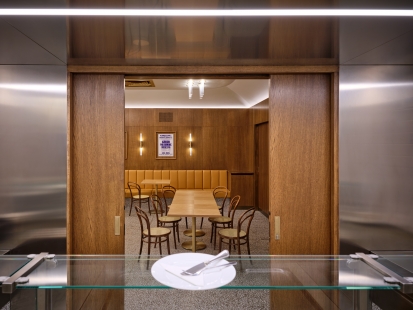
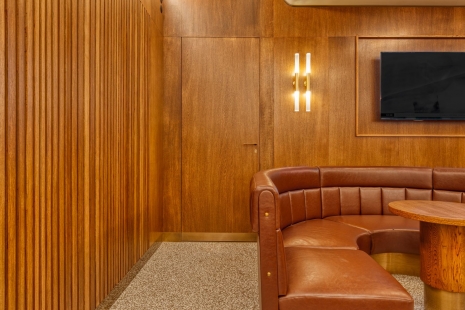
Lenka Míková's design emphasized the connection between operational demands and respect for the protected historic building. "Heritage care had an interest in overseeing interior elements in the national cultural monument and referencing the historical character of the building, even though the space had already been significantly reconstructed in the 1990s under architect Karel Prager. The challenge was primarily the replacement of all doors with sliding ones, which was a fundamental operational requirement from the philharmonic," described Lenka Míková on her social networks, adding: "The doors blend into a unifying wooden cladding that integrates many functions – in addition to a drinking fountain, acoustic infill, or sound system, there are also pockets for sliding wings, allowing for the transformation of space usage." The club thus serves as a café or bar during the day. Both service openings, as well as the niche for trays, can be closed, creating a meeting room from the dining area.
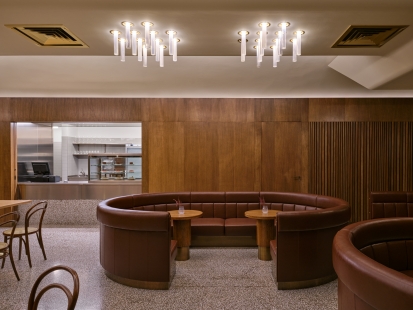

The sliding doors in the club are designed to visually blend with the wooden cladding when closed. SAPELI had to work very precisely with the continuity of the growth rings on the doors and transoms. The result is two double-leaf and one single-leaf atypical sliding doors into a pocket, transitioning into the wooden cladding – with almost no visible joints and transitions. "Each leaf was 1375 mm wide and 2200 mm high. Such large doors are not commonly manufactured, so we glued the leaves from two parts," describes Josef Míšek from the company Apolo, which supplied and installed the SAPELI doors.
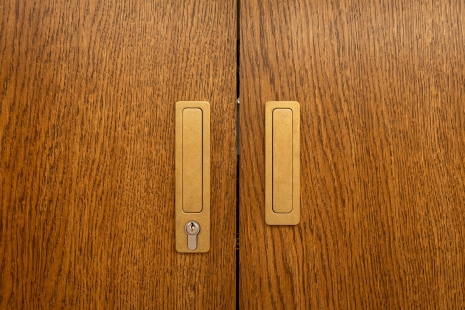
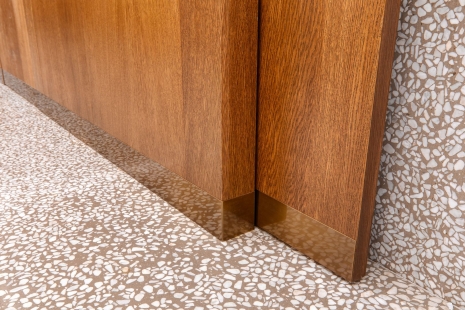
Recessed reverse doors hidden in the cladding were also produced for the club space, opening outward – without a visible rosette and with a handle elegantly milled directly into the leaf. Here too, it was an atypical solution requiring a non-standard construction of the frame casings. The material is dark oak, treated with oil for the club spaces, while it is stained for the reception.
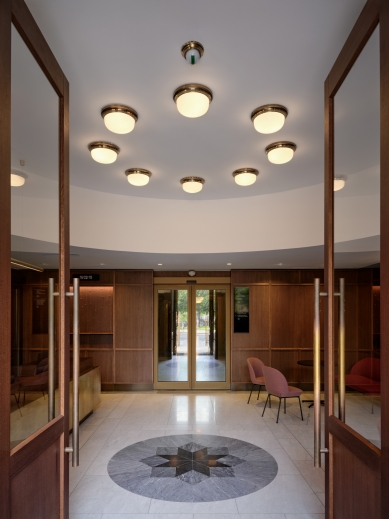
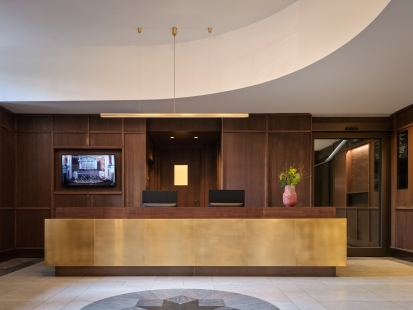
The reception is dominated by impressive double-leaf doors with a height of 3165 mm and four hinges on each door leaf, equipped with automatic drive for emergency evacuation. The lower part of the doors is solid, while the upper part features elegant glazing in an angled wooden frame. The veneer and finish of the doors were successfully matched to the surrounding furniture and cladding, although it was quite a challenge. "We adjusted the color so that the difference between veneers from different sources did not appear disruptive. In the end, we had to stain some parts again, but that is part of the process when striving for perfection," concludes Míšek.
SAPELI, a.s.
photo: BoysPlayNice, Jaroslav Červinka
The English translation is powered by AI tool. Switch to Czech to view the original text source.
0 comments
add comment