
For the anniversary of Kubitschek, a Czech book about the construction of Brasília is being published
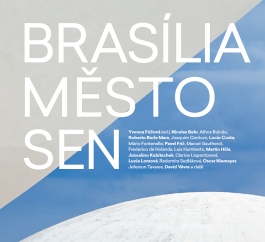 |
"The book is a mosaic of expert and lighter texts, a mix of architectural photographs and documents from the construction and contemporary life of the city, a package of explanations, and drawings by David Vávra," said the book's editor, Yvonna Fričová, to ČTK. The team of authors worked on the preparation of the book for almost five years, which is slightly longer than the construction of Brasília itself.
The idea of relocating the capital, which was Rio de Janeiro until 1960, from the inhabited coastline to the center of unexplored Brazilian hinterland had been mentioned since the 19th century in four constitutions. Brazilians perceived the coast as the center of colonial power. It was only Kubitschek, whom Brazilians elected president in January 1956, who managed to realize this plan. Building the city took three years and several months. Kubitschek, whose great-grandfather arrived in Brazil around 1830 from Třeboň, requested the architectural design from Oscar Niemeyer, with Lúcio Costa developing the urban plan. "It was the end of the world. A rough, hostile landscape. There was nothing there," the book recalls Niemeyer’s feelings during his first inspection of the future site of Brasília in 1956.
About 70,000 workers participated in the construction of the city. Thanks to them, the capital could move to Brasília in April 1960. In the following years, the pace of construction significantly slowed and only rose again during the military dictatorship from 1964 to 1985. Only after that could it be considered completed.
In 1960, the governments of various states tried to impress with their projects in Brasília. At that time, the former Czechoslovakia was the third country, after the USA and Yugoslavia, to complete its embassy in the new city and relocate its officials from Rio to the new residence. Architect Karel Filsak and his team first worked with a style called brutalism here, which features exposed concrete. From 2008 to 2010, the worn-out complex underwent reconstruction. Besides a number of Czechoslovak embassy residences, Filsak also created the Intercontinental hotel in Prague and the Barrandov Bridge.
The publication describes the circumstances of the city's creation, the adventures of its construction, introduces readers to the creators and inhabitants, presents the views of critics and admirers, and maps Czech-Brazilian connections.
Brasília has been a UNESCO heritage site for 30 years as a significant place, whose architecture reflects the history of the 20th century. Niemeyer was awarded the Pritzker Prize in 1988, which is equivalent to the Nobel Prize in architecture.
The English translation is powered by AI tool. Switch to Czech to view the original text source.

0 comments
add comment