
Expo 2025 - a look back at the World Expo in Osaka, Japan
Expo, or the World Fair, is a large international exhibition of industry and culture from individual countries, held approximately every five years since the mid-19th century. Initially, Expo primarily had a scientific and technical character, showcasing new discoveries and inventions from the period of industrialization. By the mid-20th century, its character shifted more towards cultural exchange, and since the 1980s, it has focused particularly on the presentation of the individual countries participating in the exhibition.
Since the first Expo in 1851, held under the auspices of the International Exhibitions Bureau (BIE - Bureau International des Expositions, founded in 1928), more than thirty World Expositions have taken place in various countries and continents.
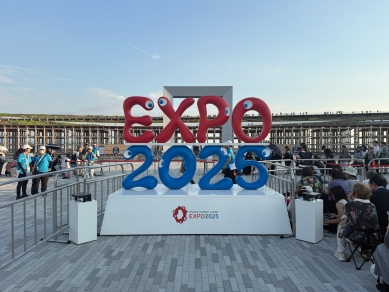
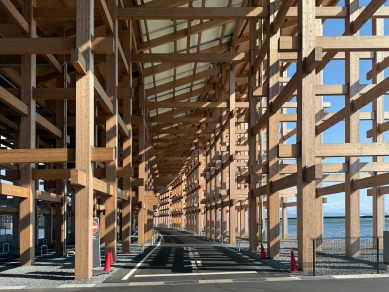
The most recent Expo 2025 was held in Osaka, Japan, marking the third time the city has hosted the exhibition. The event took place on the artificially created Yumeshima Island and focused on how robotics and artificial intelligence can be used for the public good. The iconic structure of this year's event was the so-called Grand Ring - a wooden walkway and sun shelter encircling the entire island. The design was created by architect Sou Fujimoto. The structure was also recorded in the Guinness World Records as the largest wooden architectural construction in the world, covering an area of over 61,000 m².
The Czech Republic at Expo
The Czech Republic has been regularly participating in World Expositions since its establishment in 1993. Even as Czechoslovakia, it had a long-established tradition of participation dating back to the early 20th century. Our exhibitions were often considered original, technically advanced, and artistically refined - for example, in 1958 in Brussels, we won the main prize for architecture, and the pavilion became a symbol of modern architecture and design.
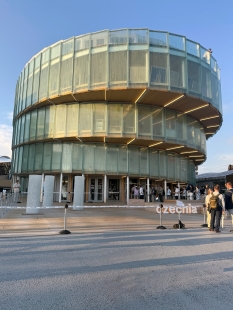
At this year's Expo 2025 with the theme Designing Future Society for Our Lives, we presented a pavilion located in the Empowering Lives zone, designed by the studio Apropos Architects. The building was among the largest wooden structures in Japan and was inspired by Czech glassmaking and traditional crafts, merging them with modern technologies, innovations, and contemporary art.
The elegant spiral structure made of wood and glass became the first CLT wooden construction without a metal supporting structure throughout all of Japan. The winning design was selected from 38 competing projects.
“The theme of our pavilion is 'sculpting vitality.' The façade is designed from sheet sintered glass, and using glass was a clear choice for us from the beginning. The craftsmanship of glass in the Czech territory has an immense tradition, and its use fits logically into both the theme of the World Expo and our chosen theme of vitality. As a society, we will live longer in full strength. To enhance our inner vitality, we need to be aware of social and cultural values, continually recalling and strengthening them. Thus, the pavilion made of wood and glass, crafted and creatively conceived, filled with Czech artistry and creativity - shaped like a dynamic spiral representing the most ideal path,” explains the concept of the winning design architect Nikoleta Slováková from Apropos Architects.
Inside the pavilion, there was an exhibition inspired by Alfons Mucha, contemporary art, master glassmaking, complemented by live performances.
The pavilion attracted a large number of visitors - over 1.5 million people visited it during six months. However, in the eyes of the Czech public, the exhibition was somewhat controversial. Due to its focus on modern glass and art, which omitted some traditional elements considered “typically Czech,” it was perceived by parts of the audience as less representative. Conversely, foreign visitors, especially from Japan, appreciated its originality, the connection of architecture with art, and the opportunity to taste traditional Czech cuisine offered in two restaurants directly in the pavilion.
In addition to the pavilion itself, the mascot René and uniforms designed by Jan Černý are worth mentioning. René was designed in two versions - the first glass version was created as a tribute to the significant Czech glassmaker and artist René Roubíček, symbolically “returning” to Osaka after 55 years. The second version was adapted for Japanese marketing, where mascots are very popular. It had a bright green color referencing uranium glass, which was also exhibited in the pavilion. The uniforms of the Czech team were designed by fashion designer Jan Černý - they featured a striking, modern design and were also available to the public, making it clear at first glance who was part of the Czech team.
Personal Experience
I visited Expo 2025 on August 14. It was the main reason I wanted to go to Japan, and I am grateful to my parents for taking me there. We had tickets for one day, although acquiring them wasn't straightforward - the official site wouldn't accept any of our cards, so we had to buy them through an unofficial server. Fortunately, everything went well. Getting to Yumeshima Island was easy - on one side, it was accessible by car, and on the other, public transportation arrived. Tickets were purchased according to the entrance to disperse the crowd, yet the attendance was enormous. Before we got through the entrance control, we spent nearly an hour in the blazing Japanese sun.
Inside, we first looked for drinks - I was pleasantly surprised that there were stations with free water available, and they even built a local 7/11 store. Just like throughout Japan, there were vending machines on every corner, but there were long lines at all of them.
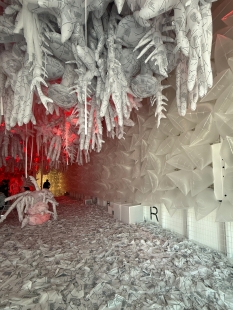
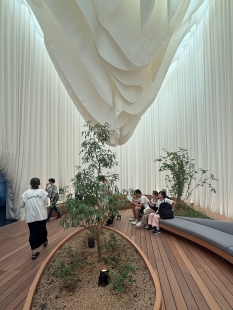
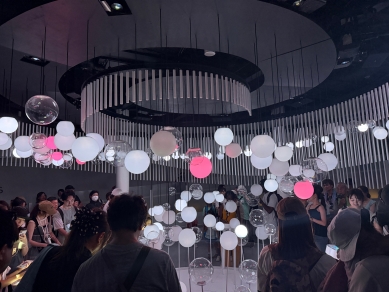
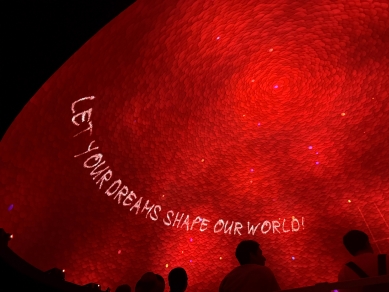
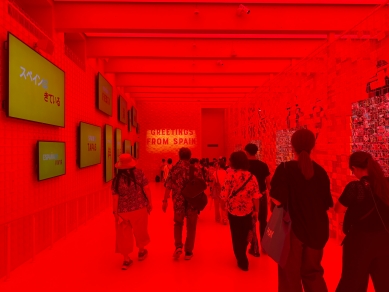
From arrival to departure, we were in constant stress from the number of people. Despite the beautiful pavilions, it was very difficult to get inside them. Reservations for tours had been booked out for over two months, so we tried the so-called roulette - hoping that a time slot would randomly open up. Nothing worked out. In the end, we managed to visit only three pavilions, as each had a queue of at least an hour, which was impossible if we wanted to see the entire area.
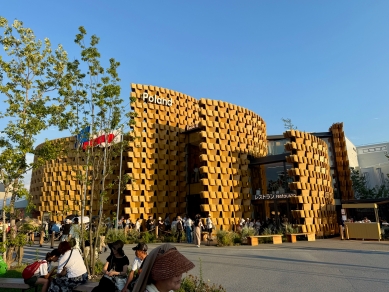
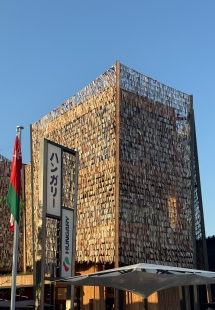
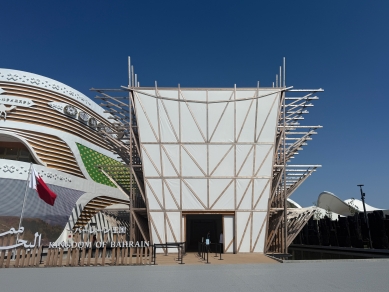
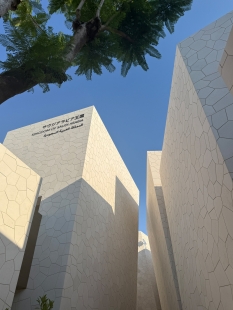
Even exterior tours were not easy - crowds often obstructed the view of the buildings themselves. Nevertheless, it was possible to draw a lot of inspiration and admire how each country approached its presentation uniquely.
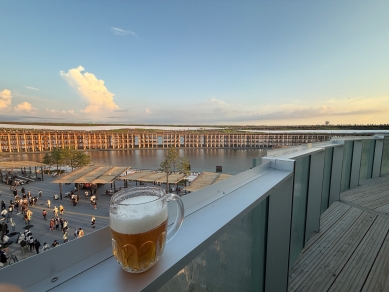
In this regard, the Czech pavilion provided us with a truly exceptional experience. When the Czech delegation noticed that we were speaking Czech, they took us inside without waiting and gave us a personal tour. Walking through the spiral and admiring the art directly on the walls was a beautiful experience. We learned how the glass pieces were made and that the whole building was exported from the Czech Republic, which was no small feat. On the top floor, which opened onto a terrace, there was a beautiful view of the entire Expo. There was also a restaurant with a Czech chef, where we tasted Japanese-adapted Czech specialties - such as kulajda and perhaps the most expensive Pilsner of our lives. Observing Japanese people with a pint of beer was an experience in itself.
Another fantastic structure was the Grand Ring. It was accessible by several escalators, stairs, and elevators and could be walked around entirely. However, it wasn't just an empty space - it was complemented by greenery and resting spots, giving it the feel of an artificial recreational hill.
Conclusion
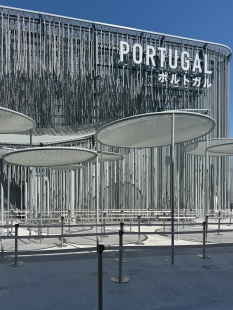
Being at Expo was a once-in-a-lifetime experience. However, if I were not also attracted to Japan itself, I probably would not have sought out a visit to the Expo. It is much easier to view the individual pavilions online on official websites, where even building details that get lost in the crowd can be seen. The internal exhibitions of other countries, such as Portugal, where we were, were not nearly interesting enough to justify an hour's wait in the sun.
In conclusion, I can say that I remember this trip with immense joy. If I have the opportunity to visit another Expo in the future, I would certainly seize it again with enthusiasm.
Since the first Expo in 1851, held under the auspices of the International Exhibitions Bureau (BIE - Bureau International des Expositions, founded in 1928), more than thirty World Expositions have taken place in various countries and continents.
The most recent Expo 2025 was held in Osaka, Japan, marking the third time the city has hosted the exhibition. The event took place on the artificially created Yumeshima Island and focused on how robotics and artificial intelligence can be used for the public good. The iconic structure of this year's event was the so-called Grand Ring - a wooden walkway and sun shelter encircling the entire island. The design was created by architect Sou Fujimoto. The structure was also recorded in the Guinness World Records as the largest wooden architectural construction in the world, covering an area of over 61,000 m².
The Czech Republic at Expo
The Czech Republic has been regularly participating in World Expositions since its establishment in 1993. Even as Czechoslovakia, it had a long-established tradition of participation dating back to the early 20th century. Our exhibitions were often considered original, technically advanced, and artistically refined - for example, in 1958 in Brussels, we won the main prize for architecture, and the pavilion became a symbol of modern architecture and design.
At this year's Expo 2025 with the theme Designing Future Society for Our Lives, we presented a pavilion located in the Empowering Lives zone, designed by the studio Apropos Architects. The building was among the largest wooden structures in Japan and was inspired by Czech glassmaking and traditional crafts, merging them with modern technologies, innovations, and contemporary art.
The elegant spiral structure made of wood and glass became the first CLT wooden construction without a metal supporting structure throughout all of Japan. The winning design was selected from 38 competing projects.
“The theme of our pavilion is 'sculpting vitality.' The façade is designed from sheet sintered glass, and using glass was a clear choice for us from the beginning. The craftsmanship of glass in the Czech territory has an immense tradition, and its use fits logically into both the theme of the World Expo and our chosen theme of vitality. As a society, we will live longer in full strength. To enhance our inner vitality, we need to be aware of social and cultural values, continually recalling and strengthening them. Thus, the pavilion made of wood and glass, crafted and creatively conceived, filled with Czech artistry and creativity - shaped like a dynamic spiral representing the most ideal path,” explains the concept of the winning design architect Nikoleta Slováková from Apropos Architects.
Inside the pavilion, there was an exhibition inspired by Alfons Mucha, contemporary art, master glassmaking, complemented by live performances.
The pavilion attracted a large number of visitors - over 1.5 million people visited it during six months. However, in the eyes of the Czech public, the exhibition was somewhat controversial. Due to its focus on modern glass and art, which omitted some traditional elements considered “typically Czech,” it was perceived by parts of the audience as less representative. Conversely, foreign visitors, especially from Japan, appreciated its originality, the connection of architecture with art, and the opportunity to taste traditional Czech cuisine offered in two restaurants directly in the pavilion.
In addition to the pavilion itself, the mascot René and uniforms designed by Jan Černý are worth mentioning. René was designed in two versions - the first glass version was created as a tribute to the significant Czech glassmaker and artist René Roubíček, symbolically “returning” to Osaka after 55 years. The second version was adapted for Japanese marketing, where mascots are very popular. It had a bright green color referencing uranium glass, which was also exhibited in the pavilion. The uniforms of the Czech team were designed by fashion designer Jan Černý - they featured a striking, modern design and were also available to the public, making it clear at first glance who was part of the Czech team.
Personal Experience
I visited Expo 2025 on August 14. It was the main reason I wanted to go to Japan, and I am grateful to my parents for taking me there. We had tickets for one day, although acquiring them wasn't straightforward - the official site wouldn't accept any of our cards, so we had to buy them through an unofficial server. Fortunately, everything went well. Getting to Yumeshima Island was easy - on one side, it was accessible by car, and on the other, public transportation arrived. Tickets were purchased according to the entrance to disperse the crowd, yet the attendance was enormous. Before we got through the entrance control, we spent nearly an hour in the blazing Japanese sun.
Inside, we first looked for drinks - I was pleasantly surprised that there were stations with free water available, and they even built a local 7/11 store. Just like throughout Japan, there were vending machines on every corner, but there were long lines at all of them.
From arrival to departure, we were in constant stress from the number of people. Despite the beautiful pavilions, it was very difficult to get inside them. Reservations for tours had been booked out for over two months, so we tried the so-called roulette - hoping that a time slot would randomly open up. Nothing worked out. In the end, we managed to visit only three pavilions, as each had a queue of at least an hour, which was impossible if we wanted to see the entire area.
Even exterior tours were not easy - crowds often obstructed the view of the buildings themselves. Nevertheless, it was possible to draw a lot of inspiration and admire how each country approached its presentation uniquely.
In this regard, the Czech pavilion provided us with a truly exceptional experience. When the Czech delegation noticed that we were speaking Czech, they took us inside without waiting and gave us a personal tour. Walking through the spiral and admiring the art directly on the walls was a beautiful experience. We learned how the glass pieces were made and that the whole building was exported from the Czech Republic, which was no small feat. On the top floor, which opened onto a terrace, there was a beautiful view of the entire Expo. There was also a restaurant with a Czech chef, where we tasted Japanese-adapted Czech specialties - such as kulajda and perhaps the most expensive Pilsner of our lives. Observing Japanese people with a pint of beer was an experience in itself.
Another fantastic structure was the Grand Ring. It was accessible by several escalators, stairs, and elevators and could be walked around entirely. However, it wasn't just an empty space - it was complemented by greenery and resting spots, giving it the feel of an artificial recreational hill.
Conclusion
Being at Expo was a once-in-a-lifetime experience. However, if I were not also attracted to Japan itself, I probably would not have sought out a visit to the Expo. It is much easier to view the individual pavilions online on official websites, where even building details that get lost in the crowd can be seen. The internal exhibitions of other countries, such as Portugal, where we were, were not nearly interesting enough to justify an hour's wait in the sun.
In conclusion, I can say that I remember this trip with immense joy. If I have the opportunity to visit another Expo in the future, I would certainly seize it again with enthusiasm.
Saša Šimečková
The English translation is powered by AI tool. Switch to Czech to view the original text source.
0 comments
add comment