
The temple complex in Angkor was discovered 150 years ago
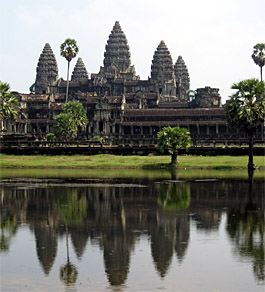 |
"It is more magnificent than anything left to us by the ancient Greeks and Romans," recorded the captivated botanist Mouhot in his diary when he stood in January 1860 in the courtyard of the most famous Angkor temple, Angkor Wat (angkor - royal dwelling, wat - temple). He spent three weeks among the ruins of several hundred structures, in the jungle approximately 230 kilometers north of Phnom Penh. He made floor plans and drawings of the buildings to then present them in a coherent form to Europe.
The first credible reports of the exotic beauty of Angkor attracted a number of explorers to the inhospitable regions of French Indochina, eager to thoroughly explore and describe the unique Khmer monument. The most famous among them became architect Henri Marchal from the scientific institute, the French School of the Far East (EFEO), which has been tasked with rescue work in Angkor since 1907. However, the site also caught the attention of various looters and art dealers. The beauty of the carved sculptures reportedly drew the famous French writer André Malraux, who visited in 1923. However, the theft was discovered and the writer had to return the figurines in disgrace.
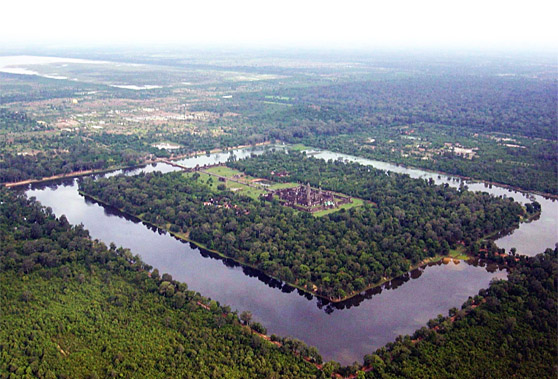
In its time, Angkor was one of the largest urban agglomerations in the world - approximately one million people were said to inhabit about 300 square kilometers. The city, with its ingenious irrigation system dedicated to the glory of the Hindu god Vishnu, was founded by Jayavarman II after he finally defeated the hostile Javanese troops at the end of the eighth century and unified the country. The new administrative center of the Cambodian Empire maintained its privileged status until 1432, when it was relocated deeper inland due to Thai attacks.
The famous site has been struggling in recent years with a huge increase in tourists. While in 1993, the main Cambodian attraction, which is incidentally depicted on the national flag, was visited by about 7,650 people, four years ago it was already one million, and the numbers continue to rise. Such an influx could permanently damage the preserved structures. And it's not just about the mechanical degradation of the sandstone, of which most local sacred buildings are made. One of the problems remains, for example, excessive water consumption, due to which the architectural treasures are sinking into the sandy substrate.
Professional teams from around the world, including Czechs, are trying to save the valuable Hindu-Buddhist monument, which has been on the UNESCO World Cultural Heritage list since 1992. Between 2006 and 2007, they trained local workers in restoration and conservation techniques and conducted important petrographic surveys as part of the Gopura development aid project.
 |
The English translation is powered by AI tool. Switch to Czech to view the original text source.
0 comments
add comment