
Neutrality of Austrian Post-War Architecture at AzW
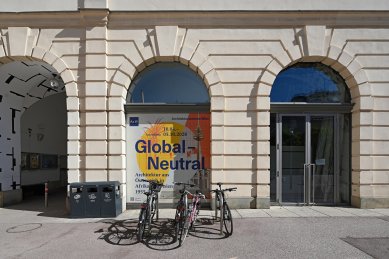
Exhibition at Architekturzentrum Wien, 16.4. - 5.10.2026
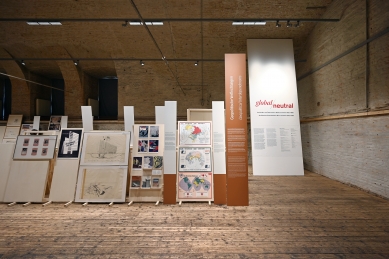
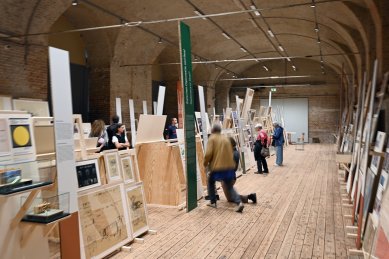
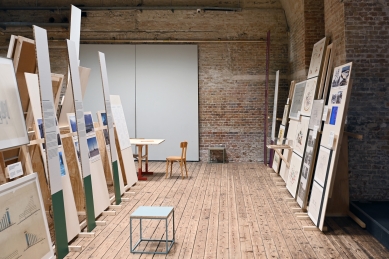
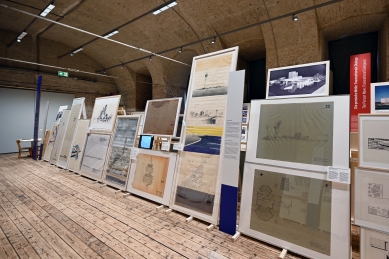
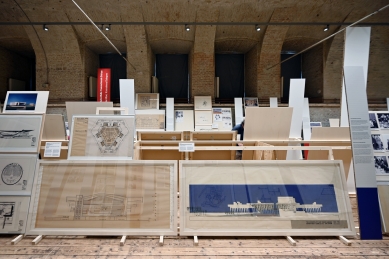
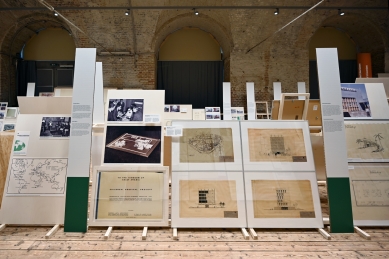
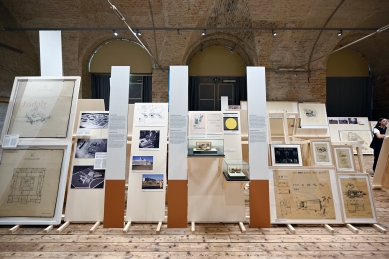
In the Vienna AzW, an exhibition “Global – Neutral” is taking place, focusing on the post-war export of Austrian architectural know-how to countries in the global South. Curators Monika Platzer and Susanne Rick sifted through the extensive AzW archive and selected works by twenty-five Austrian architects for Africa, the Persian Gulf countries, as well as for the Middle and Far East. The period between 1955 and 1989 was chosen deliberately. The first milestone, which occurred two years after Stalin's death, marks the event when Austria was left by the Allied troops of the victorious powers France, England, the USA, and the Soviet Union after ten years of occupation. The second date signifies the collapse of the Eastern Bloc and the dismantling of the Iron Curtain. In order for Austrian sovereignty to be restored after World War II, the country had to contractually commit (Staatsvertrag) to maintain neutrality, following the example of its Swiss neighbor. Nevertheless, Vienna has never entirely shaken off its reputation as the capital of spies from both poles of the Cold War between East and West. Austria, which has been a member of the EU since 1995 and has used the common currency Euro since 2002, still maintains military neutrality and is not a member of NATO. In 1979, the city of Vienna was chosen by the United Nations (UN) as one of its four main international centers, and since 1965, the cartel of oil-exporting countries (OPEC) has also established itself in the Danube metropolis.
Since the Austro-Hungarian monarchy did not possess any overseas colonies before World War I (not that it didn’t strive for them), the Second Austrian Republic in the second half of the 20th century could more easily establish contacts with newly founded states that finally gained their independence after a long period of colonialism. Austria skillfully utilized its declared neutrality to enable its architects to provide knowledge in African and Asian countries during the continually prevailing Cold War. At the same time, political, economic, but also cultural relations were strengthened. Architecture became part of development programs and simultaneously represented a materialized symbol of diplomatic rapprochement. Post-colonial countries generally became important places for the realization of bold urban visions.
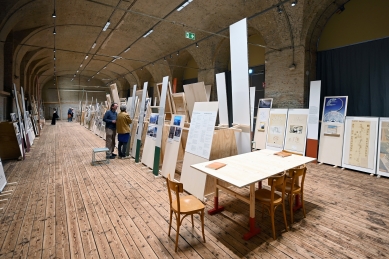
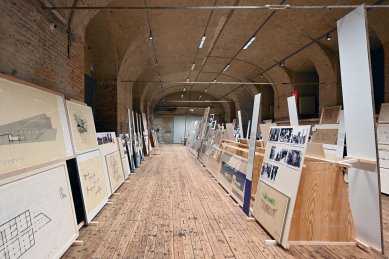
The exhibition features projects for Africa (Egypt, Ethiopia, Kenya, Congo, Tanzania,...) as well as for Asia (Iran, Iraq, India, Indonesia, Nepal, Saudi Arabia, South Korea, Thailand). It includes works by Raimund Abraham, Hans Hollein, Roland Rainer, Josef Lackner, Ottokar Uhl, Anton Schweighofer, and the Styrian association Werkgruppe Graz. Although these are works from half a century ago, some of their authors are still among us. The festive opening in mid-April was also attended by the ninety-year-old Carl Pruscha.
Guided tours take place every second Tuesday evening, and a discussion with the curators will again take place at the beginning of August. Every Wednesday late in the afternoon, admission is free for students. Otherwise, you can independently view the exhibition focused on the export of Austrian architecture until early October.
More information >
Since the Austro-Hungarian monarchy did not possess any overseas colonies before World War I (not that it didn’t strive for them), the Second Austrian Republic in the second half of the 20th century could more easily establish contacts with newly founded states that finally gained their independence after a long period of colonialism. Austria skillfully utilized its declared neutrality to enable its architects to provide knowledge in African and Asian countries during the continually prevailing Cold War. At the same time, political, economic, but also cultural relations were strengthened. Architecture became part of development programs and simultaneously represented a materialized symbol of diplomatic rapprochement. Post-colonial countries generally became important places for the realization of bold urban visions.
The exhibition features projects for Africa (Egypt, Ethiopia, Kenya, Congo, Tanzania,...) as well as for Asia (Iran, Iraq, India, Indonesia, Nepal, Saudi Arabia, South Korea, Thailand). It includes works by Raimund Abraham, Hans Hollein, Roland Rainer, Josef Lackner, Ottokar Uhl, Anton Schweighofer, and the Styrian association Werkgruppe Graz. Although these are works from half a century ago, some of their authors are still among us. The festive opening in mid-April was also attended by the ninety-year-old Carl Pruscha.
Guided tours take place every second Tuesday evening, and a discussion with the curators will again take place at the beginning of August. Every Wednesday late in the afternoon, admission is free for students. Otherwise, you can independently view the exhibition focused on the export of Austrian architecture until early October.
More information >
The English translation is powered by AI tool. Switch to Czech to view the original text source.
0 comments
add comment
Related articles
0
17.11.2025 | To the exhibition Anupama Kundoo at AzW
0
07.12.2023 | Hot Questions - Cold Storage - permanent exhibition at AzW
0
23.08.2021 | To the exhibition of Tatiana Bilbao at AzW
0
29.06.2020 | Balkrishna Doshi: Architecture for the People
0
20.02.2020 | Intergenerational dialogue of Vorarlberg architects - exhibition at AzW
0
31.03.2014 | Think Global, Build Social! v AzW
0
03.03.2013 | The Vienna Center for Architecture celebrates 20 years