
In the competition for the healthcare center in Zašová, AOSI won
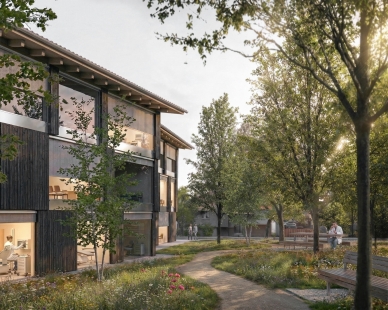
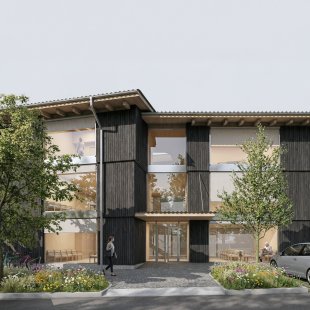
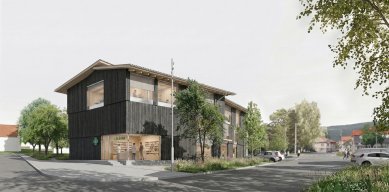
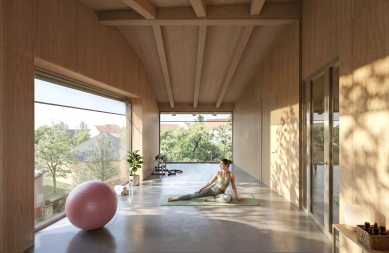
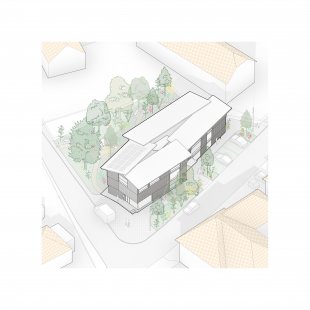
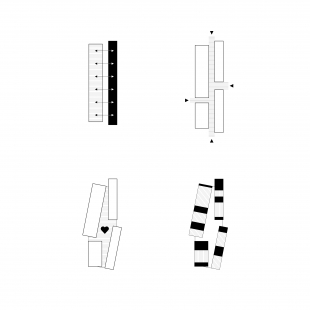
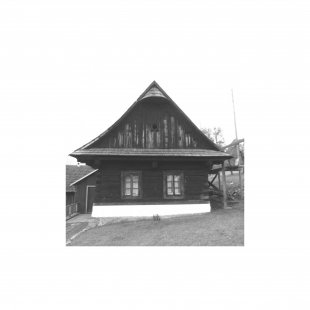
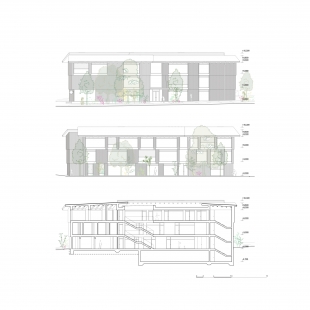
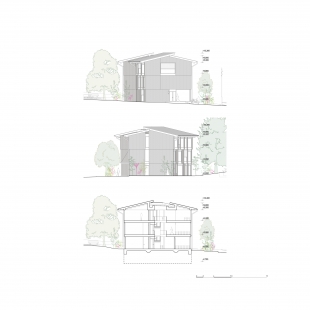
The design of the health center is based on the character of the village and the historical layers of the site, where a Wallachian wooden cottage once stood. The building is therefore conceived as a contemporary interpretation of a traditional wooden structure. A simple linear mass made of wooden blocks with a charred façade naturally complements the structure of the village square. The building respects the scale of the surroundings through its segmentation, while simultaneously creating a calm and clear environment for patients and healthcare staff. The offices are oriented towards the green park that connects, while the waiting rooms face the street. The design thus combines the rational operation of the healthcare facility with a pleasant environment and a contemporary architectural expression that references regional building tradition.
URBAN PLANNING SOLUTION
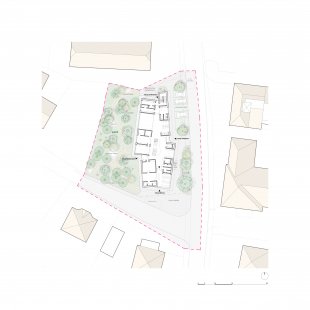
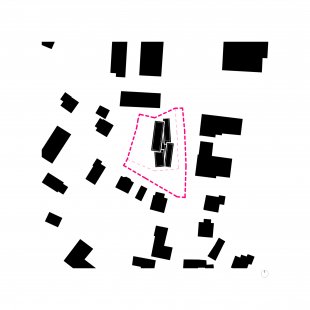
The design responds to the character of the center of the village, where the municipal office, fire station, and cultural center are in immediate proximity. The aim of the design is to complement this structure with a new public health center that will be a natural part of the village square and simultaneously offer a quality environment for the provision of healthcare services. The existing family house no longer meets the spatial or operational requirements of the task. Therefore, we propose its removal and replacement with a new building that adheres to the maximum built-up area limit of 375 m² set by the zoning plan. The remaining part of the land, protected by the mass of the building, is designed as a quiet semi-public park. This serves as a place for patients to rest, short breaks for employees, or as a shortcut for pedestrians in the broader area. Existing mature trees are preserved as much as possible and supplemented with new plantings that create a compact park space. The park features benches and a park table. The paths in the park are designed with a granular surface, sidewalks are made of granite paving, and parking spaces use permeable paving to allow water infiltration.ARCHITECTURAL SOLUTION
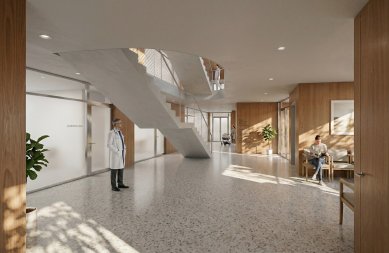
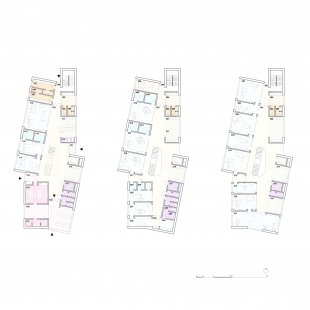
The architectural solution is based on the principle of a simple linear operation composed of several volumes. This principle allows for clear orientation within the building, distinct separation of operations, and at the same time creates a scale corresponding to the character of the village. The building program is divided into two above-ground floors and an attic with a clear operational logic. All floors are barrier-free accessible via an elevator and a central staircase, supplemented by an emergency staircase primarily for staff use. The ground floor contains the office of the general practitioner and pediatrics, which are operations with the highest patient frequency. The ground floor also includes a pharmacy with its own facilities, located at the corner of the building with direct access from both the exterior and the interior of the building. On the opposite side of the building, there is a separate entrance for employees with two changing rooms and sanitary facilities.CONSTRUCTION AND MATERIAL SOLUTION
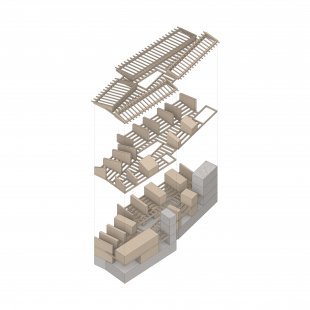
The building is designed as a timber structure using massive CLT panels supplemented by a ceiling structure made of load-bearing BSH beams, on which a CLT ceiling panel is placed. From the perspective of fire safety, the communication cores, elevator shaft, and emergency staircase are designed as reinforced concrete, just like the underground level, which contains the technical facilities of the building. The concrete part thus serves as a base for the above-ground wooden structure. The façade is designed from charred wood using the Shou Sugi Ban technology, which increases the material's durability and highlights its natural texture. The window fillings are proposed to be aluminum, supplemented by external textile roller blinds that provide protection against overheating the interior and allow light regulation in the offices. To ensure patient privacy, the walls between offices and corridors are designed with glass parts made of frosted glass. This solution allows diffuse light to enter the communication spaces without compromising the intimacy of the healthcare operations. The roof is proposed to be made of corrugated metal with the positioning of photovoltaic panels on its southwest section.ENERGY CONCEPT
The building utilizes alternative energy sources. The main heat source consists of a heat pump, supplemented by photovoltaic panels with energy storage to balance consumption. The low-temperature source will correspond to underfloor heating, which can also be used for cooling in the summer months. Ventilation employs recovery units. Thanks to the orientation of the openings, it creates the possibility for natural cross-ventilation. Stormwater on outdoor surfaces is infiltrated on-site where it falls. Rainwater collected from the roofs is stored in a rainwater tank and further used for irrigating vegetative areas and elements. Greywater from the building's operations is used for flushing toilets. The building will be connected to existing engineering networks in the vicinity.Architects: AOSI
Author: Ivo Stejskal
Investor: Municipality of Zašová
Year: 2026
Location: Zašová
Status: public architectural-urbanistic competition
The English translation is powered by AI tool. Switch to Czech to view the original text source.
0 comments
add comment