
Design Museum in London
The Design Museum

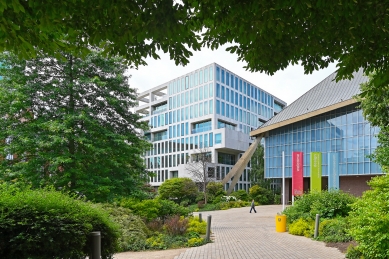
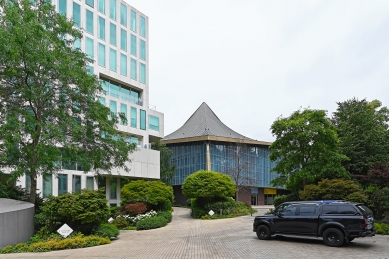
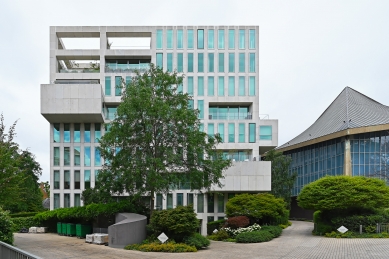
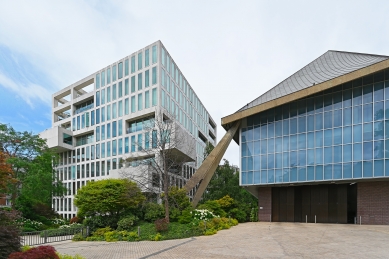
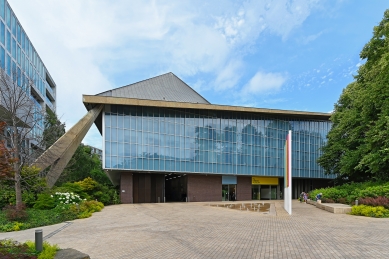
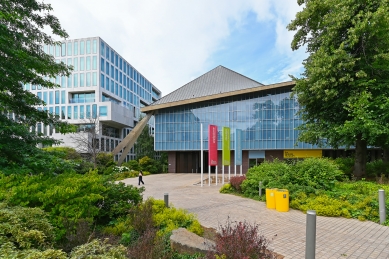
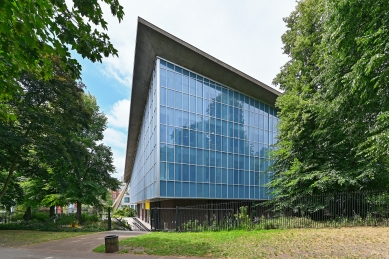
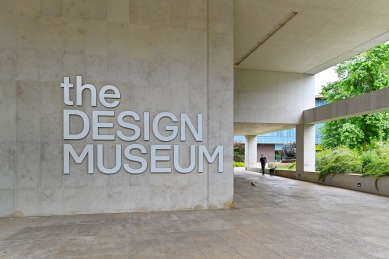
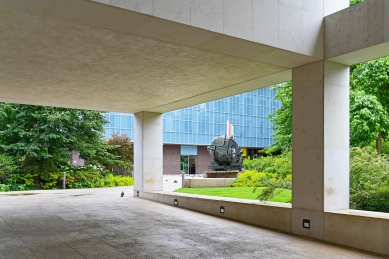
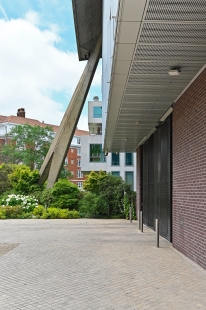
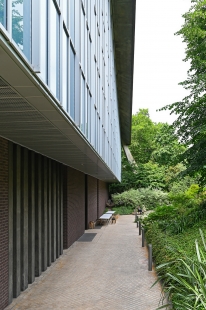
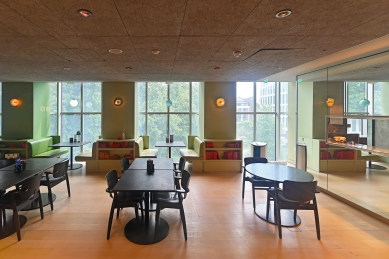
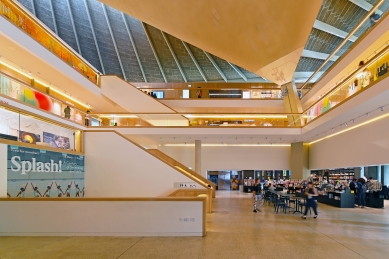
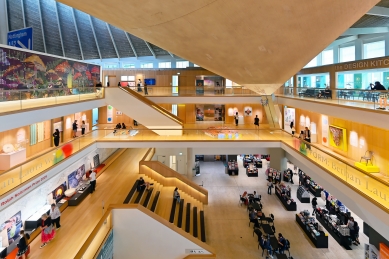
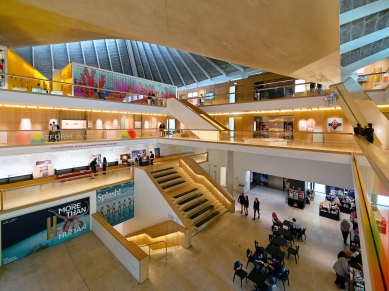
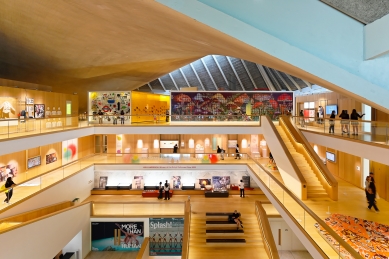
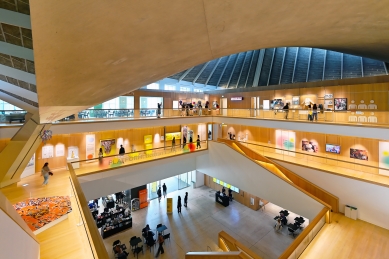
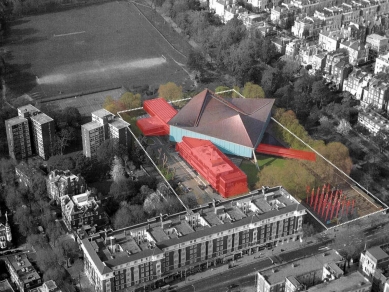
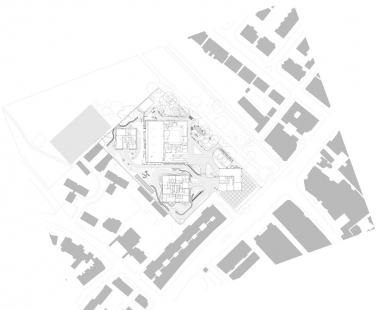
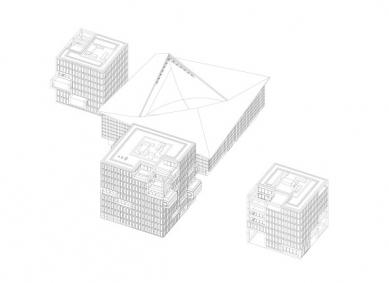
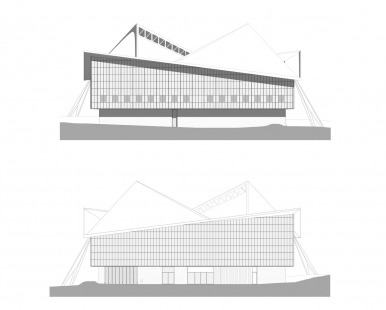
Since the end of November 2016, the London Design Museum has been located in a listed building of the former Commonwealth Institute from the 1960s, which has been redesigned according to a competition proposal by the Dutch studio OMA. The main building with a parabolic roof was preserved from the original brutalist complex, the administrative wing was demolished, and instead, a trio of residential buildings was added. The project was developed in collaboration with the London studio Allies & Morrison, the structural solution was managed by Arup Group, the minimalist interior was created by John Pawson, and the exterior enhancements were designed by the landscape studio West 8.
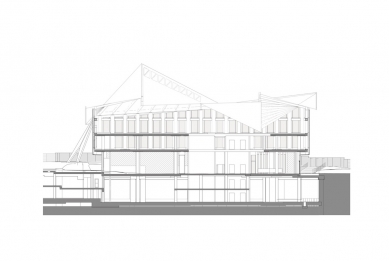
The successful completion of the project after eight years is largely due to former museum director Deyan Sudjić and Sir Terence Conran, who founded the museum in 1989. The Design Museum was originally housed in a modernist warehouse on the right bank of the River Thames near Tower Bridge. The entire site of the former Commonwealth Institute was excavated so that not only service spaces could be located in the basement, but also, for example, a multipurpose hall (Bakala Auditorium), and the external appearance of the brutalist monument was not disrupted by modern extensions. The building received new double glazing that meets current standards while retaining its original appearance.
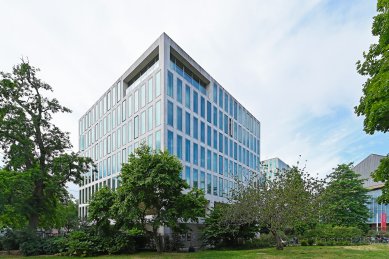
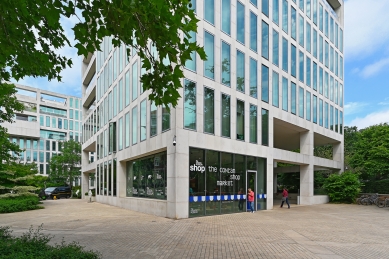
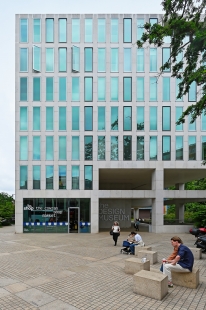
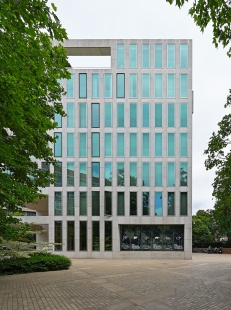
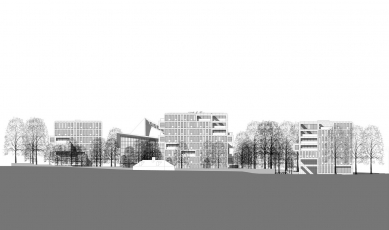
Part of the reconstruction of the Commonwealth Institute was also the adjacent development project of three residential buildings, Holland Green, which, with their regular façade grid, respond to the museum building and offer a total of 54 apartments at a prestigious address near Holland Park.
“The owners wanted to revive the abandoned site. It can be said that when they found it, the place was already dead and also listed as a heritage site - these two things often go hand in hand. We had to take action because it is clear that this is a very beautiful building. The land on which the building stood was also on the heritage list because a garden had been planned for it, but it was never realized. Essentially, it was a parking lot for a very small number of cars.”
“We chose an approach where we simply had to say that some elements are more heritage-protected than others. We decided to remove the service wing and keep the main building for hosting events because it is clearly the central element - with its beautiful parabolic roof, which is a symbol of its time - and we decided to create a valuable landscape on the site of the demolished building, which served as a parking lot. This gave us space to build three new residential buildings that frame the museum.”
“We started working on the project shortly after winning the invited competition. At that time, there was still no specific user. Once we clarified the future use and specific requirements of the Design Museum, the plans changed significantly. The 1961 building was not structurally suitable for the needs of a modern museum - the floors did not have the required load-bearing capacity. So, what started as a renovation kept acquiring more radical dimensions. In the end, we kept only the roof, and we largely rebuilt the building beneath it to resemble the original.”
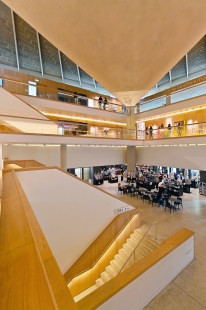
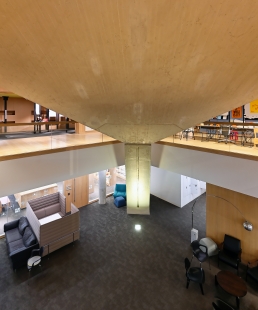
“It was great to have the opportunity to design the interior for this building. A large part of the project was already given, as Reinier de Graaf had already created a design with a large central opening. It was interesting because English Heritage was obviously very aware of the building. Thanks to them, we learned what they wanted to keep and what materials they wanted to reuse, such as marble or stained glass windows. The main thing they were interested in was the atrium opening and the narrowing floors upwards, which provides visitors with a view of the unique roof above them.”
“Because some parameters were firmly established (such as the preservation of the atrium and the view of the roof), the remaining museum spaces were derived from them. It is amazing that we managed to save the building while operating it as a center for global design. I have always argued that good houses do not need to be demolished because of architecture.”
The successful completion of the project after eight years is largely due to former museum director Deyan Sudjić and Sir Terence Conran, who founded the museum in 1989. The Design Museum was originally housed in a modernist warehouse on the right bank of the River Thames near Tower Bridge. The entire site of the former Commonwealth Institute was excavated so that not only service spaces could be located in the basement, but also, for example, a multipurpose hall (Bakala Auditorium), and the external appearance of the brutalist monument was not disrupted by modern extensions. The building received new double glazing that meets current standards while retaining its original appearance.
Part of the reconstruction of the Commonwealth Institute was also the adjacent development project of three residential buildings, Holland Green, which, with their regular façade grid, respond to the museum building and offer a total of 54 apartments at a prestigious address near Holland Park.
“The owners wanted to revive the abandoned site. It can be said that when they found it, the place was already dead and also listed as a heritage site - these two things often go hand in hand. We had to take action because it is clear that this is a very beautiful building. The land on which the building stood was also on the heritage list because a garden had been planned for it, but it was never realized. Essentially, it was a parking lot for a very small number of cars.”
“We chose an approach where we simply had to say that some elements are more heritage-protected than others. We decided to remove the service wing and keep the main building for hosting events because it is clearly the central element - with its beautiful parabolic roof, which is a symbol of its time - and we decided to create a valuable landscape on the site of the demolished building, which served as a parking lot. This gave us space to build three new residential buildings that frame the museum.”
“We started working on the project shortly after winning the invited competition. At that time, there was still no specific user. Once we clarified the future use and specific requirements of the Design Museum, the plans changed significantly. The 1961 building was not structurally suitable for the needs of a modern museum - the floors did not have the required load-bearing capacity. So, what started as a renovation kept acquiring more radical dimensions. In the end, we kept only the roof, and we largely rebuilt the building beneath it to resemble the original.”
“It was great to have the opportunity to design the interior for this building. A large part of the project was already given, as Reinier de Graaf had already created a design with a large central opening. It was interesting because English Heritage was obviously very aware of the building. Thanks to them, we learned what they wanted to keep and what materials they wanted to reuse, such as marble or stained glass windows. The main thing they were interested in was the atrium opening and the narrowing floors upwards, which provides visitors with a view of the unique roof above them.”
“Because some parameters were firmly established (such as the preservation of the atrium and the view of the roof), the remaining museum spaces were derived from them. It is amazing that we managed to save the building while operating it as a center for global design. I have always argued that good houses do not need to be demolished because of architecture.”
The English translation is powered by AI tool. Switch to Czech to view the original text source.





0 comments
add comment