
Silent heals. Acoustics in healthcare

Publisher
advertorial
28.11.2025 14:00
advertorial
28.11.2025 14:00
Acoustics are one of the key but often underestimated aspects of designing healthcare buildings. Noise from the operation of devices, corridors, or rooms affects not only patients but also healthcare personnel. A well-designed acoustic environment helps reduce stress, improves communication, and supports overall quality of care. What principles should an architect consider when designing hospital spaces?
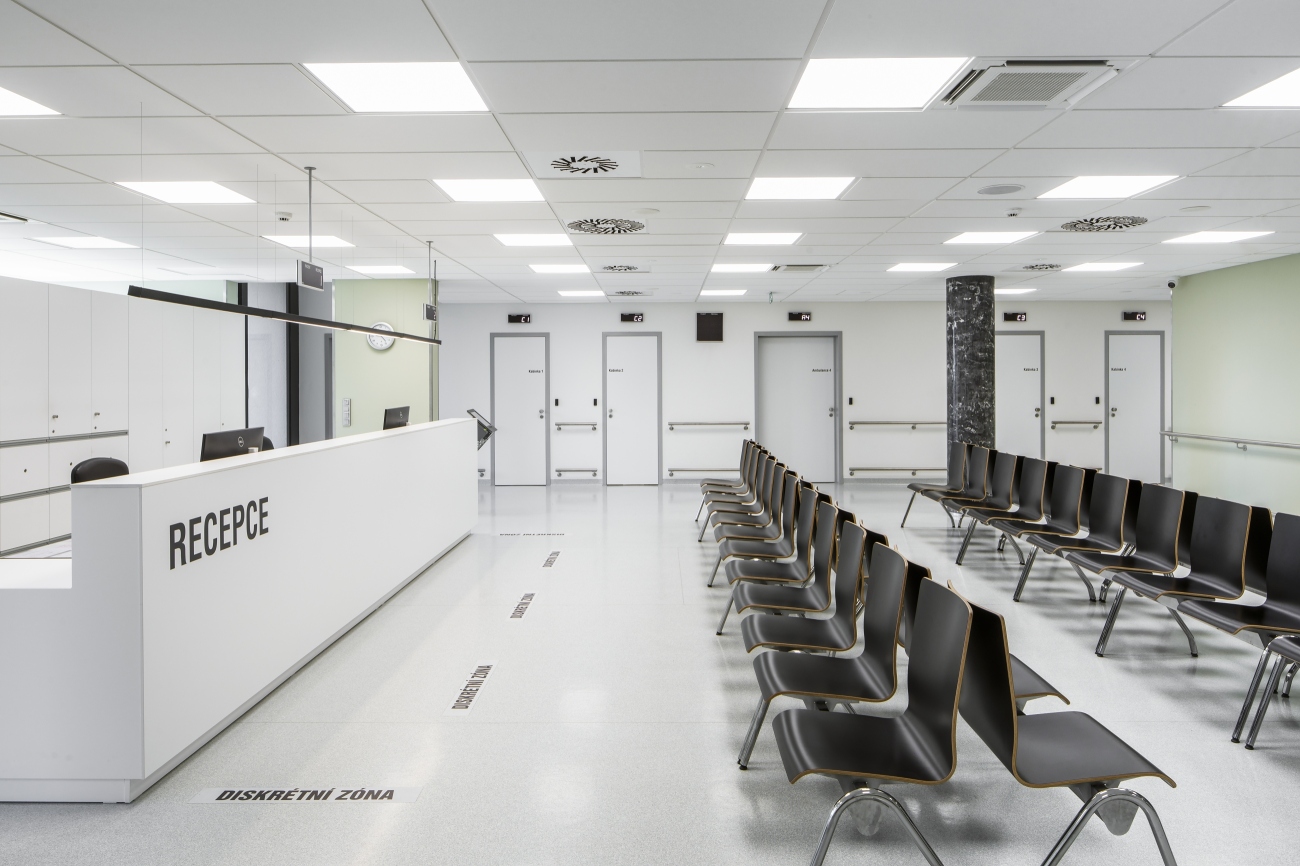 |
| Rudolf and Stefanie Benešov Hospital (photo: Tomáš Souček) |
The hospital is an environment where every sound counts. The beeping of monitors, the clicking of doors, or footsteps in the hallway create an acoustic landscape that directly impacts the psyche and physical well-being of both patients and staff.
When noise levels are too high, stress, fatigue, and the ability to concentrate decrease. In an environment where treatment is supposed to take place, one of the key factors—silence—is often missing.
Silence, in this context, does not mean emptiness but balance. It is a state where the space is acoustically balanced, allowing a person to concentrate, rest, or communicate effectively.
Acoustic comfort as part of spatial quality
Everyone who designs a healthcare facility knows that acoustics is one of the more complex disciplines. The requirements for sound absorption, hygiene, maintenance, and aesthetics must all converge in a single design.The foundation is reducing unwanted reverberation, improving speech intelligibility, and overall noise reduction from the operation of devices and the movement of people.
WHO studies indicate that noise levels in hospital wards often exceed recommended limits by 15 to 20 decibels. Well-designed acoustics can significantly reduce these values, thereby improving the environment not only for patients but also for staff.


A space that encourages concentration and care
Architectural solutions can significantly influence the acoustic quality of a space. In patient rooms, a combination of ceiling sound-absorbing surfaces and textile elements helps dampen echo while also appearing visually softer.In waiting rooms and common areas, working with acoustic wall panels, slatted ceilings, and spatial division proves effective in preventing sound from accumulating.
A well-chosen acoustic concept allows even the busy operation of the hospital to feel organized and calm. For patients, this means better conditions for rest; for staff, less fatigue and improved concentration.
Acoustics as part of architecture
Contemporary acoustic solutions are no longer just a technical addition. They are becoming a common part of architectural design and spatial expression.Panels in subtle shades, wooden slats, shaped baffles, or textiles in the interior provide visual calm and a human dimension.
Today, materials designed for healthcare also meet strict hygiene requirements. They are washable, moisture-resistant, and aesthetically pleasing. This allows architects to work with a unified spatial language without compromising functional requirements.

From practice
In one pediatric ward, excessive noise had been a long-term problem. Children had difficulty sleeping, staff were overwhelmed, and the overall atmosphere of the ward was tense.After adding ceiling panels and several vertical acoustic elements, acoustic conditions improved by 7 decibels. The result was immediately noticeable—patients are sleeping more soundly, and nurses describe their work environment as more pleasant and less tiring.
Healthy environment as an architectural goal
Healthcare buildings today are designed with an emphasis on sustainability, light, natural materials, and comfort. Acoustics are an integral part of this.A well-designed space helps not only those receiving treatment but also those working in it every day.
This article was created in collaboration with Ecophon, a company dedicated to developing acoustic solutions for healthcare and public buildings. Their approach combines functionality, aesthetics, and sustainability, for example through the We're all ears campaign and the Reuse program for repurposing panels.
The English translation is powered by AI tool. Switch to Czech to view the original text source.
0 comments
add comment