
The lighting of architecture awaits a colorful future
The current diverse design offering of lighting fixtures and the extensive range of light sources allows architects and lighting technicians to fulfill any customer wish. An infinite variety of materials, from porcelain shards to coatings with precious metals, are used for the production of lighting fixtures. Let's take a look at some truly modern lighting solutions.
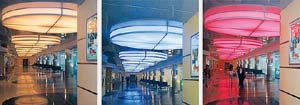
Striking lighting situations, such as changing the atmosphere from soft studio light to intimate spot lighting within a room, are a routine matter today, and it only depends on the customer's choice what appearance we give to this solution. There are also lighting fixtures available that can automatically adjust the intensity of lighting based on the daylight available on the work surface; we can smoothly adjust the color of artificial lighting according to the temperature of daylight (warm in the morning and evening, cool during the day, stimulating work performance). Lighting can also automatically greet guests who ring the doorbell, and simultaneously, based on a programmed scenario, the lighting at maintained garden arrangements will gradually turn on, and so on. The ambiance can also be set during an evening barbecue so that the artificial light does not disturb around the fire pit and only illuminates the green-overgrown corners of the garden. The system can provide festive lighting around the house for birthdays or significant days based on inputs into the calendar for many years in advance, while on other days the lights shine more dimly and less "festively." Just as today, we can reliably control each light fixture individually, including regulating intensity from anywhere on the planet that has internet access.
For these “gadgets” to work well and reliably according to the needs of the customer, it is necessary to have a thorough understanding of the user's needs by the lighting technician, and there must be a device that allows for simple operation of these systems, preferably with one button, intuitively, without special programming or setting requirements even for the elderly, with clear behavior according to expectations. Although many architects resist various types of lighting and various technical gadgets with the saying "in simplicity is strength" (which I fundamentally agree with), we still encounter several different types of lighting in quite ordinary places today, whose control and potential regulation must be elegantly managed. If we do not want to create various vertical or horizontal mosaics of switch panels on the walls, we will probably, sooner or later, have to deal with electronic control systems for lighting in today's "tech world," just as we could not avoid the introduction of electric power into households. The world of electronic control of everything possible has entered our lives along with its originators—the computers—and we will not easily avoid it. Now it is just a matter of not becoming its slaves.
But which system to choose? For a knowledgeable lighting technician, answering this question should not be a fundamental problem. Depending on the requirements, we have approximately the following options:
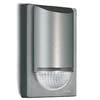
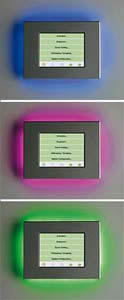
1. If it is a simple control solution where we need to manually or automatically adjust light intensity, control remotely, or if we require effective color changes in lighting, or simply turn on lighting based on twilight or motion sensors, a simple autonomous system composed of a sensor or regulator will suffice.
2. If we need a solution where, for example, a hotel, office, industrial, or commercial complex behaves automatically according to the time of day to serve functionally and save energy consumption not only on lighting but also on shading, heating, or ventilation, then a bus control system for buildings, for example based on the Instabus, Nikobus, LON standard, is ideal, which will automatically evaluate the time of day, the behavior of building users, and adjust the lighting of central areas, exterior illumination, corridors, toilets in individual sections, including heating, ventilation, and so on. The benefits of building management systems can be successfully applied to the lighting of family homes, where we can also easily set the lighting of central areas according to the moment of use, as well as the outdoor greenery lighting depending on the time of day and the activities taking place in that location (daily regular and dimmed illumination, evening barbecues with larger groups, or just intimate private evening scenes). Another advantage of building management systems is the ability to make changes or simple interior rearrangements without construction interventions; for example, if we find that a certain light fixture could be controlled more advantageously from another location or through another switch, this change can be made simply by reprogramming without the need for plaster cutting and additional cabling installation. If we need to place a switch for an individual light fixture or group in a location where no bus cabling is available, a wireless system can be used, which can intelligently share information even from controllers that would otherwise be out of reach of the building management system's receiver.
3. If we are looking for a system whose capabilities include controlling, for example, each light fixture or flexibly changeable groups separately according to assigned addresses, such as in commercial units, galleries, representative areas of hotels, restaurants, presentation events, conference rooms, it is more appropriate to use a so-called Light server, which differs from building management systems in that it is better suited for working with settings of lights and the modes of individual light groups on the bus with standards such as DALI, DMX, and so on. In the mentioned galleries, the light server can bring new dimensions of lighting to the spaces. The light can be smoothly adjusted in the gallery according to the movement of visitors, depending on the needs, for example, dynamically evolving exhibition scenes can be set, which can bring a new dimension of perception of context to the experiences of visitors. In commercial units, dynamically changing light controlled by the light server offers new presentation possibilities for merchandise.
The properties of building management systems and light servers overlap at certain points, but neither of these systems, given their original purpose, seems to have the desire or ambition to mutually replace each other. It will mainly depend on the technical requirements of the operational assignment that will allow the lighting technician to determine what equipment they will be able to propose. The combination of building management systems and light servers or other systems in a single application does not exclude each other. On the contrary, many solutions are technically simplified and made cheaper by using multiple systems simultaneously, especially in extensive applications.
Advantages and disadvantages. From the results of the applications of building management systems that we have, it follows that the failure rate of controlled lighting systems does not deviate from the norm and is below 1%. Therefore, there is no need to be particularly concerned about the operational reliability of both building management systems and light servers. Among the disadvantages at this time is especially the low knowledge of control systems in general among ordinary electrical installation companies, which hinders wider distribution of these applications. Installation, commissioning, and servicing are currently carried out primarily by a group of companies specializing in lighting control issues.
In addition to the described control systems, there are also other specialized lighting control systems designed for public lighting and other applications, which due to their narrow specialization are not the subject of this report.
|
|
||
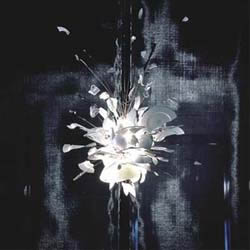
| Ingo Maurer - Porca Miseria! - porcelain shards. Price approx. 1,250,000 CZK (excluding VAT) |
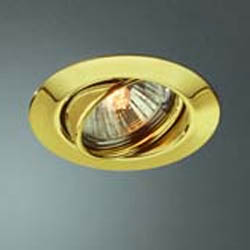
Gilded recessed halogen light. Price approx. 89 CZK (excluding VAT) |
Striking lighting situations, such as changing the atmosphere from soft studio light to intimate spot lighting within a room, are a routine matter today, and it only depends on the customer's choice what appearance we give to this solution. There are also lighting fixtures available that can automatically adjust the intensity of lighting based on the daylight available on the work surface; we can smoothly adjust the color of artificial lighting according to the temperature of daylight (warm in the morning and evening, cool during the day, stimulating work performance). Lighting can also automatically greet guests who ring the doorbell, and simultaneously, based on a programmed scenario, the lighting at maintained garden arrangements will gradually turn on, and so on. The ambiance can also be set during an evening barbecue so that the artificial light does not disturb around the fire pit and only illuminates the green-overgrown corners of the garden. The system can provide festive lighting around the house for birthdays or significant days based on inputs into the calendar for many years in advance, while on other days the lights shine more dimly and less "festively." Just as today, we can reliably control each light fixture individually, including regulating intensity from anywhere on the planet that has internet access.
 |
But which system to choose? For a knowledgeable lighting technician, answering this question should not be a fundamental problem. Depending on the requirements, we have approximately the following options:
 |
 |
 |
The properties of building management systems and light servers overlap at certain points, but neither of these systems, given their original purpose, seems to have the desire or ambition to mutually replace each other. It will mainly depend on the technical requirements of the operational assignment that will allow the lighting technician to determine what equipment they will be able to propose. The combination of building management systems and light servers or other systems in a single application does not exclude each other. On the contrary, many solutions are technically simplified and made cheaper by using multiple systems simultaneously, especially in extensive applications.
Advantages and disadvantages. From the results of the applications of building management systems that we have, it follows that the failure rate of controlled lighting systems does not deviate from the norm and is below 1%. Therefore, there is no need to be particularly concerned about the operational reliability of both building management systems and light servers. Among the disadvantages at this time is especially the low knowledge of control systems in general among ordinary electrical installation companies, which hinders wider distribution of these applications. Installation, commissioning, and servicing are currently carried out primarily by a group of companies specializing in lighting control issues.
In addition to the described control systems, there are also other specialized lighting control systems designed for public lighting and other applications, which due to their narrow specialization are not the subject of this report.
| Contact: | A-LIGHT s.r.o. Vranovská 94 614 00 BRNO tel.: 545 213 267 fax: 545 241 804 Skype: call us for free e-mail: info@a-light.cz url: www.a-light.cz e-shop: www.e-light.cz |
The English translation is powered by AI tool. Switch to Czech to view the original text source.
0 comments
add comment