
A New Aesthetic of Performance: When a Façade Is More Than Just Design

Publisher
Tisková zpráva
15.11.2026 17:30


The façade used to be primarily the face of a building, a matter of materials, proportions and composition. But climate change and the push for energy efficiency are increasingly making it an active part of how a building works, not just how it looks.

Where the pressure to perform came from As long as style was the main concern, a façade was judged primarily by how well it expressed the building’s design intent and how it fitted into its surroundings. Today, it is also expected to perform. It must retain heat in winter, block the sun in summer, admit daylight where it is needed, and behave differently in the morning and evening, in January and August.

This pressure is shaping the work of designers. The more frequent and prolonged heatwaves become, the greater the risk of overheated interiors, particularly behind glazed south- and west-facing façades, where the focus used to be primarily on providing ample light. The stricter the requirements for buildings’ operational energy performance, the less a façade can afford to be merely a visual statement.

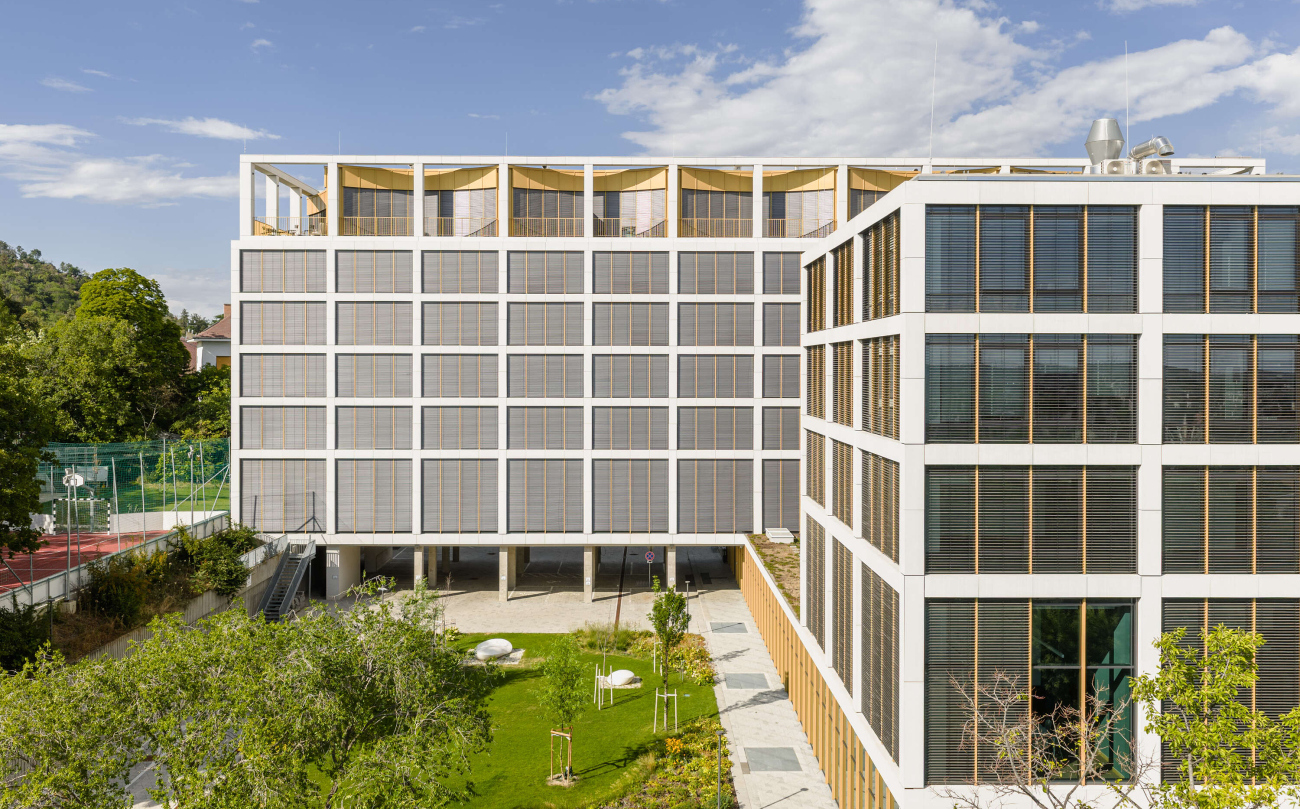
The façade as an active building interfaceThe amount of glazing on a façade, its orientation, the shading design, and its ability to respond dynamically to daily and seasonal cycles now directly affect both indoor comfort and operational energy use. This is clearly evident in everyday office use.

On a summer afternoon, a glazed façade without effective shading can turn a room beside the windows into an unusable space, while a façade designed with dynamic behaviour in mind can use the same amount of glass to the building’s advantage. The difference lies not in the amount of glass itself, but in how it is managed throughout the day and year.

Expression and performance in a single designThe real challenge for contemporary architecture is therefore not choosing between expression and performance, but bringing them into harmony within a unified design. Automated shading, such as io technology from Somfy, is often described in terms of equipment: motors, sensors, and a control unit. Yet the façade’s actual function lies not in the hardware itself, but in what that hardware enables it to do: how it responds to sunlight, wind, or temperature without user intervention.

What this means for the design itselfThis also shifts what architects need to consider. An automated façade introduces further questions: under what conditions should the shading close, when should it let light in, and how should it respond to wind or frost? Architects do not need to design the control logic for the motors or sensors themselves; the technology provides that. But from the outset, they need to be able to define the function this technology should fulfil in the building and work with its capabilities. It is precisely this ability that is now expected of them in addition to their existing skills.

In the next instalment, we will look at what architects should know about dynamic shading before making their first sketch.

The English translation is powered by AI tool. Switch to Czech to view the original text source.
0 comments
add comment