
St. Peter’s Basilica in Vatican City is one of the largest churches in the world
Vatican City – St. Peter’s Basilica in the Vatican, which was consecrated 400 years ago, on November 18, 1626, is one of the largest Roman Catholic churches in the world. The church can seat more than 20,000 people and contains approximately 800 columns, 390 larger-than-life statues and 45 altars. The basilica, which is free to enter, has many historical connections with the early Christian Church, the papacy, the Protestant Reformation and the Catholic Counter-Reformation, as well as with numerous artists, particularly Michelangelo. As a work of architecture, it is considered the most significant building of its time. The basilica has been on the UNESCO World Heritage List since 1984.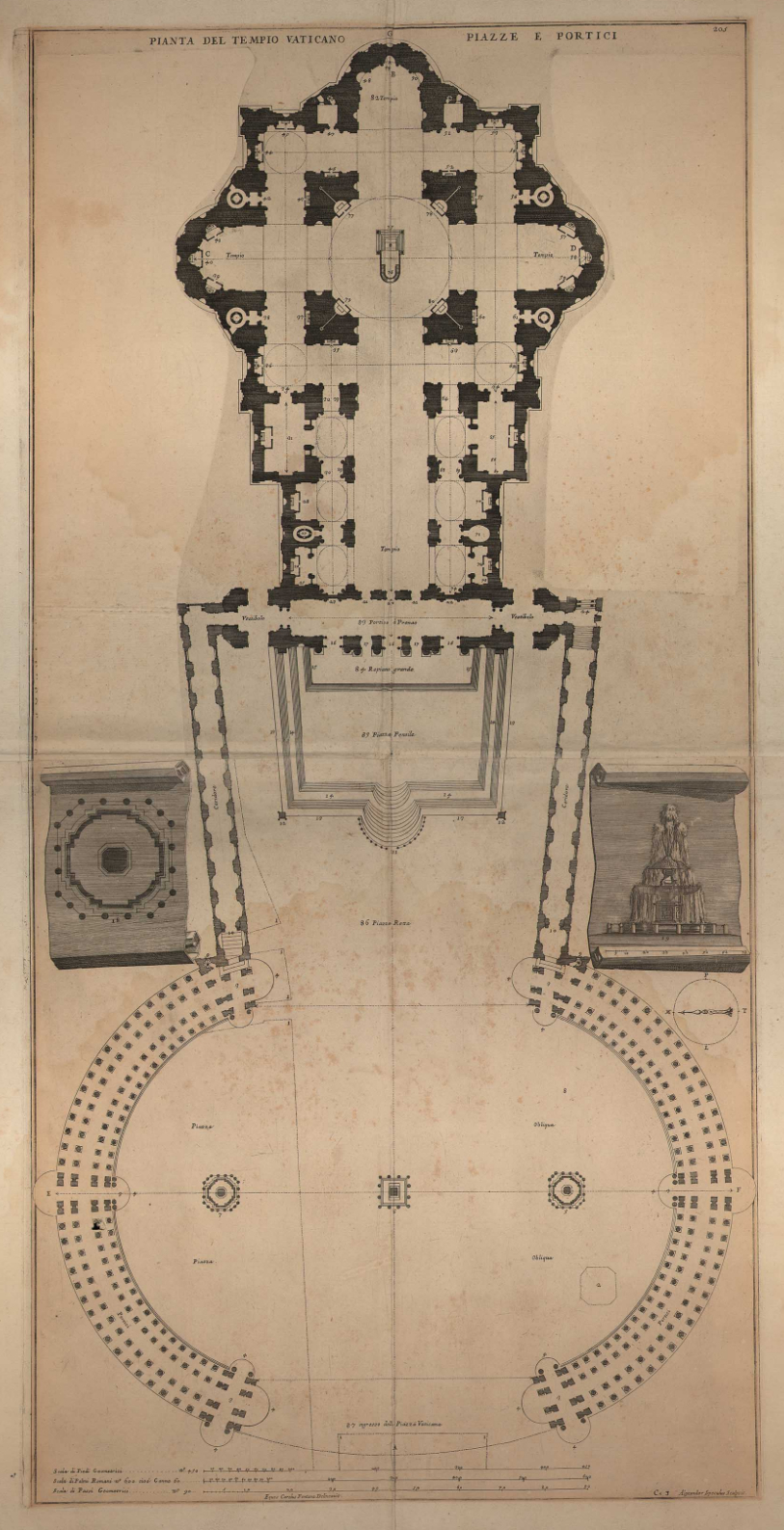
The church bears the name of the first leader of the Christian community, the apostle Peter, whose remains are kept here. Their presence has made the basilica one of Christianity’s most important pilgrimage sites. Deceased popes are traditionally buried in the basilica’s crypt, with other individuals occasionally buried there as well. The only Czech whose remains rested here was Cardinal Josef Beran, a former archbishop of Prague who opposed both the Nazi and Communist dictatorships. In April 2018, his remains were transferred to Prague and laid to rest in St. Vitus Cathedral.
The original basilica was built over the tomb of St. Peter during the reign of Emperor Constantine the Great in the fourth century. Pope Julius II initiated the construction of the present church, and work began in April 1506. The basilica, which bears the imprint of a number of prominent architects and artists, including Donato Bramante, Raphael and Michelangelo, was consecrated by Pope Urban VIII in 1626. Its monumental interior measures some 200 meters in length and 150 meters at its widest point, while the dome reaches a height of 136.6 meters at its center.
St. Peter’s Basilica ranks second, immediately after the Archbasilica of St. John Lateran, among the four churches in the world that hold the status of major papal basilica. All four are located in Rome and are also among the Seven Pilgrim Churches of Rome. Contrary to a widespread misconception, it is not a cathedral, as it is not the seat of a bishop.
Adjoining the basilica is the elliptical St. Peter’s Square, which can accommodate some 400,000 people. The square, built by architect Gian Lorenzo Bernini between 1656 and 1667, is enclosed by two semicircular colonnades comprising 284 Doric columns and 88 pillars arranged in four rows and adorned with a total of 144 statues. They symbolize the open arms of the Church welcoming the faithful. In the center of the square stands a 25.5-meter-high Egyptian obelisk seized by the Romans during the reign of Emperor Caligula. It is said to have originally stood in the Roman circus where St. Peter was martyred in AD 64 or 67 along with other early Christians.
St. Peter’s Square is a traditional gathering place for Christians. Among other celebrations, Easter Mass is held here, and the pope delivers his annual message “To the City and the World” and blesses the faithful.
Together with the Apostolic Palace—the pope’s residence, with 1,400 rooms—the gardens and the adjoining buildings, the basilica and the square make up today’s Vatican City State. Other buildings within Rome—four basilicas and a college building—as well as the pope’s summer residence in Castel Gandolfo, about 20 kilometers southeast of Rome, also enjoy extraterritorial Vatican status.
According to Cardinal Mauro Gambetti, archpriest of St. Peter’s Basilica since 2021, approximately 20 million people visited the basilica in 2025. During the peak tourist season, the basilica receives an average of about 40,000 visitors a day. In addition to the usual religious services—Masses, adoration and confessions—the church also offers half an hour of live sacred music each week and Eucharistic adoration after services.
The English translation is powered by AI tool. Switch to Czech to view the original text source.

0 comments
add comment
Related articles
0
12.01.2024 | Bernini's canopy in St. Peter's Basilica is awaiting repair, the first in 250 years
0
11.06.2009 | Bernini's colonnade in the Vatican will undergo a cleansing treatment
0
06.12.2007 | Vatican: Michelangelo's drawing of St. Peter's Basilica discovered
1
21.04.2006 | The St. Peter's Basilica faces completely modern threats