
RozRazil on architecture
round table, 17.2.2006 - Baťův skyscraper, Zlín
The Brno magazine RozRazil (www.provazek.cz/rozrazil) organized a roundtable discussion on architecture in the social space of Baťa's "Twenty-One." The essential questions of the field were discussed by Lukáš Kohl, Igor Kovačević, Josef Pleskot, Svatopluk Sládeček, Jan Šépka, Rostislav Švácha, and Jaroslav Wertig. The debate was moderated by Rostislav Koryčánek.
We thank the magazine RozRazil for allowing us to publish the discussion on Archiweb's pages.
KORYČÁNEK: For every field, including architecture, it is important to undergo constant self-reflection, which would help redefine the field and establish its meaning and significance. If we wanted to attempt such self-reflection in architecture, in my opinion, it should occur in at least four dimensions: the first pertains to the inner realm of architecture, its own laws. The second dimension is the relationship between architecture and the surrounding world. I mean the everyday confrontation where an architect, trying to clarify their stance towards their own work and that of their colleagues according to their best knowledge and conscience, finds themselves in a situation where they should apply their insights in a world governed by specific laws. The third dimension is the relationship between architecture and the public - architecture is part of the public space, and anyone using this space may feel competent to express their thoughts about the architecture around them. The fourth dimension is the most complicated and problematic, as it concerns the ethical background of architecture and the application of moral considerations. Although these topics are complicated, I would like us to try to navigate through them together. To begin with, however, a much easier question: What is the current mood in Czech architecture?
KOHL: I belong to the youngest generation here, so it might not be a surprise that I perceive a longing for change.
KORYČÁNEK: A longing for change in what?
KOHL: A longing for architects to try to find a new place in society and to have somewhat greater aspirations.
KOVAČEVIĆ: Architecture lacks a bit of courage and experimentation. We are building a lot, but the pace of today's world does not allow for experimentation. I think that is the main feature of our time.
PLESKOT: Personally, I feel a good mood, but I agree that there is little experimentation. On the other hand, there is no point in experimenting at all costs. I mean experiments that are only experiments because they have been seen somewhere and that it is fashionable to attribute a certain degree of experimentation and risk-taking to the field. However, tying back to the initial idea of self-reflection, I have to say that I perceive myself as an architect in a very reduced and critical way from a certain point in time. I believe once a person starts to feel too much like an architect and becomes overly settled in the field, their paths lead in the wrong direction. They move away from society.
SLÁDEČEK: Considering that I remember the architectural scene of the 90s, I am not just in anticipation, unlike my younger colleagues. I perceive the mood in contemporary architecture similarly to the atmosphere in a hockey locker room after the first period, which ended 1:1. I consider that an excellent result because it could just as well have been 3:0 for the opponent. I think there is a certain relief that architecture has managed to defend itself because at the beginning of the 90s, it didn't look too promising. On the other hand, the doors to the world, especially to the West, are wide open, and behind them, one can see that something is happening that we will probably find very difficult to catch up with, and we may not even be able to catch up because we simply lack the "training."
ŠÉPKA: I think the purpose of architecture is to overcome boundaries, and unfortunately, Czech architecture does not strive for that much. For this reason, I see the mood as mediocre, and I am not even in anticipation.
ŠVÁCHA: Allow me to position myself as a spokesperson more for the architectural audience than for the architects themselves. I would say that the audience exhibits generational stratification. Generations whose relationship is shaped by the architecture of panel housing estates have no relationship to contemporary architecture; they might even get upset with contemporary architecture. I fear explosions of hatred, which I expected when the Dancing House by architects Vlado Milunić and Frank Gehry was built in Prague. Fortunately, it turned out completely opposite back then. Currently, I fear the reaction to the new construction on Brno's Náměstí Svobody by architects Kuba and Pilař. A certain hatred and uproar would be more deserved by Špalíček on Dominikánské Náměstí, but unfortunately, it seems that the previously mentioned architects will take the brunt of it at this moment. But besides this generation of my peers, there is also a younger generation whose experience has been mainly influenced by the events after 1989 - thus, non-panel architecture - and here the mood is better, friendlier; young people are genuinely interested in contemporary architecture, considering it an interesting topic of conversation. The mood isn't as terrible as it may seem, I would say.
WERTIG: Personally, I am also satisfied; many annoying topics from the 90s venting frustrations from communism are fortunately passé. On the other hand, new problems are emerging that we are starting to name, and for me, that is, for example, the increasing dominance of mediocrity not only in architecture. On one hand, it is improving, and on the other hand, it makes it difficult to navigate what is and isn't quality.
WERTIG: I don’t really know what you expect from such a definition. Are you looking for criteria to distinguish that this is architecture and that is not? That is like asking me whether architecture is art. Is cooking an art? They are simply cultural phenomena, and they have no sharp boundaries.
ŠVÁCHA: These are questions that are extraordinarily difficult to answer, and perhaps not entirely productive. You tag me here as a theorist of architecture, but I have never attempted that; it's a question I fear - to articulate in a few words, what architecture is. Let's rely on the fact that everyone here, except for me and Mr. Koryčánek, practices architecture, and what they do is architecture. It may be silly, but I can't think of anything better.
PLESKOT: I truly don't know whether I am doing architecture, even though it pleases me that you think I am. But when the question is posed, there should be an attempt to answer it. So: a construction work is also architecture, but maybe architecture is not highly self-aware. I expect a great deal of self-awareness, great engagement, and profound experience from architecture... But paradoxically, it often happens that it's entirely the opposite. In many architectural works, I do not feel sufficient engagement and experience.
KORYČÁNEK: I am aware that there is a general unwillingness to deal with this distinction, and this question is intended as a provocation against this state.
SLÁDEČEK: For me, the personal experience of architecture is tied to space, with a literal physical dizziness that occurs in creatively engaged space. Such a work brings me delight. A building where tested schemes are repeated can bring this experience very rarely and only by chance. It doesn't even have to be a building; it can be anything that happens in space.
KORYČÁNEK: Is the purpose of architecture to prepare an experience for the audience, or an intelligent environment that doesn’t preserve the activities that take place within it?
WERTIG: The role of the architect is to transform construction performance into a cultural act. I would best compare the position of an architect to the significance of a director in film. I concede that there are films that rely on the actors, the camera, the musical aspect, but in the vast majority of films, it is the director who guarantees that a balanced work is created and not just a mindless production.
KOVAČEVIĆ: I personally cannot imagine a film being made without a director. Yet, construction works arise without directors. Perhaps that's the answer.
KORYČÁNEK: Assisted preparation of a spatial, cultural experience...?
PLESKOT: The role of the architect is to shape social relations through space. That means not betting on the phenomenologization of space, on bombast, or on being captivated by space. The space does not need to be imaginative, bombastic, phenomenal at all, and yet it can formulate social relations much better than another.
SLÁDEČEK: In my formulation, I have only tried to delineate the experience of architecture and the space it creates. If space behaves oppositely, if it does not bring amazement, but rather leads to calm and concentration, it has the same value. The space becomes a medium of expression that I can also target towards what you are saying.
KOHL: Should the architect strive for something that immediately transcends construction? Is that a correct aspiration? Certainly! And then it is quite an interesting question what distinguishes architecture from mere construction because that is something I should occasionally attempt. There was talk of fascination with space. Spatial quality - certainly. Likewise, social aspirations transcend mere construction, for example when an architect tries to improve social relationships through a building. But there are also other aspirations that are not part of mere construction - for example, when an architect tries to create an environment that speaks to a person privately and quietly. I believe there are many such possible aspirations. And if I expect any change in contemporary Czech architecture, it is precisely that someone will gather the courage and finally ask what distinguishes architecture from construction. When architects prefer not to distinguish themselves from construction, it may seem like modesty. But isn't it more of a sidestepping of the question of why we are architects instead of simply builders who can draw, and what is therefore expected of us? What should we strive for? Have we succeeded or not? And in Czech architecture, this is truly a problem.
On the other hand, I think that an architect can occasionally devote themselves to mere construction with a clear conscience.
ŠÉPKA: The boundary between construction and architecture is probably drawn differently by everyone, which is why we encounter so many difficulties in defining it. I return to what I said at the beginning: Perhaps the task of architecture is to overcome boundaries on any level - social, static, technical, artistic... On the level that everyone sets for themselves. When I see that a work has crossed a certain boundary, it captures my interest, and I perceive it as an architectural act.
KOHL: There lie two questions. One question is whether an architect should cross that boundary. The second question is whether that work has been recognized by people as architecture. Many construction works were created as non-architecture, only over time, as perception changes, did they begin to be perceived as architecture.
WERTIG: I don’t know whether it sounded overly proud when I stated that the architect is the one who elevates buildings to a cultural act because there is traditional and folk architecture that exemplifies "films without directors." Here we find such fundamental architectural achievements that one can't help but humbly tip their hat.
KORYČÁNEK: Let’s assume that architecture should bring some originality, specifically originality in how to postulate the relationships concerning the user and the environment into which the house is situated. This delineation is very exclusive because it has at least two levels. The first level is that this act is perceived as original by contemporaries, and the second level is that it will only become original after some time due to the symbolic meanings that gradually adhere to it. However, there is also a less exclusive, more prosaic dimension - what is the relationship between those architects who seek to discover originality and those who opted for the mass distribution of originality? Is it a beneficial relationship since we can describe it as an increase in the average, where a few seekers open the boundaries, and the overall architectural quality rises?
WERTIG: If it contributes to the improvement of the average, I see nothing dreadful about it. But I also don’t believe that the role of the architect is necessarily that of a developer or experimenter who tests their truths at all costs on someone else’s land and with other people’s money. His contribution is also in finding a balance between various aspects that enter into the construction and shape it. This is a quality that does not necessarily have the dimension of originality. As Alena Šrámková says, the worst are those ideas.
PLESKOT: Jaroslav Fragner said that too. But it bothers me as well, and I vehemently resist it: the role of the architect is not to invent original things.
KOHL: I think there isn’t just one role for architecture. And if all architecture were to renounce experimentation, it might look somewhat like the automotive industry renouncing development - we would all still be driving in Škodas. Architects who engage in experimentation bear their skin in the game and risk that it may not go well. In the end, however, they also contribute to others. Many architectural processes that we now perceive as common and normal had to be discovered by someone through experimentation. Architecture can certainly exist without experimentation; it is not essential to it. But it would ultimately leave only some sort of graveyard.
SLÁDEČEK: One possible form of architecture is that we perceive it as a medium of expression. I fully declare that architecture is art. And when an artist, an architect, expresses themselves, they are reacting to a situation in which they find themselves. Sometimes they express themselves surprisingly, extravagantly, and sometimes conversely they may cool the overall atmosphere in society - and that can, under certain circumstances, look like an extravagant gesture. The fact that someone reacts and expresses themselves through architecture can have such an expression that they reject an idea, for example.
ŠVÁCHA: It depends on the context of use. There are various possibilities and types of creation, and it would be detrimental to suppress one and prefer another. However, I want to return to the word originality. It isn't entirely the best. There is a difference between originality and experimentation. When I think back to the 1920s and 30s, a time that also shaped the environment in which we are sitting right now, it was a time that did not favor the effort for originality. Teige said that originality is a bourgeois prejudice. Nevertheless, he firmly defended experimentation. Personally, I wouldn't overly prefer originality, in the sense of standing out from others at all costs. But I would advocate for experimentation. Pushing things a little further is a good thing, and it doesn't have to be done by being original.
PLESKOT: I love Formula 1 races and they are not run in original cars. They run in high-performing, perfectly constructed vehicles. In an original car, you won't reach high speeds; those are good only for a parade.
KORYČÁNEK: Are it really the history of architecture that has backed architects against the wall? What happened after World War II seems to me to be a much more complicated process that affected architecture and stripped architects of the sovereign position they had appropriated between the wars. Is architecture today in the role of an observer standing in the background and fulfilling assignments, or does architecture still have aspirations to become an intervener, a medium that will strive to articulate the problems that exist in society and regulate them with its language?
KOVAČEVIĆ: I believe this is a social and very significant aspect of architecture. For me, experimentation is a solution to problems, and architecture is dead when it does not address a problem - but I do not see that problem in a technical sense, but rather in a social one. The solution to technical problems should be a matter of course. However, what pushes architecture forward, what drives it ahead, is that social dimension, the solution of broader problems, and relationships.
PLESKOT: It is absolutely impossible for an architect to relinquish the role of functioning as an engaged creator, as an engaged person who would lose the right to address the problems; that is absolutely excluded.
SLÁDEČEK: An architect cannot lose that right; no one can take it away from them. If they have that need, they will find space for themselves. They can exist as an architect, or they may parasitize on the building process. In any case, they can express themselves, and no one can forbid that. In that, they have the same freedom as a poet or anyone else. And of course, they could sometimes suffer similar consequences for it.
KORYČÁNEK: But how can an architect be free in their expression if the client's requirements are completely clear and unforgiving, and the architect's task is simply to resolve a certain, specific area? What if the client just wants a coat that they can present themselves with? Is there space for articulating the problems that plague the world even here?
KOHL: Are you referring to the articulation of some social vision of an architect, their own architectural program, or whether someone creates architecture that becomes a symbol?
KORYČÁNEK: I mean the assumption and articulation of social appeal. The strength of architecture in the 1930s originated, for example, from the willingness to address social issues.
SLÁDEČEK: In any assignment for an architect, there remains a large amount of space for their own expression - if I disregard the extreme possibility of refusing an order. The architect's task is to think through solutions that allow them to convey something. However, they must also consider what exactly they are saying.
ŠVÁCHA: I will simplify it. The client says: I want it this way. And now it's up to the architect how they will respond to that. I would distinguish architects into those who serve the client exactly as they want, these are architects who view their profession as a business, a way to earn money. But then there are architects who do not unconditionally submit to the order and try to extract something else from it. Perhaps those are the true architects; this might be the dividing line between architecture and good architecture. Servile vs creative architecture - creative, not original. Architecture of creators who resist.
ŠÉPKA: A large part of architectural production has degraded to mere commodity...
KOVAČEVIĆ: And what is wrong with a commodity? Even the F1 we spoke of is a commodity. Everything I can own is a commodity.
ŠÉPKA: I mean a situation where the client wants something that the office produces standardly according to the catalog. I see this as a commodity.
KOVAČEVIĆ: Do you mean a thing designed in advance, ripped from the context of time, place...?
ŠÉPKA: Yes.
KOVAČEVIĆ: I agree with that.
WERTIG: That peculiar nostalgia for the 1930s and the exceptional position of architecture can be perceived when we look at a period photo of Le Corbusier's Citroën villa with a car and a lady in the foreground. In the whole photo, there is the most modern architecture, then a lady in a Coco Chanell suit, then the charming design of the car, and finally the sepia shades of the photograph. If we were to compare it with a contemporary image of the same content, we would notice a tremendous shift in technical possibilities and the quality of the photograph, the design of the contemporary car would be very progressive; the lady's costume might look more modern, but I fear that architecture would end up in last place. Today, architecture may not be the bearer of the banner of progress and the establishment of new aesthetic codes, but sometimes I think it is almost a good thing. This role had broader and more frightening ramifications. When I was in Zlín for the first time, I was struck by how much of what inevitably had to come is foreshadowed in the local architecture. It was certainly progressive architecture, but even back then, it was fascism with a human face.
KORYČÁNEK: I am not even so much concerned with nostalgia but rather with the question of whether architecture today is willing to take on more than merely the fear of whether a building will last thirty or fifty years.
ŠVÁCHA: What is the difference between today and the 1920s and 30s? I would say that today the client shapes the order, not the architect, whereas back then the architects tried to formulate the order themselves. That was, of course, associated with a considerable degree of social utopianism, and it didn’t end well, but I do not view today's significant resignation of architects in formulating their orders positively either. There isn't much sense of social solidarity in today's architects. Most architects see the sense of their work in accepting commissions from clients, and they do not try to formulate the orders themselves.
KOHL: I think architects reacted quite responsibly when they retreated after the war. The ambition to fundamentally reform the world also brought with it some rather terrible fruits. Therefore, it is understandable that today architects prefer to rather correct the world a bit or just find the optimal solution with the client. I would say that the retreat from social utopianism is correct. In the Czech Republic, there is a dismal deficit of works that could become memories of their time. Perhaps there is not such a large deficit of socially considerate works. And if there are fewer than, say, in the Netherlands, it is because the social state is discredited here, and that is understandable.
KORYČÁNEK: Should architecture remain an observer?
KOHL: No, but it should not be swayed by a utopia, an ideology that wants to remake the world. It is much more responsible when an architect sits down with the client and figures out how to improve the environment compared to how it is currently. But certainly, our current architectural program is much less sexy than it was between the wars.
SLÁDEČEK: That the client formulates the order is, in my opinion, the greatest victory of modern architecture; it is the greatest attack on traditional building models. Never have there been so many clients able to formulate something as there are now. Sometimes the formulations are clumsy, but the great victory is that they even formulate. Modern architecture has given freedom to the client. It is up to architects to manage and transform the strength that is offered to them. They probably won’t build social housing districts on a production line anymore, but there is still plenty of room, and perhaps something similarly strong can emerge from this constellation as at the beginning of the 20th century.
ŠVÁCHA: Clients emerged here after 1989; before that, there was only one client, and that was the state.
PLESKOT: The ethos is fascinating from the beginning of modern architecture, but the fetish is boring. What is left fascinates me less and less. I feel we had to return to what remained. We went through it, and whoever managed to rid themselves of it, won.
KOVAČEVIĆ: I think the public should rather be educated. However, it should also use other means than itself. Few use PR mechanisms to promote their buildings, which is quite common in other countries today.
ŠVÁCHA: When I hear PR, I reach for a revolver. Advertising bad things is one thing, and enlightenment is another. It's about mediation. Architecture itself cannot adequately address uninitiated people; people do not know what to think of it; its means of reaching its audience are insufficient. The role of intermediaries - architectural magazines, popular housing magazines, newspapers, and ultimately television - is irreplaceable. However, do the media report on architecture sufficiently - as architects would like or as architecture deserves? These are important questions; achieving consensus about architecture is difficult if the media, or intermediaries, do not function properly.
ŠÉPKA: Enlightenment is undoubtedly important, and Czech architecture suffers from the fact that it is not known. Without the media, no one will know about it, and magazines like Architekt, Stavba, we read to each other. In this, the Czech Chamber of Architects and the Society of Architects should be helpful.
PLESKOT: We can agree that society knows nothing about architecture at all. However, I will slightly oppose that I don't think it's just a matter of enlightenment. Society is not settled in the awareness that architecture is supposed to exist, that it is a useful field that should engage in construction. I have encountered investors who thought that an architect is not needed at all. It was only when we worked together that we came to conclude that if there were no architect, the client's ideas could not be formulated - realized. The role of the architect is irreplaceable for shaping the client’s ideas, yet I do not want to speak of upbringing through architecture, at least not in the way it is discussed here.
KOVAČEVIĆ: PR does not have to serve only the sale of bad things but also good ones. It is primarily the fault of us architects that we do not adequately present our work. We must strive to present quality goods.
WERTIG: Under John Paul II, they came up with the idea in the Vatican that things of goodness and love need to be promoted much more because evil is inherently more appealing and attractive. Quality also needs PR - let’s emphasize the positives.
In the question of consensus, I feel our struggle with the dimension and principle of democracy, which we still understand more in terms of Bolshevism: what is legitimate is what suits more people; broader compromise is understood as quality. From this perspective, the best architecture would be totalitarian, communicating with broad masses through their mob instincts.
SLÁDEČEK: Advertising and PR can only be done in maximum of the field - the work is done, and I inform that it exists, and you can experience it. I cannot advertise an architect in advance: this piece was successful for them, and you can look forward to the next one. We simply do not know what the work will be because it is still ahead of us. A clear consensus, in my opinion, is not only unnecessary but even inappropriate, although the architect may inquire about it.
ŠVÁCHA: Kenneth Frampton points out with the term architectural cultures that there are countries in the world whose society adapts to contemporary architecture more than elsewhere - he means Spain, Finland, and Japan. Let us suppose that his term could serve as a substitute for the concept of consensus; in the mentioned countries, society understands architecture as a cultural discipline, similar to theater, film, etc. We have not reached that point, but I would not say that there are no prerequisites for it. It’s not that bad.
KOHL: I don’t know whether the media provide architecture with an opportunity or rather a threat. For a long time, architecture had an unquestionable primacy because it was the biggest and most impressive thing surrounding people. It was all around a person. Today, this primacy is losing, and architects have realized that the media are a powerful weapon. It is very unlikely that a wave has not reached us from the West that could be described as a greater renunciation of architecture in relation to the media and reliance of architecture on the media. Perhaps this will be a threat to architecture because it could get even more lost behind the media. It is certainly true that with the help of advertising, even garbage can be sold; however, the fact is that the medialization of architecture has attracted enormous attention to architecture in the USA.
KOVAČEVIĆ: By presentation, I do not mean just the promotion of individual buildings but primarily of the field itself. Even Rem Koolhaas ultimately asserts that architecture must be presented, not oneself. This is the PR of architects, which the Chamber of Architects should have in their workload.
KORYČÁNEK: I also ask about consensus because when Czech media begin to focus more on architecture, it usually ends in conflict. An example may be the already mentioned house on Brno’s Náměstí Svobody or the reconstruction of Horní náměstí in Olomouc, where Jan Šépka was one of the main actors. At that time, a newspaper article stating that the maintenance of the laid stone would be very labor-intensive sparked a storm of resistance against the reconstruction of the square, and the reconstruction itself was suddenly in jeopardy. Wouldn't it therefore actually be better for Czech architecture if the media paid no attention to it?
ŠÉPKA: Just to clarify: that report was indeed the last straw that sparked the affair, but the main issue was that after the elections, the structure of the city council changed, and the new council did not want to respect the decision of the previous council. The media exploited the situation not in the sense of defending architecture or the possibility of public expert discussion, but as a tabloid gossip that needed to be properly processed. The media definitely harmed the entire reconstruction a lot. But back to what Lukáš Kohl said - I feel that the self-promotion of architects or buildings leads to architects becoming stars. And stars then produce what the client has seen from them or what the client demands from them, and for many of these stars, that is the end. They only produce what they once did as the first. Perhaps this phenomenon will not reach us; however, I still appeal for enlightenment. Working with people who know what they want and are interested in architecture is a completely different discussion when working on a project than with people who know almost nothing about architecture.
SLÁDEČEK: We talked about whether architecture should educate, and some rejected that outright. It occurs to me whether we shouldn’t talk about educating to architecture in such a way that we emphasize that it is also good for something and that it can enrich us. If I accept this position, I actually educate myself because architecture develops me simply by receiving it.
KORYČÁNEK: Is there a feasible methodology to not overlook the public and to try to involve them in the process of thinking about architecture?
PLESKOT: Recently, I encountered a fascinating assignment where the client requested a building that would serve as a tool for reforming his institution (the project of a new headquarters for ČSOB in Prague, ed. note). It struck me as a revelation! I had only heard of something like that before, but I had never experienced it. Perhaps if society could formulate its assignments in a way that would somehow correct and reform itself, then at this point both the client and the architect know what they are serving, and essentially there is no conflict, and there is absolute agreement in every detail.
WERTIG: Once, we applied a formulated method of public participation to an urban plan. We tried it with the help of Bohuslav Blažek. However, the cooperation was very awkward; the result seemed distant, and I could not fully justify such an approach even to some of my colleagues. In the end, we redefined the assignment and adjusted the project according to the results of Blažek's inquiry and went to the municipality with the project. And it turned out that local politicians, who had ordered the project from us, could not identify with it, and we realized that the problem was that the public should not communicate with us, architects, but with the politicians, that is, those responsible for formulating public orders and able to assign them to the architect. In the end, we were angry that we wasted a lot of money on social ecology; instead, we could have created more comprehensive plans and made more publishable visualizations on which we could at least make a name for ourselves. We got angry and walked away from it. And what happened was: six months later, there was an initiative of people who attended those Blažek sessions and followed the process, named the initiative after our drawer project, and pushed us to do the project’s promotion again. Now the project is being realized, and we actually do not have to be there anymore. So, the potential is there, but methods of how to work with it are difficult to find and implement. One thing is undeniable; in shaping public space, Czech politics and politicians at any level are failing.
KORYČÁNEK: The interest of the Czech state in architecture is minimal, as evidenced by the number of commissions that the state has had architecturally processed.
ŠÉPKA: The state’s approach to architecture is, I think, primarily political. I have encountered very few politicians willing to stake their skin for the fight for quality architecture. I will return again to Horní náměstí in Olomouc. The new city council wanted to involve the broader public in its resolution so that they could express what they wanted on it. It sent out a questionnaire based on about ten questions like, "How wide should the gap between the paving stones be? - a) 1cm, b) 2cm, c) 3cm." Secondly: "What kind of lamp do you want in the square? - historical, modern, or other…" In this spirit, all other questions were phrased, and they certainly did not benefit the overall atmosphere; on the contrary, they worsened it.
ŠVÁCHA: Such a questionnaire is essentially populist: "We will do it the way you want." And in the end, it gets to the point where such a wide community of people does not agree on an acceptable solution at all. In some Western countries, however, methods for involving people in projects are very well developed - good examples can be found in solving various types of tasks in Australia or in the Netherlands in building social housing. Different approaches work for residential neighborhoods than for squares where everyone goes and everyone has an ideal idea of how such a square should look. At that moment, it really depends on enlightened politicians to have the courage and push through the solution that is the most appropriate and that I hope the architect will propose, and not the people filling in the individual points of the survey.
WERTIG: In traditional democracies, there are also other tools. Cheb collaborates with the German Marktredwitz on preparing a large garden exhibition. In Germany, garden exhibitions, whose purpose is to revitalize urban neighborhoods or unused zones, have a very long tradition. In Cheb, the exhibition was supposed to be the first attempt to transfer this tradition to our conditions. The difference in the approach of Czech and German representatives was striking: the Germans not only managed to convince and involve the Czechs but also had a well-developed methodology for the entire endeavor - they collaborated with several companies that provided support throughout the preparation and hosting of the exhibition and had an organizational structure well-crafted to ensure that the formulation of the public interest in public spaces would be fulfilled with a meaningful urban concept and subsequent solutions. Our representatives missed the chance to learn something new. Their activities devolved into hurried beautification of paths and painting benches within the capabilities of a system that persists. They did not understand that they had the opportunity to learn how to catch a fish. They only drew it up to look like they had it, too.
KORYČÁNEK: Is the current Brno referendum about the solution of Dominikánské náměstí an example of suitable participation? People are supposed to choose between two solutions, and the city proclaims that it will be they who choose the best one. Is it populism, or is the survey one of the possible educational tools that draw the public into the design process, encouraging them to start thinking about architecture?
ŠVÁCHA: Here, surveys are used to shoot down excellent projects. An alarming example was the competition for small architecture in public spaces in Prague - newspaper stalls, curbs, etc. This competition was won by an excellent sculptor, Karel Nepraš, but because it did not please the councilors, who also had a very favorable contract from the French company Decco, they organized a poll in which about five people participated; since it resulted in 4:1 against Karel Nepraš, this project was swept off the table. Meanwhile, the jury that decided Nepraš's victory had more members than the participants in the survey. I use that to appeal to everyone not to participate in such polls.
SLÁDEČEK: Participation can only serve to formulate a reliable assignment. However, there is no mechanism to positively influence the acceptance of the architecture that grows from this assignment. I have even encountered a situation where the most dissatisfied were those who had a participatory project.
PLESKOT: What to do with that? Difficult, isn't it? From my perspective, it is unacceptable; it does not coexist with my conscience at all. However, the question is whether everything we are doing is right.
KORYČÁNEK: Architecture has an incredibly complicated situation precisely because there are so many phenomena to which it must react. But that is precisely why I ask whether there is some point to which an architect can relate as a creator. I quote Renzo Piano: "Architecture is a socially dangerous art because it is inevitably unavoidable. You do not have to read a bad book; you do not have to listen to terrible music, but an ugly apartment block in front of your house leaves you no alternative; you must look at it. Architecture imposes total immersion in its ugliness, giving the user no choice. It is a suffocating necessity, and all the more so, it concerns future generations." Can architecture suffice with being an idea meant for realization, or is there a responsibility to something higher, to superior moral principles?
PLESKOT: That is an attack on conscience... I contemplate it every day. I know I am doing things that do not resonate with many people. Yet, I cannot abstain from doing them.
SLÁDEČEK: That is not a question for architecture; that is a question for life, for existence - whether I can not only afford to design in such a regime, whether I can even afford to live in such a regime, should it be a political regime. On the other hand, and I would like to refer to the source of all rules, I would never presume to judge that so that I am not judged myself.
KOVAČEVIĆ: Maybe you would simplify our lives with a question of whether there are clients we reject.
KORYČÁNEK: Are there clients you reject?
KOVAČEVIĆ: There are. There are clients with whom I "just don't click" and we do not cooperate; that is perhaps the first layer of aspects at a higher level, politically and socially. I feel the moral principle, the principle of integrity of the profession, in the freedom to refuse a client.
KOHL: An architect cannot take on all the consequences arising from building a house at this time and specifically for someone who is responsible for this or that. They cannot take on infinite responsibility because they could not live with that. On the other hand, if one does not allow for any responsibility, it is quite easy - they are a villain. But I fear that a simple criterion is beyond our capabilities.
ŠÉPKA: All this time, I have been thinking about the great buildings that Albert Speer, Giuseppe Terragni, and others made, and to be honest, I still do not know what to make of that. And it does not have to be a matter of regime; if we look at Jiří Kroh and his fantastic building of the Zemská průmyslová škola in Mladá Boleslav, we must inevitably deal with the relationship between ethics and architecture, the question of what an architect is, what they can do, what their conscience is. I must admit that I do not know what is good and what is bad.
WERTIG: This was the main theme of the exhibition about Leni Riefenstahl that is directly personified by the question of what is the relationship between talent and contemporary contexts, engagement. The fact that this question irritates and attracts us simultaneously is given by the fact that we have no answer to it. But the point you mentioned exists, and it is not outside of us; we have it within ourselves; it is a sense of proportion and something referred to as conscience.
AUDIENCE QUESTION (PETR VŠETEČKA): The theme of the entire discussion relates, among other things, to the question of freedom. I am curious whether you would accept the commission for a public building project in China - under the conditions that exist there today.
PLESKOT: I will answer without hesitation; I have thought it through: on no account.
KOVAČEVIĆ: Yes.
KOHL: I will respond with a quote: "Lead us not into temptation."
SLÁDEČEK: No.
WERTIG: I spoke with Karel Doubner, who is designing some large development there, and he scared me with the business conditions prevailing there; thus, no.
ŠÉPKA: I think that with every commission, the decisive factor is with whom one is dealing and what exactly it is about. Personally, I prefer smaller projects over Chinese mega cities and buildings, so I would also rather not.
ŠVÁCHA: I am not an architect; I do not have to respond, but I do not trust any of you - you would take it.
KOVAČEVIĆ: I say I would take it, but I will finish that thought. I think an architectural act can help in education - on my first commission, I would probably strive for something like that because this is a big challenge. For example, the television building that Rem Koolhaas built there can only be built in China. Such a house cannot be built in Europe, not even for political reasons.
We thank the magazine RozRazil for allowing us to publish the discussion on Archiweb's pages.
KORYČÁNEK: For every field, including architecture, it is important to undergo constant self-reflection, which would help redefine the field and establish its meaning and significance. If we wanted to attempt such self-reflection in architecture, in my opinion, it should occur in at least four dimensions: the first pertains to the inner realm of architecture, its own laws. The second dimension is the relationship between architecture and the surrounding world. I mean the everyday confrontation where an architect, trying to clarify their stance towards their own work and that of their colleagues according to their best knowledge and conscience, finds themselves in a situation where they should apply their insights in a world governed by specific laws. The third dimension is the relationship between architecture and the public - architecture is part of the public space, and anyone using this space may feel competent to express their thoughts about the architecture around them. The fourth dimension is the most complicated and problematic, as it concerns the ethical background of architecture and the application of moral considerations. Although these topics are complicated, I would like us to try to navigate through them together. To begin with, however, a much easier question: What is the current mood in Czech architecture?
KOHL: I belong to the youngest generation here, so it might not be a surprise that I perceive a longing for change.
KORYČÁNEK: A longing for change in what?
KOHL: A longing for architects to try to find a new place in society and to have somewhat greater aspirations.
KOVAČEVIĆ: Architecture lacks a bit of courage and experimentation. We are building a lot, but the pace of today's world does not allow for experimentation. I think that is the main feature of our time.
PLESKOT: Personally, I feel a good mood, but I agree that there is little experimentation. On the other hand, there is no point in experimenting at all costs. I mean experiments that are only experiments because they have been seen somewhere and that it is fashionable to attribute a certain degree of experimentation and risk-taking to the field. However, tying back to the initial idea of self-reflection, I have to say that I perceive myself as an architect in a very reduced and critical way from a certain point in time. I believe once a person starts to feel too much like an architect and becomes overly settled in the field, their paths lead in the wrong direction. They move away from society.
SLÁDEČEK: Considering that I remember the architectural scene of the 90s, I am not just in anticipation, unlike my younger colleagues. I perceive the mood in contemporary architecture similarly to the atmosphere in a hockey locker room after the first period, which ended 1:1. I consider that an excellent result because it could just as well have been 3:0 for the opponent. I think there is a certain relief that architecture has managed to defend itself because at the beginning of the 90s, it didn't look too promising. On the other hand, the doors to the world, especially to the West, are wide open, and behind them, one can see that something is happening that we will probably find very difficult to catch up with, and we may not even be able to catch up because we simply lack the "training."
ŠÉPKA: I think the purpose of architecture is to overcome boundaries, and unfortunately, Czech architecture does not strive for that much. For this reason, I see the mood as mediocre, and I am not even in anticipation.
ŠVÁCHA: Allow me to position myself as a spokesperson more for the architectural audience than for the architects themselves. I would say that the audience exhibits generational stratification. Generations whose relationship is shaped by the architecture of panel housing estates have no relationship to contemporary architecture; they might even get upset with contemporary architecture. I fear explosions of hatred, which I expected when the Dancing House by architects Vlado Milunić and Frank Gehry was built in Prague. Fortunately, it turned out completely opposite back then. Currently, I fear the reaction to the new construction on Brno's Náměstí Svobody by architects Kuba and Pilař. A certain hatred and uproar would be more deserved by Špalíček on Dominikánské Náměstí, but unfortunately, it seems that the previously mentioned architects will take the brunt of it at this moment. But besides this generation of my peers, there is also a younger generation whose experience has been mainly influenced by the events after 1989 - thus, non-panel architecture - and here the mood is better, friendlier; young people are genuinely interested in contemporary architecture, considering it an interesting topic of conversation. The mood isn't as terrible as it may seem, I would say.
WERTIG: Personally, I am also satisfied; many annoying topics from the 90s venting frustrations from communism are fortunately passé. On the other hand, new problems are emerging that we are starting to name, and for me, that is, for example, the increasing dominance of mediocrity not only in architecture. On one hand, it is improving, and on the other hand, it makes it difficult to navigate what is and isn't quality.
Architecture is when…
KORYČÁNEK: What does architecture and architectural expression represent for you personally? Where does construction production end, and where does architecture begin? Is a definition that states the purpose of architecture is "to create an inspiring and intelligent environment that retains the ability to change over time and in detail" sufficient for describing architecture?WERTIG: I don’t really know what you expect from such a definition. Are you looking for criteria to distinguish that this is architecture and that is not? That is like asking me whether architecture is art. Is cooking an art? They are simply cultural phenomena, and they have no sharp boundaries.
ŠVÁCHA: These are questions that are extraordinarily difficult to answer, and perhaps not entirely productive. You tag me here as a theorist of architecture, but I have never attempted that; it's a question I fear - to articulate in a few words, what architecture is. Let's rely on the fact that everyone here, except for me and Mr. Koryčánek, practices architecture, and what they do is architecture. It may be silly, but I can't think of anything better.
PLESKOT: I truly don't know whether I am doing architecture, even though it pleases me that you think I am. But when the question is posed, there should be an attempt to answer it. So: a construction work is also architecture, but maybe architecture is not highly self-aware. I expect a great deal of self-awareness, great engagement, and profound experience from architecture... But paradoxically, it often happens that it's entirely the opposite. In many architectural works, I do not feel sufficient engagement and experience.
KORYČÁNEK: I am aware that there is a general unwillingness to deal with this distinction, and this question is intended as a provocation against this state.
SLÁDEČEK: For me, the personal experience of architecture is tied to space, with a literal physical dizziness that occurs in creatively engaged space. Such a work brings me delight. A building where tested schemes are repeated can bring this experience very rarely and only by chance. It doesn't even have to be a building; it can be anything that happens in space.
KORYČÁNEK: Is the purpose of architecture to prepare an experience for the audience, or an intelligent environment that doesn’t preserve the activities that take place within it?
WERTIG: The role of the architect is to transform construction performance into a cultural act. I would best compare the position of an architect to the significance of a director in film. I concede that there are films that rely on the actors, the camera, the musical aspect, but in the vast majority of films, it is the director who guarantees that a balanced work is created and not just a mindless production.
KOVAČEVIĆ: I personally cannot imagine a film being made without a director. Yet, construction works arise without directors. Perhaps that's the answer.
KORYČÁNEK: Assisted preparation of a spatial, cultural experience...?
PLESKOT: The role of the architect is to shape social relations through space. That means not betting on the phenomenologization of space, on bombast, or on being captivated by space. The space does not need to be imaginative, bombastic, phenomenal at all, and yet it can formulate social relations much better than another.
SLÁDEČEK: In my formulation, I have only tried to delineate the experience of architecture and the space it creates. If space behaves oppositely, if it does not bring amazement, but rather leads to calm and concentration, it has the same value. The space becomes a medium of expression that I can also target towards what you are saying.
KOHL: Should the architect strive for something that immediately transcends construction? Is that a correct aspiration? Certainly! And then it is quite an interesting question what distinguishes architecture from mere construction because that is something I should occasionally attempt. There was talk of fascination with space. Spatial quality - certainly. Likewise, social aspirations transcend mere construction, for example when an architect tries to improve social relationships through a building. But there are also other aspirations that are not part of mere construction - for example, when an architect tries to create an environment that speaks to a person privately and quietly. I believe there are many such possible aspirations. And if I expect any change in contemporary Czech architecture, it is precisely that someone will gather the courage and finally ask what distinguishes architecture from construction. When architects prefer not to distinguish themselves from construction, it may seem like modesty. But isn't it more of a sidestepping of the question of why we are architects instead of simply builders who can draw, and what is therefore expected of us? What should we strive for? Have we succeeded or not? And in Czech architecture, this is truly a problem.
On the other hand, I think that an architect can occasionally devote themselves to mere construction with a clear conscience.
ŠÉPKA: The boundary between construction and architecture is probably drawn differently by everyone, which is why we encounter so many difficulties in defining it. I return to what I said at the beginning: Perhaps the task of architecture is to overcome boundaries on any level - social, static, technical, artistic... On the level that everyone sets for themselves. When I see that a work has crossed a certain boundary, it captures my interest, and I perceive it as an architectural act.
KOHL: There lie two questions. One question is whether an architect should cross that boundary. The second question is whether that work has been recognized by people as architecture. Many construction works were created as non-architecture, only over time, as perception changes, did they begin to be perceived as architecture.
WERTIG: I don’t know whether it sounded overly proud when I stated that the architect is the one who elevates buildings to a cultural act because there is traditional and folk architecture that exemplifies "films without directors." Here we find such fundamental architectural achievements that one can't help but humbly tip their hat.
KORYČÁNEK: Let’s assume that architecture should bring some originality, specifically originality in how to postulate the relationships concerning the user and the environment into which the house is situated. This delineation is very exclusive because it has at least two levels. The first level is that this act is perceived as original by contemporaries, and the second level is that it will only become original after some time due to the symbolic meanings that gradually adhere to it. However, there is also a less exclusive, more prosaic dimension - what is the relationship between those architects who seek to discover originality and those who opted for the mass distribution of originality? Is it a beneficial relationship since we can describe it as an increase in the average, where a few seekers open the boundaries, and the overall architectural quality rises?
WERTIG: If it contributes to the improvement of the average, I see nothing dreadful about it. But I also don’t believe that the role of the architect is necessarily that of a developer or experimenter who tests their truths at all costs on someone else’s land and with other people’s money. His contribution is also in finding a balance between various aspects that enter into the construction and shape it. This is a quality that does not necessarily have the dimension of originality. As Alena Šrámková says, the worst are those ideas.
PLESKOT: Jaroslav Fragner said that too. But it bothers me as well, and I vehemently resist it: the role of the architect is not to invent original things.
KOHL: I think there isn’t just one role for architecture. And if all architecture were to renounce experimentation, it might look somewhat like the automotive industry renouncing development - we would all still be driving in Škodas. Architects who engage in experimentation bear their skin in the game and risk that it may not go well. In the end, however, they also contribute to others. Many architectural processes that we now perceive as common and normal had to be discovered by someone through experimentation. Architecture can certainly exist without experimentation; it is not essential to it. But it would ultimately leave only some sort of graveyard.
SLÁDEČEK: One possible form of architecture is that we perceive it as a medium of expression. I fully declare that architecture is art. And when an artist, an architect, expresses themselves, they are reacting to a situation in which they find themselves. Sometimes they express themselves surprisingly, extravagantly, and sometimes conversely they may cool the overall atmosphere in society - and that can, under certain circumstances, look like an extravagant gesture. The fact that someone reacts and expresses themselves through architecture can have such an expression that they reject an idea, for example.
ŠVÁCHA: It depends on the context of use. There are various possibilities and types of creation, and it would be detrimental to suppress one and prefer another. However, I want to return to the word originality. It isn't entirely the best. There is a difference between originality and experimentation. When I think back to the 1920s and 30s, a time that also shaped the environment in which we are sitting right now, it was a time that did not favor the effort for originality. Teige said that originality is a bourgeois prejudice. Nevertheless, he firmly defended experimentation. Personally, I wouldn't overly prefer originality, in the sense of standing out from others at all costs. But I would advocate for experimentation. Pushing things a little further is a good thing, and it doesn't have to be done by being original.
PLESKOT: I love Formula 1 races and they are not run in original cars. They run in high-performing, perfectly constructed vehicles. In an original car, you won't reach high speeds; those are good only for a parade.
Architecture beyond the horizon
ŠÉPKA: I believe that the history of architecture has a significant influence on our perception of architecture. The values attributed to different styles and buildings by their authors. There is a certain distortion since after some time, you realize that in every publication about architecture, you find the same types of buildings. It is no wonder that there is a hunger for originality, for something new. Perhaps it is precisely the history of architecture that has brought architecture in the 21st century to where it is today.KORYČÁNEK: Are it really the history of architecture that has backed architects against the wall? What happened after World War II seems to me to be a much more complicated process that affected architecture and stripped architects of the sovereign position they had appropriated between the wars. Is architecture today in the role of an observer standing in the background and fulfilling assignments, or does architecture still have aspirations to become an intervener, a medium that will strive to articulate the problems that exist in society and regulate them with its language?
KOVAČEVIĆ: I believe this is a social and very significant aspect of architecture. For me, experimentation is a solution to problems, and architecture is dead when it does not address a problem - but I do not see that problem in a technical sense, but rather in a social one. The solution to technical problems should be a matter of course. However, what pushes architecture forward, what drives it ahead, is that social dimension, the solution of broader problems, and relationships.
PLESKOT: It is absolutely impossible for an architect to relinquish the role of functioning as an engaged creator, as an engaged person who would lose the right to address the problems; that is absolutely excluded.
SLÁDEČEK: An architect cannot lose that right; no one can take it away from them. If they have that need, they will find space for themselves. They can exist as an architect, or they may parasitize on the building process. In any case, they can express themselves, and no one can forbid that. In that, they have the same freedom as a poet or anyone else. And of course, they could sometimes suffer similar consequences for it.
KORYČÁNEK: But how can an architect be free in their expression if the client's requirements are completely clear and unforgiving, and the architect's task is simply to resolve a certain, specific area? What if the client just wants a coat that they can present themselves with? Is there space for articulating the problems that plague the world even here?
KOHL: Are you referring to the articulation of some social vision of an architect, their own architectural program, or whether someone creates architecture that becomes a symbol?
KORYČÁNEK: I mean the assumption and articulation of social appeal. The strength of architecture in the 1930s originated, for example, from the willingness to address social issues.
SLÁDEČEK: In any assignment for an architect, there remains a large amount of space for their own expression - if I disregard the extreme possibility of refusing an order. The architect's task is to think through solutions that allow them to convey something. However, they must also consider what exactly they are saying.
ŠVÁCHA: I will simplify it. The client says: I want it this way. And now it's up to the architect how they will respond to that. I would distinguish architects into those who serve the client exactly as they want, these are architects who view their profession as a business, a way to earn money. But then there are architects who do not unconditionally submit to the order and try to extract something else from it. Perhaps those are the true architects; this might be the dividing line between architecture and good architecture. Servile vs creative architecture - creative, not original. Architecture of creators who resist.
ŠÉPKA: A large part of architectural production has degraded to mere commodity...
KOVAČEVIĆ: And what is wrong with a commodity? Even the F1 we spoke of is a commodity. Everything I can own is a commodity.
ŠÉPKA: I mean a situation where the client wants something that the office produces standardly according to the catalog. I see this as a commodity.
KOVAČEVIĆ: Do you mean a thing designed in advance, ripped from the context of time, place...?
ŠÉPKA: Yes.
KOVAČEVIĆ: I agree with that.
WERTIG: That peculiar nostalgia for the 1930s and the exceptional position of architecture can be perceived when we look at a period photo of Le Corbusier's Citroën villa with a car and a lady in the foreground. In the whole photo, there is the most modern architecture, then a lady in a Coco Chanell suit, then the charming design of the car, and finally the sepia shades of the photograph. If we were to compare it with a contemporary image of the same content, we would notice a tremendous shift in technical possibilities and the quality of the photograph, the design of the contemporary car would be very progressive; the lady's costume might look more modern, but I fear that architecture would end up in last place. Today, architecture may not be the bearer of the banner of progress and the establishment of new aesthetic codes, but sometimes I think it is almost a good thing. This role had broader and more frightening ramifications. When I was in Zlín for the first time, I was struck by how much of what inevitably had to come is foreshadowed in the local architecture. It was certainly progressive architecture, but even back then, it was fascism with a human face.
KORYČÁNEK: I am not even so much concerned with nostalgia but rather with the question of whether architecture today is willing to take on more than merely the fear of whether a building will last thirty or fifty years.
ŠVÁCHA: What is the difference between today and the 1920s and 30s? I would say that today the client shapes the order, not the architect, whereas back then the architects tried to formulate the order themselves. That was, of course, associated with a considerable degree of social utopianism, and it didn’t end well, but I do not view today's significant resignation of architects in formulating their orders positively either. There isn't much sense of social solidarity in today's architects. Most architects see the sense of their work in accepting commissions from clients, and they do not try to formulate the orders themselves.
KOHL: I think architects reacted quite responsibly when they retreated after the war. The ambition to fundamentally reform the world also brought with it some rather terrible fruits. Therefore, it is understandable that today architects prefer to rather correct the world a bit or just find the optimal solution with the client. I would say that the retreat from social utopianism is correct. In the Czech Republic, there is a dismal deficit of works that could become memories of their time. Perhaps there is not such a large deficit of socially considerate works. And if there are fewer than, say, in the Netherlands, it is because the social state is discredited here, and that is understandable.
KORYČÁNEK: Should architecture remain an observer?
KOHL: No, but it should not be swayed by a utopia, an ideology that wants to remake the world. It is much more responsible when an architect sits down with the client and figures out how to improve the environment compared to how it is currently. But certainly, our current architectural program is much less sexy than it was between the wars.
SLÁDEČEK: That the client formulates the order is, in my opinion, the greatest victory of modern architecture; it is the greatest attack on traditional building models. Never have there been so many clients able to formulate something as there are now. Sometimes the formulations are clumsy, but the great victory is that they even formulate. Modern architecture has given freedom to the client. It is up to architects to manage and transform the strength that is offered to them. They probably won’t build social housing districts on a production line anymore, but there is still plenty of room, and perhaps something similarly strong can emerge from this constellation as at the beginning of the 20th century.
ŠVÁCHA: Clients emerged here after 1989; before that, there was only one client, and that was the state.
PLESKOT: The ethos is fascinating from the beginning of modern architecture, but the fetish is boring. What is left fascinates me less and less. I feel we had to return to what remained. We went through it, and whoever managed to rid themselves of it, won.
Architecture for everyone?
KORYČÁNEK: Is it necessary for the emergence of architecture to have a public consensus about it? Must architecture consider the opinion of the broad public?KOVAČEVIĆ: I think the public should rather be educated. However, it should also use other means than itself. Few use PR mechanisms to promote their buildings, which is quite common in other countries today.
ŠVÁCHA: When I hear PR, I reach for a revolver. Advertising bad things is one thing, and enlightenment is another. It's about mediation. Architecture itself cannot adequately address uninitiated people; people do not know what to think of it; its means of reaching its audience are insufficient. The role of intermediaries - architectural magazines, popular housing magazines, newspapers, and ultimately television - is irreplaceable. However, do the media report on architecture sufficiently - as architects would like or as architecture deserves? These are important questions; achieving consensus about architecture is difficult if the media, or intermediaries, do not function properly.
ŠÉPKA: Enlightenment is undoubtedly important, and Czech architecture suffers from the fact that it is not known. Without the media, no one will know about it, and magazines like Architekt, Stavba, we read to each other. In this, the Czech Chamber of Architects and the Society of Architects should be helpful.
PLESKOT: We can agree that society knows nothing about architecture at all. However, I will slightly oppose that I don't think it's just a matter of enlightenment. Society is not settled in the awareness that architecture is supposed to exist, that it is a useful field that should engage in construction. I have encountered investors who thought that an architect is not needed at all. It was only when we worked together that we came to conclude that if there were no architect, the client's ideas could not be formulated - realized. The role of the architect is irreplaceable for shaping the client’s ideas, yet I do not want to speak of upbringing through architecture, at least not in the way it is discussed here.
KOVAČEVIĆ: PR does not have to serve only the sale of bad things but also good ones. It is primarily the fault of us architects that we do not adequately present our work. We must strive to present quality goods.
WERTIG: Under John Paul II, they came up with the idea in the Vatican that things of goodness and love need to be promoted much more because evil is inherently more appealing and attractive. Quality also needs PR - let’s emphasize the positives.
In the question of consensus, I feel our struggle with the dimension and principle of democracy, which we still understand more in terms of Bolshevism: what is legitimate is what suits more people; broader compromise is understood as quality. From this perspective, the best architecture would be totalitarian, communicating with broad masses through their mob instincts.
SLÁDEČEK: Advertising and PR can only be done in maximum of the field - the work is done, and I inform that it exists, and you can experience it. I cannot advertise an architect in advance: this piece was successful for them, and you can look forward to the next one. We simply do not know what the work will be because it is still ahead of us. A clear consensus, in my opinion, is not only unnecessary but even inappropriate, although the architect may inquire about it.
ŠVÁCHA: Kenneth Frampton points out with the term architectural cultures that there are countries in the world whose society adapts to contemporary architecture more than elsewhere - he means Spain, Finland, and Japan. Let us suppose that his term could serve as a substitute for the concept of consensus; in the mentioned countries, society understands architecture as a cultural discipline, similar to theater, film, etc. We have not reached that point, but I would not say that there are no prerequisites for it. It’s not that bad.
KOHL: I don’t know whether the media provide architecture with an opportunity or rather a threat. For a long time, architecture had an unquestionable primacy because it was the biggest and most impressive thing surrounding people. It was all around a person. Today, this primacy is losing, and architects have realized that the media are a powerful weapon. It is very unlikely that a wave has not reached us from the West that could be described as a greater renunciation of architecture in relation to the media and reliance of architecture on the media. Perhaps this will be a threat to architecture because it could get even more lost behind the media. It is certainly true that with the help of advertising, even garbage can be sold; however, the fact is that the medialization of architecture has attracted enormous attention to architecture in the USA.
KOVAČEVIĆ: By presentation, I do not mean just the promotion of individual buildings but primarily of the field itself. Even Rem Koolhaas ultimately asserts that architecture must be presented, not oneself. This is the PR of architects, which the Chamber of Architects should have in their workload.
KORYČÁNEK: I also ask about consensus because when Czech media begin to focus more on architecture, it usually ends in conflict. An example may be the already mentioned house on Brno’s Náměstí Svobody or the reconstruction of Horní náměstí in Olomouc, where Jan Šépka was one of the main actors. At that time, a newspaper article stating that the maintenance of the laid stone would be very labor-intensive sparked a storm of resistance against the reconstruction of the square, and the reconstruction itself was suddenly in jeopardy. Wouldn't it therefore actually be better for Czech architecture if the media paid no attention to it?
ŠÉPKA: Just to clarify: that report was indeed the last straw that sparked the affair, but the main issue was that after the elections, the structure of the city council changed, and the new council did not want to respect the decision of the previous council. The media exploited the situation not in the sense of defending architecture or the possibility of public expert discussion, but as a tabloid gossip that needed to be properly processed. The media definitely harmed the entire reconstruction a lot. But back to what Lukáš Kohl said - I feel that the self-promotion of architects or buildings leads to architects becoming stars. And stars then produce what the client has seen from them or what the client demands from them, and for many of these stars, that is the end. They only produce what they once did as the first. Perhaps this phenomenon will not reach us; however, I still appeal for enlightenment. Working with people who know what they want and are interested in architecture is a completely different discussion when working on a project than with people who know almost nothing about architecture.
SLÁDEČEK: We talked about whether architecture should educate, and some rejected that outright. It occurs to me whether we shouldn’t talk about educating to architecture in such a way that we emphasize that it is also good for something and that it can enrich us. If I accept this position, I actually educate myself because architecture develops me simply by receiving it.
KORYČÁNEK: Is there a feasible methodology to not overlook the public and to try to involve them in the process of thinking about architecture?
PLESKOT: Recently, I encountered a fascinating assignment where the client requested a building that would serve as a tool for reforming his institution (the project of a new headquarters for ČSOB in Prague, ed. note). It struck me as a revelation! I had only heard of something like that before, but I had never experienced it. Perhaps if society could formulate its assignments in a way that would somehow correct and reform itself, then at this point both the client and the architect know what they are serving, and essentially there is no conflict, and there is absolute agreement in every detail.
WERTIG: Once, we applied a formulated method of public participation to an urban plan. We tried it with the help of Bohuslav Blažek. However, the cooperation was very awkward; the result seemed distant, and I could not fully justify such an approach even to some of my colleagues. In the end, we redefined the assignment and adjusted the project according to the results of Blažek's inquiry and went to the municipality with the project. And it turned out that local politicians, who had ordered the project from us, could not identify with it, and we realized that the problem was that the public should not communicate with us, architects, but with the politicians, that is, those responsible for formulating public orders and able to assign them to the architect. In the end, we were angry that we wasted a lot of money on social ecology; instead, we could have created more comprehensive plans and made more publishable visualizations on which we could at least make a name for ourselves. We got angry and walked away from it. And what happened was: six months later, there was an initiative of people who attended those Blažek sessions and followed the process, named the initiative after our drawer project, and pushed us to do the project’s promotion again. Now the project is being realized, and we actually do not have to be there anymore. So, the potential is there, but methods of how to work with it are difficult to find and implement. One thing is undeniable; in shaping public space, Czech politics and politicians at any level are failing.
KORYČÁNEK: The interest of the Czech state in architecture is minimal, as evidenced by the number of commissions that the state has had architecturally processed.
ŠÉPKA: The state’s approach to architecture is, I think, primarily political. I have encountered very few politicians willing to stake their skin for the fight for quality architecture. I will return again to Horní náměstí in Olomouc. The new city council wanted to involve the broader public in its resolution so that they could express what they wanted on it. It sent out a questionnaire based on about ten questions like, "How wide should the gap between the paving stones be? - a) 1cm, b) 2cm, c) 3cm." Secondly: "What kind of lamp do you want in the square? - historical, modern, or other…" In this spirit, all other questions were phrased, and they certainly did not benefit the overall atmosphere; on the contrary, they worsened it.
ŠVÁCHA: Such a questionnaire is essentially populist: "We will do it the way you want." And in the end, it gets to the point where such a wide community of people does not agree on an acceptable solution at all. In some Western countries, however, methods for involving people in projects are very well developed - good examples can be found in solving various types of tasks in Australia or in the Netherlands in building social housing. Different approaches work for residential neighborhoods than for squares where everyone goes and everyone has an ideal idea of how such a square should look. At that moment, it really depends on enlightened politicians to have the courage and push through the solution that is the most appropriate and that I hope the architect will propose, and not the people filling in the individual points of the survey.
WERTIG: In traditional democracies, there are also other tools. Cheb collaborates with the German Marktredwitz on preparing a large garden exhibition. In Germany, garden exhibitions, whose purpose is to revitalize urban neighborhoods or unused zones, have a very long tradition. In Cheb, the exhibition was supposed to be the first attempt to transfer this tradition to our conditions. The difference in the approach of Czech and German representatives was striking: the Germans not only managed to convince and involve the Czechs but also had a well-developed methodology for the entire endeavor - they collaborated with several companies that provided support throughout the preparation and hosting of the exhibition and had an organizational structure well-crafted to ensure that the formulation of the public interest in public spaces would be fulfilled with a meaningful urban concept and subsequent solutions. Our representatives missed the chance to learn something new. Their activities devolved into hurried beautification of paths and painting benches within the capabilities of a system that persists. They did not understand that they had the opportunity to learn how to catch a fish. They only drew it up to look like they had it, too.
KORYČÁNEK: Is the current Brno referendum about the solution of Dominikánské náměstí an example of suitable participation? People are supposed to choose between two solutions, and the city proclaims that it will be they who choose the best one. Is it populism, or is the survey one of the possible educational tools that draw the public into the design process, encouraging them to start thinking about architecture?
ŠVÁCHA: Here, surveys are used to shoot down excellent projects. An alarming example was the competition for small architecture in public spaces in Prague - newspaper stalls, curbs, etc. This competition was won by an excellent sculptor, Karel Nepraš, but because it did not please the councilors, who also had a very favorable contract from the French company Decco, they organized a poll in which about five people participated; since it resulted in 4:1 against Karel Nepraš, this project was swept off the table. Meanwhile, the jury that decided Nepraš's victory had more members than the participants in the survey. I use that to appeal to everyone not to participate in such polls.
SLÁDEČEK: Participation can only serve to formulate a reliable assignment. However, there is no mechanism to positively influence the acceptance of the architecture that grows from this assignment. I have even encountered a situation where the most dissatisfied were those who had a participatory project.
The architect's conscience
KORYČÁNEK: Let’s move to the most difficult point in our discussion. Is there a framework for architecture and architects to which they could relate as a measure of morality or ethics in the field? How should we approach the problem when an architect realizes an exclusive project for a criminal regime - can we find justification for such an act from a historical perspective?PLESKOT: What to do with that? Difficult, isn't it? From my perspective, it is unacceptable; it does not coexist with my conscience at all. However, the question is whether everything we are doing is right.
KORYČÁNEK: Architecture has an incredibly complicated situation precisely because there are so many phenomena to which it must react. But that is precisely why I ask whether there is some point to which an architect can relate as a creator. I quote Renzo Piano: "Architecture is a socially dangerous art because it is inevitably unavoidable. You do not have to read a bad book; you do not have to listen to terrible music, but an ugly apartment block in front of your house leaves you no alternative; you must look at it. Architecture imposes total immersion in its ugliness, giving the user no choice. It is a suffocating necessity, and all the more so, it concerns future generations." Can architecture suffice with being an idea meant for realization, or is there a responsibility to something higher, to superior moral principles?
PLESKOT: That is an attack on conscience... I contemplate it every day. I know I am doing things that do not resonate with many people. Yet, I cannot abstain from doing them.
SLÁDEČEK: That is not a question for architecture; that is a question for life, for existence - whether I can not only afford to design in such a regime, whether I can even afford to live in such a regime, should it be a political regime. On the other hand, and I would like to refer to the source of all rules, I would never presume to judge that so that I am not judged myself.
KOVAČEVIĆ: Maybe you would simplify our lives with a question of whether there are clients we reject.
KORYČÁNEK: Are there clients you reject?
KOVAČEVIĆ: There are. There are clients with whom I "just don't click" and we do not cooperate; that is perhaps the first layer of aspects at a higher level, politically and socially. I feel the moral principle, the principle of integrity of the profession, in the freedom to refuse a client.
KOHL: An architect cannot take on all the consequences arising from building a house at this time and specifically for someone who is responsible for this or that. They cannot take on infinite responsibility because they could not live with that. On the other hand, if one does not allow for any responsibility, it is quite easy - they are a villain. But I fear that a simple criterion is beyond our capabilities.
ŠÉPKA: All this time, I have been thinking about the great buildings that Albert Speer, Giuseppe Terragni, and others made, and to be honest, I still do not know what to make of that. And it does not have to be a matter of regime; if we look at Jiří Kroh and his fantastic building of the Zemská průmyslová škola in Mladá Boleslav, we must inevitably deal with the relationship between ethics and architecture, the question of what an architect is, what they can do, what their conscience is. I must admit that I do not know what is good and what is bad.
WERTIG: This was the main theme of the exhibition about Leni Riefenstahl that is directly personified by the question of what is the relationship between talent and contemporary contexts, engagement. The fact that this question irritates and attracts us simultaneously is given by the fact that we have no answer to it. But the point you mentioned exists, and it is not outside of us; we have it within ourselves; it is a sense of proportion and something referred to as conscience.
AUDIENCE QUESTION (PETR VŠETEČKA): The theme of the entire discussion relates, among other things, to the question of freedom. I am curious whether you would accept the commission for a public building project in China - under the conditions that exist there today.
PLESKOT: I will answer without hesitation; I have thought it through: on no account.
KOVAČEVIĆ: Yes.
KOHL: I will respond with a quote: "Lead us not into temptation."
SLÁDEČEK: No.
WERTIG: I spoke with Karel Doubner, who is designing some large development there, and he scared me with the business conditions prevailing there; thus, no.
ŠÉPKA: I think that with every commission, the decisive factor is with whom one is dealing and what exactly it is about. Personally, I prefer smaller projects over Chinese mega cities and buildings, so I would also rather not.
ŠVÁCHA: I am not an architect; I do not have to respond, but I do not trust any of you - you would take it.
KOVAČEVIĆ: I say I would take it, but I will finish that thought. I think an architectural act can help in education - on my first commission, I would probably strive for something like that because this is a big challenge. For example, the television building that Rem Koolhaas built there can only be built in China. Such a house cannot be built in Europe, not even for political reasons.
The English translation is powered by AI tool. Switch to Czech to view the original text source.
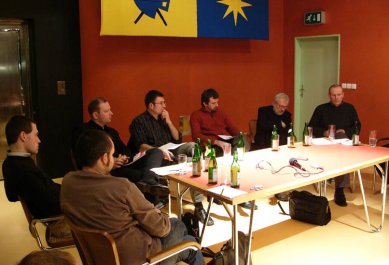
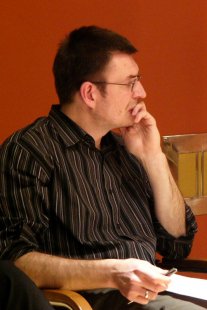

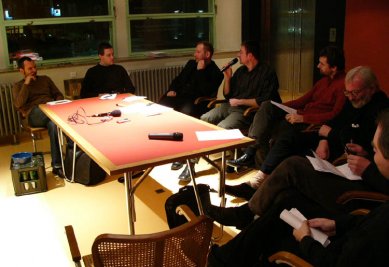
15 comments
add comment
Subject
Author
Date
fyzická závrať :-)
Eva
15.03.06 12:54
schemata
Jan Kratochvíl
15.03.06 12:25
originalita
Eva
15.03.06 01:18
Kde?
Jan Kratochvíl
15.03.06 02:26
Tady
Eva
15.03.06 02:30
show all comments