
The representatives rejected the modification of the archive building being constructed at Chodovec
Prague - Prague representatives rejected the modification of the city archive being built in Chodovec. The proposal included changes to the construction before its completion costing over 130 million crowns. Modern technologies were supposed to ensure data and printed material archiving, compliant with the cybersecurity law. Following today's rejection of the resolution, the construction will remain frozen, which costs between 1.3 million and two million crowns monthly, depending on the weather.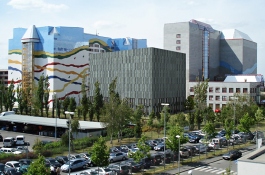
The building was originally supposed to cost 530 million crowns, the new variant is projected to be seven million crowns cheaper, according to councilor Jan Wolf (KDU-ČSL/Trojkoalice). The rough construction is completed, but further work has been stalled for five months, and its management has already cost ten million crowns. In winter months, the building needs heating, increasing the management and security costs to nearly two million crowns per month.
The councilors approved a public tender to be announced last April without publication in the negotiation procedure. However, the representatives rejected the method of announcing the tender, where only one supplier is contacted. Some of them, members of previous city councils, are already facing criminal prosecution due to the previous tender for the management of the opencard system being conducted in this way.
The under-construction building in Chodovec is expected to provide Prague with 6,300 square meters of space. It is intended to house a data center, a digitization center, an electronic document archive, and an archive of nearly 17,000 meters of documentation. It is meant to serve for another 30 to 50 years. Project modifications are required not only for cybersecurity but also because some technologies used in the 2011 project are no longer manufactured. Besides the main city archive, the premises also house the State District Archive and the National Archive.
Prague announced a tender for the construction supplier back in 2012, but there was a long delay in selecting one. Subsequent analyses proved that there was no other solution. The capacity of the current archive will be filled by 2016, and moreover, many documents are stored in various locations across Prague, often in unsuitable conditions.
In the new facilities, digitized archives and documents will be stored, as well as paper official files. Some documents were temporarily stored in various buildings following the floods in 2002, for example in the train station building in Bubny or in the Clam-Gallas Palace at Mariánské náměstí.
The English translation is powered by AI tool. Switch to Czech to view the original text source.
0 comments
add comment
Related articles
0
23.11.2017 | Prague archivists are beginning to move to a new building in Chodovec
0
10.07.2014 | Praha has started the construction of an archive in Chodovec for 640 million
0
27.02.2014 | Prague will build a new wing of the archive in Chodovec for 640 million
0
11.02.2014 | The Prague council approved the construction of an archive in Chodovec for 640 million.
0
22.08.2013 | Prague will build an archive in Chodovec for 640 million