
The Pardubice Region wants to support housing in outlying areas
Pardubice – A shortage of affordable housing can deepen disparities between regions and contribute to population decline in outlying areas. The Pardubice Region is therefore exploring ways to support housing construction, make use of vacant buildings and improve living and working conditions in less developed parts of the region, Regional Governor Martin Netolický (3PK) said today at a housing conference in Pardubice.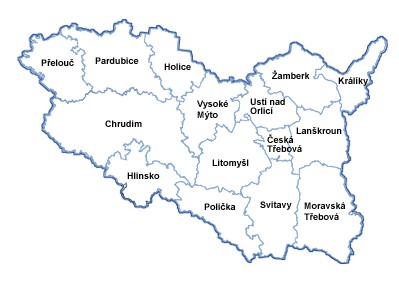
"The situation around Pardubice and Chrudim differs from that in the eastern and other outlying areas, where housing issues are compounded by a lack of job opportunities and population decline. That is why our planning cannot rely solely on aggregate figures for large areas," the governor said.
According to demographic projections, some areas in the east of the region could lose approximately five to nine percent of their population by 2040. Affordable housing and job opportunities are among the conditions that could help mitigate this trend, the governor said. Fewer residents mean lower revenues, limited investment and greater difficulty co-financing development projects.
According to the governor, housing is primarily the responsibility of the state and municipalities. "The region can help through coordination and targeted measures, but its options are also limited by the amount of funding available and the way tax revenues are allocated. If we are to support the development of the region's disadvantaged areas, we need to direct assistance to places where problems are genuinely concentrated," Netolický said.
One way to increase the housing supply could be to convert unused municipal buildings. According to the governor, municipalities sometimes acquire buildings formerly used for public services, such as post offices, and seek new uses for them. The region intends to explore ways to support the creation of housing in these premises, particularly in smaller and outlying municipalities.
Netolický also stressed the need to consider the long-term costs of investments. Operating and subsequently renovating expensive facilities can limit municipalities' capacity for further development, including housing, employment and business. Building leisure infrastructure alone may not stop residents from leaving if the area lacks other conditions needed for living and working, he said.
According to the governor, electricity distribution grid capacity and high-quality internet access need to be addressed in some parts of the region. The regional authorities are therefore in talks with distributors about upgrading the grids and are supporting high-speed internet projects in outlying areas.
A survey by CEEC Research found that 63 percent of local authorities in the region consider the supply of rental housing insufficient. Its development is hampered mainly by a lack of funding, suitable land and buildings, and unstable support rules. In the Pardubice Region, 69 percent of respondents identified affordable rentals for middle-income households as a necessity. Fifty-nine percent of respondents reported a shortage of starter homes for young people and families.
Construction began on 864 housing units in the Pardubice Region in the first half of this year, up 23 percent year-on-year. Nevertheless, construction per capita lagged behind the national average. A total of 639 housing units were completed, eight percent fewer than last year.
The English translation is powered by AI tool. Switch to Czech to view the original text source.

0 comments
add comment