
The demolition of Těšnov is a memento, but industrial buildings have not won yet
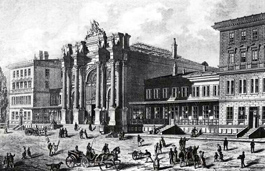 |
"The demolition of Těšnov station is a trauma from the pre-November heritage care and a cautionary reminder; however, there is nothing to suggest that something similar could not happen again," said Kateřina Bečková, chairwoman of the Club for Old Prague, to ČTK. However, according to her, it will not be a demolition per se, as the awareness and conscience of society regarding heritage has shifted somewhat.
"However, even in seemingly commendable projects of various 'revitalizations', ideas are appearing that can match the brutality of Těšnov's demolition. From this perspective, the planned reconstruction of Klementinum raises concerns," she stated.
Concerns that the demolition of Těšnov was not a sufficient reminder are also shared by Benjamin Fragner, director of the Research Center for Industrial Heritage at the Czech Technical University. For instance, because every further example of the destruction of a monument is never entirely identical, it is thus possible to find loopholes and excuses for further demolitions, he told ČTK.
Architecture demonstrating the industrial era is being demolished even today, as evidenced by the exhibition and book "What We Have Torn Down," prepared by the aforementioned research center. The total number of destroyed buildings in just the last ten years amounts to hundreds.
"For many of us who watched the demise of the station helplessly at the time, Těšnov has rather become a shorthand, symbolic expression of a cautionary experience. It became a model example of obsessive stubbornness and arrogance that led to the realization of a questionable project. It deliberately aimed at the disappearance of undeniable values," Fragner believes.
Similar arrogance, but often also the vocabulary used have, according to him, haunted the cases of today even after a quarter of a century. "Let us recall the ongoing discussions about a location not far from Těšnov, concerning the paramount monument of railway development, the Masaryk railway station complex," he reminds one of the developers' plans, which are now likely only hindered by the economic crisis.
"Yet we are 25 years further along; the arguments of the expert community, as well as the interest and awareness of the vanishing values of industrial heritage, can no longer be ignored. In this, I see an optimistic sign of recalling this somewhat strange anniversary," Fragner concluded.
Těšnov was not saved from destruction even though it was a cultural monument. Even after 1989, monuments were sometimes deliberately destroyed; very few were as significant as Těšnov.
According to experts, the demolition of Špačkova House in the 1990s was also a symbolic demolition in Prague. The later demolition of the Ringhoffer factories, one of Prague's significant industrial monuments, directly led to the establishment of the Industrial Traces biennale, which has been commemorating the cultural heritage of industrial architecture since 2001.
The English translation is powered by AI tool. Switch to Czech to view the original text source.
1 comment
add comment
Subject
Author
Date
Přepisovatelé dějin
Dr. Lusciniol
16.03.10 01:16
show all comments