
10,000 people visited the restored synagogue in Čkyně over four years
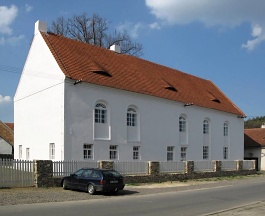 |
The building is, along with the synagogue in Bechyně, the oldest preserved Jewish place of worship in the region. It was saved thanks to volunteers, the municipality, sponsors, and in particular a Czech-Bavarian grant, with the repair costing ten million CZK. Today it is the only functioning Jewish prayer house in South Bohemia.
The synagogue also serves as an inspiration for the restoration of other synagogues in the Czech Republic and Germany. An example is the synagogue in the West Bohemian village of Podmokly. "It is really a village one, a cobbled house made of clay, with a spring outside. It is a European rarity because there were more village synagogues, but most are either demolished or turned into family homes. This one was successfully purchased - it was supposed to be a hostel for workers - and is already starting to operate," said Bromová. The example from Čkyně could also help the synagogue in Volyně, South Bohemia, where, according to Bromová, there is currently a nightclub and a second-hand shop. The altar and books from it ended up in a landfill.
The operation of the synagogue in Čkyně, which costs 180,000 CZK annually, is funded by the municipality. The synagogue receives small grants from the region for events. Concerts, beekeeping workshops, film screenings, and exhibitions are held there; one successful event was a collection of original sheets from the book Šumava by Josef Váchal.
In December, there can be up to six concerts. "We have the acoustics that attract people here. And if we could acquire a small organ, the concerts would gain a different dimension and we would have another draw," said Bromová. The region has a tradition of Celtic drumming, and one of these events attracted 300 people.
Bromová and her team want to especially attract locals. People also travel from Prague, Germany, and descendants of Jews. However, not all locals have accepted the synagogue. "Prejudices against Jews have been inherited: 'grandpa used to say that,'" said guide Miroslav Knotek to ČTK. Plans for the synagogue, which is open from April to November, also include the restoration of the black kitchen, where matzot, unleavened bread, would be baked.
The second Jewish prayer house in Čkyně is from 1828. Partial repairs began in the 1990s when the municipality acquired it. On the western side of the abandoned mikveh, the Jews planted grapevines in 1922, which still bear fruit today.
The beginnings of Jewish settlement in Čkyně date back to the 16th century. In 1825, there were 677 inhabitants in the town, of which 151 were Jews; by 1930, only 11 remained. The last local Jewish woman and resident of the synagogue, Karolina Španingerová, died in Březnice in 1984. The Jewish cemetery is also preserved and renovated. It covers 2058 square meters and has nearly 400 tombstones. A peculiarity is the western orientation of most tombstones facing the mortuary at the entrance. Enthusiasts recently repaired the retaining wall that had collapsed.
In 2013, the synagogue in Český Krumlov also reopened after repairs. The restoration of the synagogue in Písek has been in preparation for more than ten years.
The English translation is powered by AI tool. Switch to Czech to view the original text source.

0 comments
add comment