
A new book showcases village square chapels in the South Bohemian Region dating from the 19th century onwards
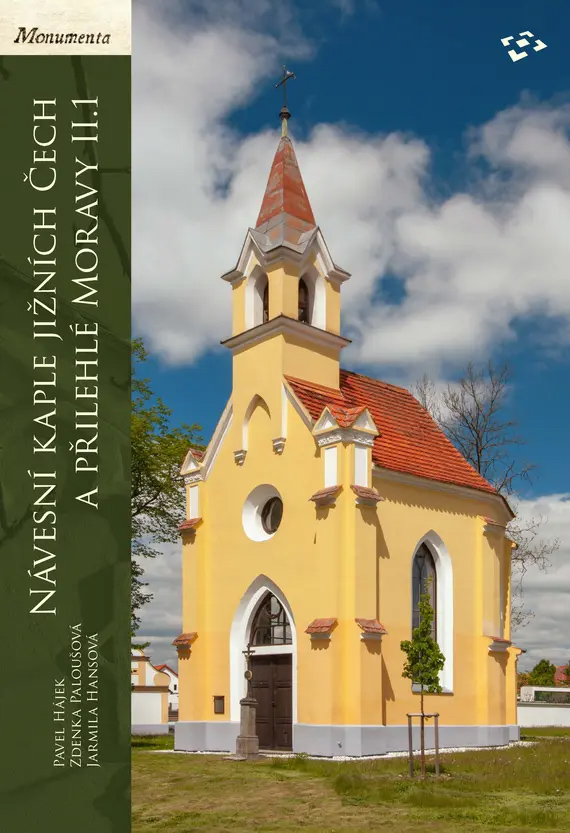 |
The book documents findings on 441 buildings dating from the mid-19th century onwards in South Bohemia and the Dačice and Slavonice areas. "Given the sheer number of buildings and the wealth of archival material we found, the book grew considerably," Hájek said. The authors therefore decided to divide the second volume into two parts. The first surveys religious buildings dating from the mid-19th century to 1945, while the second is intended to cover the remaining chapels.
Over decades of research, the authors were able to observe the condition of the small chapels immediately after the Velvet Revolution and trace their development up to the present. "Only rarely was a chapel in good structural condition and being cared for. Over those 35 years, the situation has been completely reversed. Municipalities began to take ownership of these buildings and once again see them as part of their communities," Hájek said. In many places, chapels no longer serve spiritual purposes but are centres of village social life.
The first part of the second volume explores why these buildings were constructed, how they were financed, and their social and spiritual functions. It also examines relations between neighbours and negotiations with state and ecclesiastical authorities. The comparative research reveals a diverse range of building types and styles, particularly bell-tower and gabled chapels, as well as buildings with a flat bell-cote or a rectangular bell turret above the gable.
The publication follows the first volume, which was devoted to chapels built before the mid-19th century. This time, it focuses on the period after 1848, when fundamental social and political changes transformed opportunities for residents to participate in various aspects of civic life in their municipalities, leading to an increase in the number of newly founded chapels. This process continued during the First Czechoslovak Republic and only tapered off towards the end of the 1930s. In the vast majority of cases, village green chapels were an expression of community solidarity and a desire to create a shared space for gatherings, the spiritual protection of the village, and the celebration of Mass.
The English translation is powered by AI tool. Switch to Czech to view the original text source.

0 comments
add comment