
Almost five billion from the EU will go for the repair of Czech housing estates
 |
The total amount, however, is somewhat lower than originally planned. Still, in the spring, the Ministry of Regional Development promised more than seven billion crowns, with the total amount, including Czech sources, expected to reach 8.3 billion crowns. However, it is the Czech Republic, not Brussels, that will determine how much will be allocated for the renovation of housing estates, as the country received a certain amount from the EU for the next six years. The division of this amount, however, must be managed by the country itself.
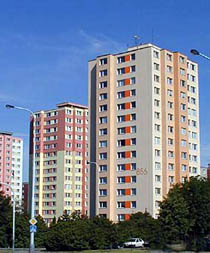
Approximately four million people live in panel apartments in the Czech Republic. The most panel buildings were constructed between 1971 and 1980, during which around 33,000 buildings with more than 468,000 apartments were built. Although this represents roughly a third of the entire housing stock in the republic, a large portion is in a neglected state. Experts estimate that the costs for renovating all panel buildings at once range from 300 to 400 billion crowns.
Since the early 1990s, the ownership structure of houses and apartments has fundamentally changed. Cities, which largely owned the housing estates, preferred to sell the apartments to tenants, who are now repairing them with their own money. The regulated rents were insufficient to cover operational costs for the municipalities. Now, cities are seeking funds primarily for the improvement of housing estates, where there is a lack of parking space, public greenery, and playgrounds.
Nevertheless, the money from the EU represents a turning point. Brussels had not previously provided funds for this purpose. However, new EU countries emphasized that housing estates face crime and social exclusion of residents, persisting until the EU conceded. Additionally, new members of the European community were supported by countries such as France and Italy. Until now, those interested in support had to turn only to the state, which subsidized interest on loans and emergency repairs. This year, approximately 800 million crowns will be allocated in this way.
The English translation is powered by AI tool. Switch to Czech to view the original text source.
0 comments
add comment