The conference aims to rehabilitate the architecture of the socialist era
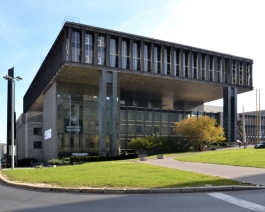 |
Often these are buildings that are valuable in themselves and also serve as significant historical evidence, says Jakub Potůček from the National Gallery in Prague, where he deals with modern and contemporary architecture and who will be one of the speakers. He reminds us that in architecture, just like in art, the notion of progressive and regressive epochs no longer applies.
"Today, no one claims that Gothic is worse than Renaissance or that our interwar architecture is better than that from 1948 to 1989. Buildings from all periods represent cultural heritage, evidence of the life and thoughts of society, and not only because of this do they deserve protection," he states. The conference should therefore address how society should treat modern cultural heritage. It will discuss whether these structures should be reconstructed or demolished, how heritage conservation evaluates socialist architecture, or why it is mostly perceived negatively by the general public.
Even though we speak of architecture from the socialist era, the architectural culture of the entire forty-year period was not dominated by just one or two directions, but by several styles, Potůček reminds us. Even in the 1950s, which are automatically associated with the dictate of ideologically engaged socialist realism. At the beginning of this decade, construction was still commonly done in the spirit of functionalism, while at its end, the playful decorative style known as Brussels made a comeback.
Besides that, many so-called non-stylish buildings were created, which Potůček refers to as engineering architecture. The 1960s were the most diverse, characterized by optimism and boundless faith in techniques and technologies. Progressive tendencies that influenced Western architecture were also manifested in the Czech lands. Alongside brutalism, there was also machinism, high-tech, and even postmodernism.
The fifth edition of the conference Crossroads of Architecture will therefore be titled Architecture with the Red Star without Stigmas and Prejudices. It has been prepared by the program council led by the director of the National Heritage Institute, Naděždy Goryczkové.
The English translation is powered by AI tool. Switch to Czech to view the original text source.

0 comments
add comment