
How is the quality of integrated blinds ScreenLine verified?

Publisher
Tisková zpráva
21.11.2011 11:00
Tisková zpráva
21.11.2011 11:00
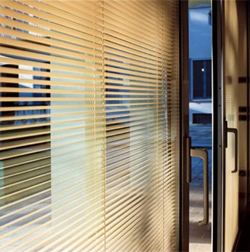 |
Integrated interstitial blinds have recently been receiving well-deserved attention from clients who are slowly discovering all the advantages that the unique design of ScreenLine blinds offers and can calculate their return on investment over time. We recently introduced the integrated interstitial blinds ScreenLine in the article "Architects, designers, are you really offering your clients the best?", and therefore, we will only remind you of the most important aspects that make them a choice worth considering.
Practical and Economic Reasons to Say Yes
The advantages of the integrated solution are immediately apparent. A window with integrated blinds forms one aesthetically clean and compact element, with nothing protruding or sticking out. Besides architects, who find new possibilities for utilization such as in the form of interior partitions and dividers, those who have already experienced cleaning a window with a blind, where taut strings and the top profile hinder the process will rejoice, as will parents who appreciate the virtually zero risk of damage, even when their children are playing near the blinds. The integrated solution will also be appreciated by those who have experience with the use and behavior of outdoor blinds in strong winds.However, the main advantage of integrated interstitial blinds lies in their interaction with incoming thermal radiation. While traditional internal blinds can only shade sunlight and cannot manage heat rays, interstitial blinds can regulate this crucial factor. As a result, much less heat enters a house or apartment during the summer, improving overall comfort and yielding significant energy savings in the case of installed air conditioning. In winter, this solution, in turn, prevents unwanted window condensation.
Thorough Testing as a Guarantee of Quality
The lifespan of ScreenLine integrated interstitial blinds is ensured not only by hermetically sealing the movable parts of the system between two glass panes and a touchless control system that is ensured by a patented magnetic system but also through rigorous pre-production testing of individual components. Let’s take a closer look at them. Lifespan Test
|
|


Fogging Test
|
Magnetic Properties Test
|


Dimensional Stability Test
|
Test of Free Particle Emission
|


You can see for yourself that quality and durability are a priority for ScreenLine blinds. The basic materials, as well as the manufacturing process itself, are under constant control both from company laboratories and certified testing facilities. All ScreenLine products are certified by leading testing laboratories for use in insulating glass in all countries of the world.
> www.screenline.cz
The English translation is powered by AI tool. Switch to Czech to view the original text source.
0 comments
add comment