
<p>Five years ago, the National Museum of Egyptian Civilization was opened.</p>
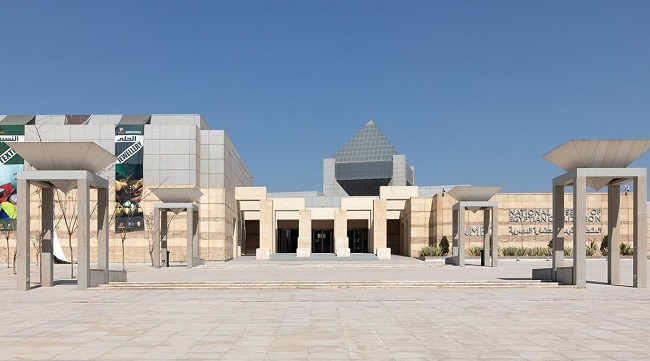 |
Cairo/Prague - Five years ago, on April 3, 2021, a ceremonial procession transporting 22 mummies of Egyptian rulers departed from the Egyptian Museum in downtown Cairo amid the sounds of honorary salutes. The remains of 18 kings and four queens from ancient Egypt, including Ramses II and one of the most powerful women among the Egyptian pharaohs, Hatshepsut, rested in the National Museum of Egyptian Civilization (NMEC) in the southern part of the metropolis, which then fully opened. The journey, preceded by several hours of cultural programming, was streamed online for viewers.
The remains traveled through the city on allegorical cars. The extravagant procession, which cost Egypt several million dollars, set out just before eight in the evening from the Egyptian Museum on the banks of the Nile to the new museum building in the Cairo district of Fustat. The remains had been kept in the Egyptian Museum without major relocations for about 120 years. The five-kilometer journey, lined with spectators and volunteers in period costumes, was completed by the procession in 40 minutes. At the new resting place of the rulers, they were welcomed by Egyptian President Abdel Fattah el-Sisi. The remains, which owe their preservation over millennia to ancient mummification techniques, were placed in special boxes filled with nitrogen. The surface of the path on which the procession drove was newly paved to ensure the ride was as smooth as possible.
Most of the 22 mummies that were gradually discovered near Luxor since 1881 had spent the last century in the Egyptian Museum in Tahrir Square. The pharaohs had been displayed together in a small room since the 1950s, without adequate explanatory labels. The National Museum of Egyptian Civilization exhibits them separately - in an environment reminiscent of the underground of royal tombs, and in some cases also with CT images of the mummies.
The permanent collection in the museum is divided into two separate parts, chronological and thematic. The chronological sections are as follows: prehistoric Egypt, early dynasties, pharaohs, Greco-Roman period, Coptic period, medieval period, Islam, modern and contemporary periods. The thematic sections are: dawn of civilization, the Nile, writing, state and society, material culture, faith and thought, and the gallery of royal mummies.
In comparison to the Grand Egyptian Museum (GEM), which opened near the pyramids in Giza last November, NMEC has a relatively strong collection of Egyptian prehistory, starting from the Stone Age.
The English translation is powered by AI tool. Switch to Czech to view the original text source.

0 comments
add comment