
Istanbul 2005: Grand Bazaar of Architecture
Under the title Cities: Grand Bazaar of Architecture/s, the XXII World Congress of Architecture UIA took place in Istanbul from July 3 to July 10, 2005. The first day was reserved for participant registration, and the main program for the public followed from July 4 to July 7, with the final three days dedicated to the General Assembly of the International Union of Architects (UIA). The congress was attended by around 7,500 registered participants from 128 countries around the world. Approximately a third of the participants were "locals," that is, from Turkey, but even the remaining 5,000 is an impressive number. I do not have exact statistics available, but it seems that a good half of the participants were students, primarily from Turkey, but many came from Balkan countries, Iran, Central Asia, and the former Soviet Union. The composition of the congress visitors always partially depends on the location of the congress: the next one will be in 2008 in Turin, and a serious candidate for 2011 is Durban, South Africa.
UIA awards several prizes on the occasion of the congresses. The UIA Gold Medal, awarded since 1984 for lifetime contributions to the field, is the most significant honor an architect can receive from their peers. The award decision is made by a jury composed exclusively of architects under the presidency of the UIA president, currently Brazilian architect, urban planner, and politician Jaime Lerner. In the history of the award, it has been granted to Hassan Fathy from Egypt, Reima Pietila from Finland, Charles Correa from India, Fumihiko Maki from Japan, Rafael Moneo from Spain, Ricardo Legoretta from Mexico, and Renzo Piano from Italy, with Tadao Ando joining them this year. The Auguste Perret Prize for the use of technology in architecture was awarded to Werner Sobek from Germany, the Sir Patrick Abercrombie Award for urban planning and land development went to Nuno Portas from Portugal, and the Jean Tschumi Award for critical work and education in architecture was shared between the Catalan magazine Quaderns and former Architectural Review editor Peter Davey. The Sir Robert Matthew Prize for improving the quality of human settlements was awarded to Stefan Foster from Germany and Xiaodong Wang from China.
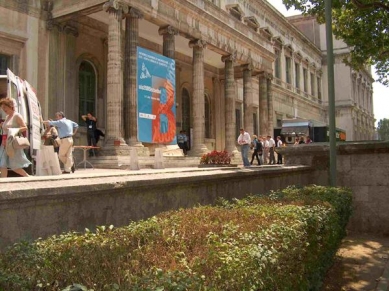
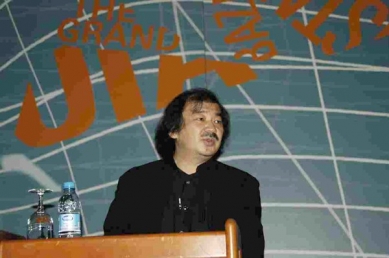
The program for the four main congress days was literally packed with lectures, presentations, and exhibitions. Meetings of individual working groups took place in parallel across thirty halls and rooms in four buildings – the congress center, the Faculty of Architecture, and two Istanbul universities. The main draw of the program was the lectures by prominent figures in contemporary architecture and design. Robert Venturi and Denise Scott Brown, Peter Eisenman, Michael Sorkin, Shigeru Ban, and several others – it was sometimes difficult to choose when the program offered two attractive names at different venues at the same hour. Zaha Hadid reliably filled the largest hall of the congress center, which has 2,500 seats. However, the most famous architect of the present drew a significantly larger audience, making it practically impossible to pass through the hall. The atmosphere resembled more of a rock concert than an academic lecture. When Hadid finally appeared on stage with a slight delay, cameras started clicking, and the crowd erupted into thunderous applause. Following was a presentation of recent projects introduced under the theme Architecture as an Abstraction of Space. Unlike other lectures, there was no discussion afterward, just prolonged applause. Another laureate of the Pritzker Prize, Australian Glenn Murcutt, represents in many ways the antipode of Zaha Hadid. His architecture is certainly not dramatic or spectacular; it is characterized primarily by its elegant simplicity. Rather than a grand gesture, it represents an effort to blend with the landscape and natural surroundings. Murcutt’s expression is as clear as his buildings, which, in the conditions of the Australian landscape, relate more to geological and climatic contexts than to the landscape as we understand it in Central Europe. Among the speakers was also Ross Lovegrove, a star of contemporary design. He convincingly demonstrated that his fame has a solid foundation. He spoke about the working method of his studio, the search for form, and design in the age of computer aesthetics, and the difference between human and computer drawing (while acknowledging both their irreplaceable roles in the design process). It seems as though these three distinctly different creators – the dramatic Hadid, the considerate Murcutt, and the fluid Lovegrove – reflect fundamental themes and directions of contemporary architecture and design.
The accompanying program of several dozen exhibitions throughout the city offered a wide range of projects from small presentations to major showcases from both the history and contemporaneity of architecture. Student videos of urban landscapes, presentations from the East Asian section of docomomo, a case study of a social center for mothers with children in Senegal, a project for infrastructure revitalization in Seoul, as well as showcases of contemporary Romanian or Japanese architecture or an exhibition summarizing the history of the Aga Khan Award, founded in 1977 to support Islamic culture through architectural creation – all of this and much more was offered at the Grand Bazaar of Architecture, living up to its name. The exhibition of the latest edition of the European Prize for Architecture / Mies van der Rohe Award 2005 began its journey across Europe in Istanbul. A showcase of Catalan architects' work abroad also arrived from Barcelona, clearly demonstrating the potential of a united Europe in the development of professional opportunities: it included over 500 works (realizations and projects) by 242 architects, registered in Catalonia and working worldwide.
The Golden Ratio prepared the exhibition Czech Secession in Photography Ester Havlová based on an order from the Ministry of Foreign Affairs, which was part of the Art Nouveau - From Europe to Istanbul exhibition at the Imperial Mint of the Topkapi Palace (similar in character and location to our Imperial Stable at Prague Castle). It would, of course, be nice if the next time it was possible to present the current form of Czech architecture, which rarely gets involved in international comparisons.
An interesting exhibition from recent history, whose impact reaches into the present, was prepared by the German Institute für Auslandsbeziehungen. The extensive exhibition titled Zwei deutsche Architekturen 1949 - 1989 examined the differences and similarities of architecture in divided Germany in the second half of the 20th century. The exhibition, meticulously prepared with proverbial thoroughness, was based on a comparison of projects – always one from the former GDR and one from the FRG – that belonged to the same typological category. The exhibition speaks volumes about the relationship between architecture and politics, showing the distortion of criteria that occurs in a totalitarian regime. Let us hope that it will be possible to bring the exhibition to our country to help open a debate about how Czech architecture fared under the communist regime and what consequences it bore.
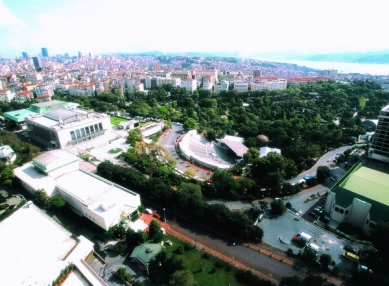
Istanbul provided a unique framework for the meeting of architects. In the metropolis on both sides of the Bosphorus, Europe and Asia meet not only geographically but, above all, culturally. Today, approximately 12 to 15 million people live here over an area of 7,500 m², but in the mid-60s, Istanbul had just under 2 million inhabitants. The significant European identity that the city acquired in the second half of the 19th and the beginning of the 20th century, which is immediately evident in its elegant neighborhoods and suburbs, confronts a massive influx of immigrants from the eastern part of Turkey, predominantly a Muslim rural population. The dramatic growth of the city is reflected in, among other things, the increase in illegal construction production, with some sources claiming that up to 70% of buildings are without permits. A large portion pertains to housing for new immigrants, but this does not mean that these are emergency colonies: in many cases, it just indicates that the building permit procedure had not been completed, and the acceptance of the building had not taken place. The authorities take a more or less tolerant stance towards this situation and try to be more of a partner than an accuser to the private actors in the city's development. Urban transport and infrastructure are in very good condition, and it is evident that substantial investments are being made in them; with the support of the European Union, revitalization projects for neglected parts of old Istanbul are underway with active participation from homeowners. Istanbul is facing growth difficulties that have no parallel in any other city in Europe, but it seems to be strong and rich enough to deal with them.
UIA awards several prizes on the occasion of the congresses. The UIA Gold Medal, awarded since 1984 for lifetime contributions to the field, is the most significant honor an architect can receive from their peers. The award decision is made by a jury composed exclusively of architects under the presidency of the UIA president, currently Brazilian architect, urban planner, and politician Jaime Lerner. In the history of the award, it has been granted to Hassan Fathy from Egypt, Reima Pietila from Finland, Charles Correa from India, Fumihiko Maki from Japan, Rafael Moneo from Spain, Ricardo Legoretta from Mexico, and Renzo Piano from Italy, with Tadao Ando joining them this year. The Auguste Perret Prize for the use of technology in architecture was awarded to Werner Sobek from Germany, the Sir Patrick Abercrombie Award for urban planning and land development went to Nuno Portas from Portugal, and the Jean Tschumi Award for critical work and education in architecture was shared between the Catalan magazine Quaderns and former Architectural Review editor Peter Davey. The Sir Robert Matthew Prize for improving the quality of human settlements was awarded to Stefan Foster from Germany and Xiaodong Wang from China.
The program for the four main congress days was literally packed with lectures, presentations, and exhibitions. Meetings of individual working groups took place in parallel across thirty halls and rooms in four buildings – the congress center, the Faculty of Architecture, and two Istanbul universities. The main draw of the program was the lectures by prominent figures in contemporary architecture and design. Robert Venturi and Denise Scott Brown, Peter Eisenman, Michael Sorkin, Shigeru Ban, and several others – it was sometimes difficult to choose when the program offered two attractive names at different venues at the same hour. Zaha Hadid reliably filled the largest hall of the congress center, which has 2,500 seats. However, the most famous architect of the present drew a significantly larger audience, making it practically impossible to pass through the hall. The atmosphere resembled more of a rock concert than an academic lecture. When Hadid finally appeared on stage with a slight delay, cameras started clicking, and the crowd erupted into thunderous applause. Following was a presentation of recent projects introduced under the theme Architecture as an Abstraction of Space. Unlike other lectures, there was no discussion afterward, just prolonged applause. Another laureate of the Pritzker Prize, Australian Glenn Murcutt, represents in many ways the antipode of Zaha Hadid. His architecture is certainly not dramatic or spectacular; it is characterized primarily by its elegant simplicity. Rather than a grand gesture, it represents an effort to blend with the landscape and natural surroundings. Murcutt’s expression is as clear as his buildings, which, in the conditions of the Australian landscape, relate more to geological and climatic contexts than to the landscape as we understand it in Central Europe. Among the speakers was also Ross Lovegrove, a star of contemporary design. He convincingly demonstrated that his fame has a solid foundation. He spoke about the working method of his studio, the search for form, and design in the age of computer aesthetics, and the difference between human and computer drawing (while acknowledging both their irreplaceable roles in the design process). It seems as though these three distinctly different creators – the dramatic Hadid, the considerate Murcutt, and the fluid Lovegrove – reflect fundamental themes and directions of contemporary architecture and design.
The accompanying program of several dozen exhibitions throughout the city offered a wide range of projects from small presentations to major showcases from both the history and contemporaneity of architecture. Student videos of urban landscapes, presentations from the East Asian section of docomomo, a case study of a social center for mothers with children in Senegal, a project for infrastructure revitalization in Seoul, as well as showcases of contemporary Romanian or Japanese architecture or an exhibition summarizing the history of the Aga Khan Award, founded in 1977 to support Islamic culture through architectural creation – all of this and much more was offered at the Grand Bazaar of Architecture, living up to its name. The exhibition of the latest edition of the European Prize for Architecture / Mies van der Rohe Award 2005 began its journey across Europe in Istanbul. A showcase of Catalan architects' work abroad also arrived from Barcelona, clearly demonstrating the potential of a united Europe in the development of professional opportunities: it included over 500 works (realizations and projects) by 242 architects, registered in Catalonia and working worldwide.
The Golden Ratio prepared the exhibition Czech Secession in Photography Ester Havlová based on an order from the Ministry of Foreign Affairs, which was part of the Art Nouveau - From Europe to Istanbul exhibition at the Imperial Mint of the Topkapi Palace (similar in character and location to our Imperial Stable at Prague Castle). It would, of course, be nice if the next time it was possible to present the current form of Czech architecture, which rarely gets involved in international comparisons.
An interesting exhibition from recent history, whose impact reaches into the present, was prepared by the German Institute für Auslandsbeziehungen. The extensive exhibition titled Zwei deutsche Architekturen 1949 - 1989 examined the differences and similarities of architecture in divided Germany in the second half of the 20th century. The exhibition, meticulously prepared with proverbial thoroughness, was based on a comparison of projects – always one from the former GDR and one from the FRG – that belonged to the same typological category. The exhibition speaks volumes about the relationship between architecture and politics, showing the distortion of criteria that occurs in a totalitarian regime. Let us hope that it will be possible to bring the exhibition to our country to help open a debate about how Czech architecture fared under the communist regime and what consequences it bore.
Istanbul provided a unique framework for the meeting of architects. In the metropolis on both sides of the Bosphorus, Europe and Asia meet not only geographically but, above all, culturally. Today, approximately 12 to 15 million people live here over an area of 7,500 m², but in the mid-60s, Istanbul had just under 2 million inhabitants. The significant European identity that the city acquired in the second half of the 19th and the beginning of the 20th century, which is immediately evident in its elegant neighborhoods and suburbs, confronts a massive influx of immigrants from the eastern part of Turkey, predominantly a Muslim rural population. The dramatic growth of the city is reflected in, among other things, the increase in illegal construction production, with some sources claiming that up to 70% of buildings are without permits. A large portion pertains to housing for new immigrants, but this does not mean that these are emergency colonies: in many cases, it just indicates that the building permit procedure had not been completed, and the acceptance of the building had not taken place. The authorities take a more or less tolerant stance towards this situation and try to be more of a partner than an accuser to the private actors in the city's development. Urban transport and infrastructure are in very good condition, and it is evident that substantial investments are being made in them; with the support of the European Union, revitalization projects for neglected parts of old Istanbul are underway with active participation from homeowners. Istanbul is facing growth difficulties that have no parallel in any other city in Europe, but it seems to be strong and rich enough to deal with them.
The English translation is powered by AI tool. Switch to Czech to view the original text source.
0 comments
add comment