
Businessman Petr Dědek would like to build a speed skating hall in Pardubice
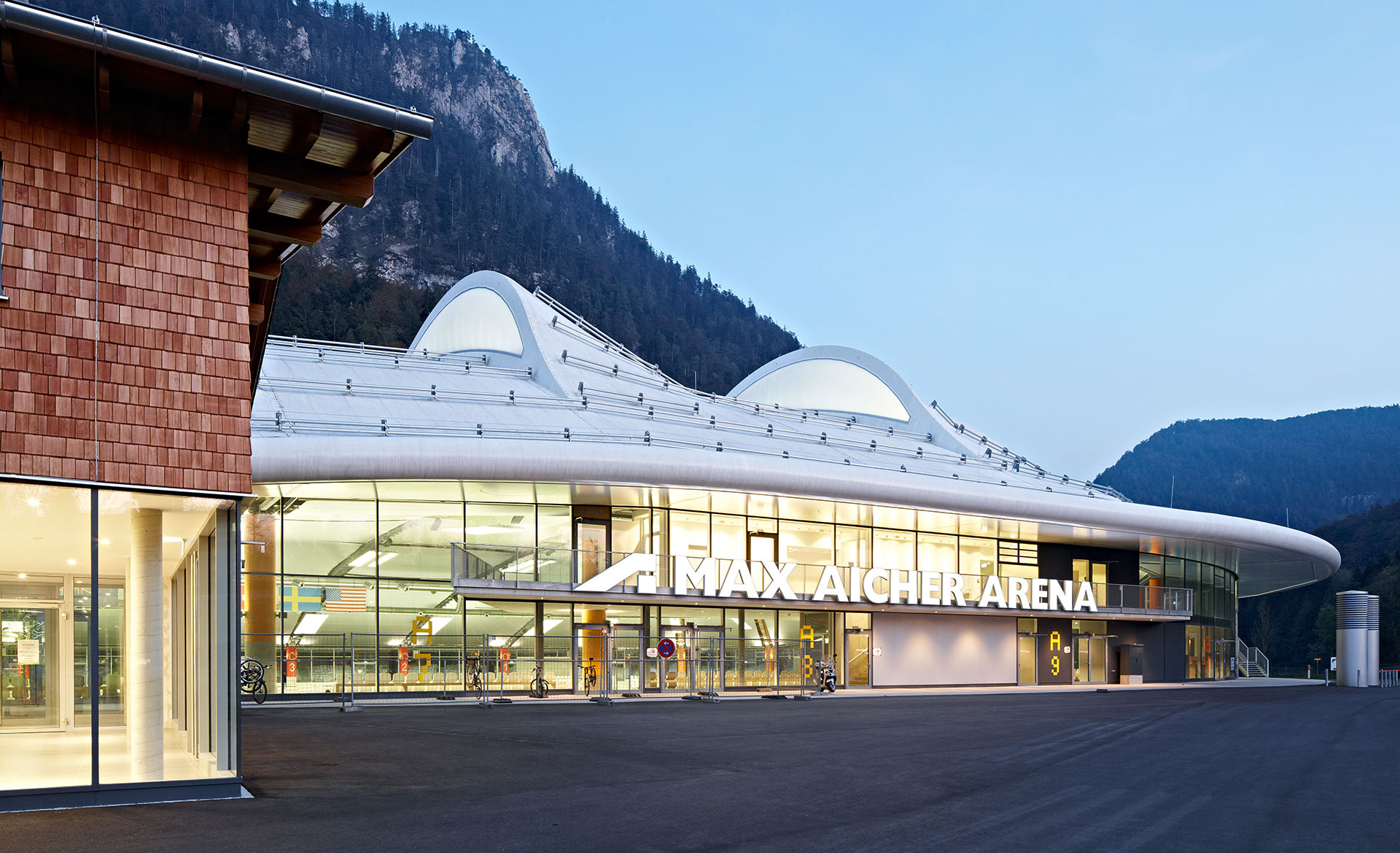 |
| Behnisch Architekten: Speed Skating Stadium “Max Aicher Arena”, Inzell, project 2011 |
Pardubice – The Ice Sports Hall in Pardubice is a vision that entrepreneur Petr Dědek would like to realize. The facility with a speed skating track could be built in the Hůrka area. The project would need support from the state and the city. Dědek told reporters today. He estimates that the hall with facilities and accommodation could cost around one billion Czech crowns. According to the city leadership, the location of the hall is not ideal, as they have other plans for the area. Dědek is preparing to build a large multifunctional hall for nearly 22,300 people in the regional city.
"We are ready to co-invest in a beautiful ice sports hall if there is an agreement with the city and the state is interested," said Dědek. According to him, the Hůrka area would be suitable for construction, where the city plans residential development. The investor would need to change the land study and the zoning plan. He has not yet presented the idea to the city.
According to the land study for the Hůrka area by road I/36, a primary school with a sports facility for students and the public and a parking garage should be built."We will definitely not be retreating from our intentions; our priority is the accessibility of housing, including quality civic amenities," said Deputy Mayor Jakub Rychtecký (Žijeme Pardubice).
Dědek and his colleagues were inspired by the success of speed skater Metoděj Jílek at the Olympics. He also read old articles about when a hall for Martina Sáblíková was being considered around 2010.
"The hall could be built in four years; it is realistic. We have the know-how, we have an operational scheme. It would not only function for elite sports," said Dědek.
The ice sports hall could have a capacity of 400 seats, and the oval could measure 400 meters. There could be two ice surfaces and space for curling. The facility would offer amenities for athletes, including accommodation. The project can be successful and does not need to be several hundred meters above sea level, as is commonly discussed in debates about speed skating halls, he stated.
The Hůrka area is a former military complex. The entrepreneur plans to build a parking garage there, which would provide additional capacity for his multifunctional hall in Nová Cihelna. From there, shuttle buses would transport spectators to concerts or sporting events and back to their cars.
"For projects to be successful, it is necessary to look at their sustainability," said Dědek. In combination with a parking garage, accommodation, and good transport accessibility, the project could work well, he said.
The topic of building a speed skating hall in the Czech Republic has resonated several times before. It was particularly prominent after Sáblíková's successes at the Vancouver 2010 Games, where she won two gold medals and one bronze. In the past, support for the project was also expressed by current Prime Minister Andrej Babiš, who, in mid-February while congratulating Jílek on his gold medal, mentioned Sáblíková's coach, Petr Novák, as the reason why the hall was not built. "This is a topic for which some journalists still want to make fun of me. It's a pity that they don't sometimes ask Martina Sáblíková's coach, Mr. Novák; he would tell them how it all was. He would confirm how I showed him the lands in Brno, which he did not like because of the altitude, or a place in Nové Město na Moravě, which the biathletes did not like," Babiš stated.
Dědek also talked about another vision at the meeting with reporters, which is a cable car from the train station to the multifunctional arena in Nová Cihelna. He had a feasibility study done for both the hall and the cable car, which makes them realizable projects. "The cable car is a great mode of transport that can carry 4,000 people an hour. As I said, I am a visionary; it would be a great transport solution that would help the city, and we are ready to participate in it," said Dědek.
The English translation is powered by AI tool. Switch to Czech to view the original text source.
0 comments
add comment