
Demolition at Bedřiška was in violation of regulations, stated the Ostrava magistrate
 |
The mayor of the Mariánské Hory and Hulváky district, Patrik Hujdus (Mayors for Ostrava), told ČTK that the district did not act unlawfully but based on a valid decision from the building authority. He still needs to familiarize himself more closely with the magistrate's conclusions.
"The reason for the cancellation was, according to the magistrate, the illegality of the permit, as the request from the Mariánské Hory and Hulváky city district and the actions of the Vítkovice building authority had significant deficiencies from the very beginning. The decision is not yet final; the city district can appeal," stated Lehotská. She added that the residents of Bedřiška continue to strive for the purchase or establishment of building rights for the remaining houses, trying to save the settlement. In the past, their efforts were supported by, for example, President Petr Pavel.
"We decided to submit a petition to the magistrate to initiate a review process because it was clear to us from the very start of the demolitions that the actions of the owner, namely the city district and the building authority, were not in accordance with the law. The magistrate confirmed our position with its decision by stating that there were numerous violations of both building regulations and administrative procedure," added Lehotská.
The demolition of selected houses in the colony began on November 12. They were empty buildings, and the district defended itself by saying that demolitions would prevent possible vandalism. However, in some cases, the demolished houses were part of duplexes, and families continue to live in the undemolished sections. A wave of protests arose against the demolition. People supporting the preservation of the former miner's colony criticized the city's actions, stating that they were unlawful. According to them, the city did not sufficiently inform the current residents of the settlement, where about fifty people still live.
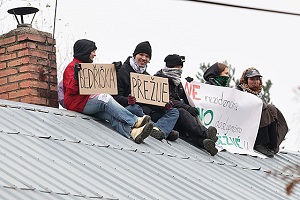
Supporters of the settlement subsequently occupied the roof of the last house designated for demolition in this wave. They repeatedly climbed onto the roof, even in adverse weather conditions. The last house was ultimately demolished by construction machinery on December 8. Early in the morning, police secured the house, activists were not inside, and it was subsequently demolished.
"The reason for the cancellation of the demolition permit is primarily that the city district provided insufficient and misleading information in the demolition permit application. Specifically, it did not mention that there are still permanent residents in the demolished duplexes and concealed the possible effects of the demolition of half of the duplex on the inhabited half. According to the magistrate, the drawing part of the demolition documentation also shows significant deficiencies. The building authority issued the demolition permit in a fast-tracked mode, even though it was not authorized to do so," said Lehotská's lawyer, Vincenc Bouček.
Mayor Hujdus stated that he needs to familiarize himself further with the magistrate's decision, as he has had it for a short time. "The city district acted in accordance with the valid decision of the building authority, which was competent to do so, and that decision achieved legal force, so we proceeded in accordance with current legislation. We had no reason to question it," said Hujdus.
The city of Ostrava's Mariánské Hory and Hulváky district does not want to manage the houses in the settlement due to their condition. According to them, they are beyond their lifespan, and repair costs are high. The district wants to gradually relocate tenants and leave the area as a strategic land reserve. They are offering alternative accommodation to the residents. The residents claim that the Finnish houses are not in such bad condition. Opponents of the demolition argue that the colony is an example of unique community work, where a socially weak area has been transformed into a functional neighborhood and is a model of harmonious coexistence between the Roma community and the majority society.
The English translation is powered by AI tool. Switch to Czech to view the original text source.
0 comments
add comment
Related articles
0
08.12.2025 | Machines demolished a house in the Ostrava settlement of Bedřiška, its supporters protested
0
08.12.2025 | In the Bedřiška colony, the demolition of a house that was previously defended by activists has begun
0
25.11.2025 | Residents of Bedřiška are calling on the city and the district for further discussions about the fate of the location
0
14.11.2025 | Supporters of Bedřiška protested for several hours on the roof of a building slated for demolition
0
11.09.2020 | Ostrava is preparing a transformation of the Bedřiška residential colony
0
28.08.2018 | Architects are looking for an alternative rescue plan for the settlement of Bedřiška
0
08.02.2018 | City Hall wants housing for young people in the Ostrava locality of Bedřiška