
The concrete plant on Rohanský Island in Prague will end in 2028; the municipality wants a farm there
Prague – The concrete plant operated by TBG Metrostav on Rohanský Island in Prague will cease operations in 2028 based on an agreement with Prague 8. The district intends to create an urban farm at the site, connected to the planned surrounding Maniny park. It would serve schools and the general public as community gardens. Representatives from Prague 8 and TBG Metrostav announced this to reporters today at the concrete plant.
According to TBG Metrostav's director Jakub Šimáček, the concrete plant, along with other operations, began functioning on Rohanský Island in 1967 as a support facility for the construction of the first sections of the metro. Since 2007, its operations have been limited solely to the concrete plant, which, like another similar facility in Libeň, uses the Vltava River for transporting raw materials.
Due to residential construction in the immediate vicinity of the concrete plant, the company has agreed with the district to end operations, and both parties have signed a contract. According to Šimáček, the company will need to ensure an alternative supply of concrete, for example, for the completion of the inner ring road, within the city, as concrete mixtures must be processed within 90 minutes of mixing, which places high demands on the speed of transportation to the construction site.
Where the new concrete plant will be located is not yet clear, according to the director. However, he believes it is necessary to start addressing what will happen to the extensive area on Rohanský Island after the cessation of operations. The current leadership of the eighth district shares this view, and they have commissioned an architectural study for the use of the concrete plant as a so-called urban farm, which would connect to the Maniny park planned by the city for the entire Rohanský Island.
"We don’t want to leave it to chance. We don’t want this place to deteriorate or turn into a ghetto for homeless people," said the deputy mayor of Prague 8, Radomír Nepil (ANO). He added that the city hall has also listened to the concerns of locals who feared that the area could become a space for concerts and noisy parties. This led to the proposal for an urban farm utilizing some prominent features of the current operation. "It doesn't burden the surroundings and at the same time brings something that we currently don’t have in Prague," said the deputy mayor.
The study on possible use of the area for the district was created by a team led by Michal Fišer from the environmental design studio třiarchitekti, which is also preparing the surrounding park for the city. According to the architect, it is essential to begin addressing the future of the concrete plant as soon as possible so that the transformation of the entire area can be coordinated and aligned with the planned park. According to Fišer, preparations for the building permit documentation should begin in the fall, which will take about two years.
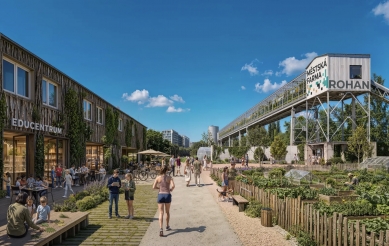
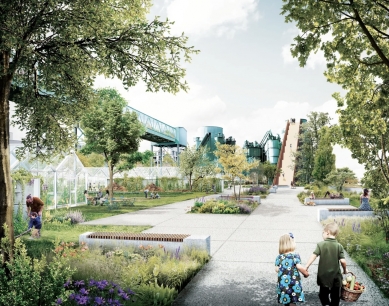
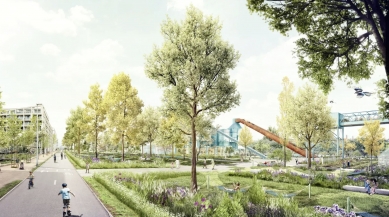
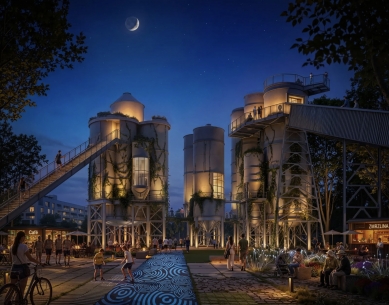
The study for the transformation of the concrete plant, according to the architect, anticipates a central space connected to the surrounding park, linked to Karlín by Breitfeldova Street. The dominant feature of the space will be preserved storage silos for raw materials for concrete production. Additionally, there will be a production zone for the farm with cultivation areas and greenhouses, where the most prominent feature would be a horizontal conveyor for gravel transformed into a suspended greenhouse.
According to Fišer, other parts will include a service and technical zone connected to a shop for local products and a café, as well as an educational center, which is to be created in the current administrative building at the entrance to the area. The current docking station will also be preserved, where ferries and excursion boats can dock. The area will be enhanced with attractions such as a lookout point, nature trails, exhibitions, or play elements for children.
So far, this is a vision that the district wants to offer to the city hall, which owns the area’s land and rents it to TBG Metrostav. According to Nepil, however, further discussions will be dependent on the new political representatives at the city hall and the district that will emerge from the October elections. He estimates that the transformation of the area would cost about hundreds of millions of crowns, but it would likely be possible to utilize European grants for it. Nepil added that the entire operation should then be economically self-sustaining.
According to TBG Metrostav's director Jakub Šimáček, the concrete plant, along with other operations, began functioning on Rohanský Island in 1967 as a support facility for the construction of the first sections of the metro. Since 2007, its operations have been limited solely to the concrete plant, which, like another similar facility in Libeň, uses the Vltava River for transporting raw materials.
Due to residential construction in the immediate vicinity of the concrete plant, the company has agreed with the district to end operations, and both parties have signed a contract. According to Šimáček, the company will need to ensure an alternative supply of concrete, for example, for the completion of the inner ring road, within the city, as concrete mixtures must be processed within 90 minutes of mixing, which places high demands on the speed of transportation to the construction site.
Where the new concrete plant will be located is not yet clear, according to the director. However, he believes it is necessary to start addressing what will happen to the extensive area on Rohanský Island after the cessation of operations. The current leadership of the eighth district shares this view, and they have commissioned an architectural study for the use of the concrete plant as a so-called urban farm, which would connect to the Maniny park planned by the city for the entire Rohanský Island.
"We don’t want to leave it to chance. We don’t want this place to deteriorate or turn into a ghetto for homeless people," said the deputy mayor of Prague 8, Radomír Nepil (ANO). He added that the city hall has also listened to the concerns of locals who feared that the area could become a space for concerts and noisy parties. This led to the proposal for an urban farm utilizing some prominent features of the current operation. "It doesn't burden the surroundings and at the same time brings something that we currently don’t have in Prague," said the deputy mayor.
The study on possible use of the area for the district was created by a team led by Michal Fišer from the environmental design studio třiarchitekti, which is also preparing the surrounding park for the city. According to the architect, it is essential to begin addressing the future of the concrete plant as soon as possible so that the transformation of the entire area can be coordinated and aligned with the planned park. According to Fišer, preparations for the building permit documentation should begin in the fall, which will take about two years.
The study for the transformation of the concrete plant, according to the architect, anticipates a central space connected to the surrounding park, linked to Karlín by Breitfeldova Street. The dominant feature of the space will be preserved storage silos for raw materials for concrete production. Additionally, there will be a production zone for the farm with cultivation areas and greenhouses, where the most prominent feature would be a horizontal conveyor for gravel transformed into a suspended greenhouse.
According to Fišer, other parts will include a service and technical zone connected to a shop for local products and a café, as well as an educational center, which is to be created in the current administrative building at the entrance to the area. The current docking station will also be preserved, where ferries and excursion boats can dock. The area will be enhanced with attractions such as a lookout point, nature trails, exhibitions, or play elements for children.
So far, this is a vision that the district wants to offer to the city hall, which owns the area’s land and rents it to TBG Metrostav. According to Nepil, however, further discussions will be dependent on the new political representatives at the city hall and the district that will emerge from the October elections. He estimates that the transformation of the area would cost about hundreds of millions of crowns, but it would likely be possible to utilize European grants for it. Nepil added that the entire operation should then be economically self-sustaining.
The English translation is powered by AI tool. Switch to Czech to view the original text source.
0 comments
add comment