Hotel by the lake

Publisher
Tisková zpráva
11.09.2007 17:00
Tisková zpráva
11.09.2007 17:00
A love for agricultural estates and attention to detail breathed new life into an old recreational property from the last century, from the days of East Germany. Architects and husband-and-wife team Johanne and Gernot Nalbach from Berlin unexpectedly fulfilled their long-held dream.
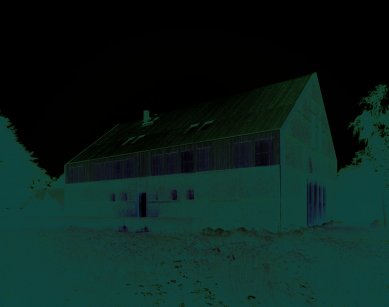
The property “Seehotel am Neuklostersee” used to be a classic agricultural estate. This very peaceful and relaxing spot, surrounded by forests, blooming meadows, and fields, is located just two and a half hours' drive from Berlin. The hotel complex is situated in a protected area next to a lake used for swimming.
In 2004, a spa wing was built to complement the original representative building and two main buildings – a stone house with a restaurant and a hotel. This created a traditional three-wing agricultural estate, typical for this region.
With an emphasis on detail, the individual buildings were furnished with a harmonious combination of old furniture and new, modern equipment and accessories. The mix of history and present gives the entire hotel a special charm. Each of the buildings has its distinctive style.
The stone house bears traces of Southern European architecture – beech parquet floors, light colors, and furnishings characteristic of a modern rustic style. Bright chairs with textile upholstery, white-painted chairs, and tables invite longer stays.
Various materials were used for the decoration of the interiors – the shade of the carpets corresponds with the color of the rooms. The modern built-in cabinets act as sculptural works, and although they contrast with the period furniture, the overall result is very harmonious.
The representative property is suitable for holding conferences, concerts, seminars, or other similar events. Beams and oak staircases harmoniously complement the terracotta floor from old French monasteries. The rooms, which are complemented by winter gardens, are exceptionally well-lit and in direct contact with nature. The winter gardens are connected to the terraces by a path paved with local granite, ensuring the connection between indoor and outdoor spaces.
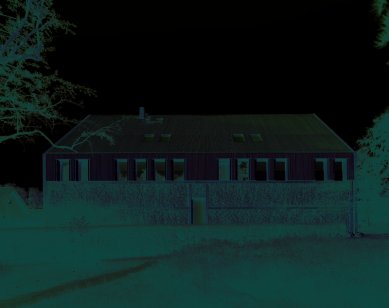
The architects aimed for the pool building not to appear archaic, which they achieved through many interesting details. The lower part of the front facade is adorned with artificially oxidized steel gutters with climbing ivy. The aging of the construction material was intentionally accelerated to integrate the new building among the existing houses from the very start. The shutters are designed to fully blend into the facade when closed.
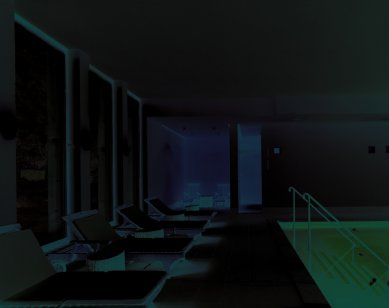
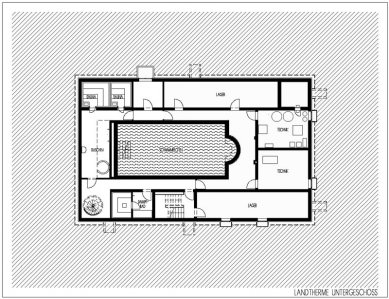
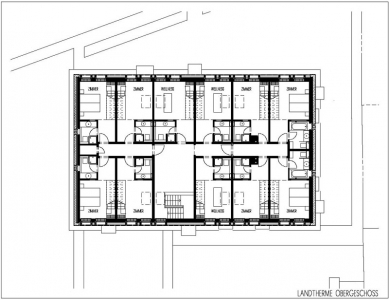
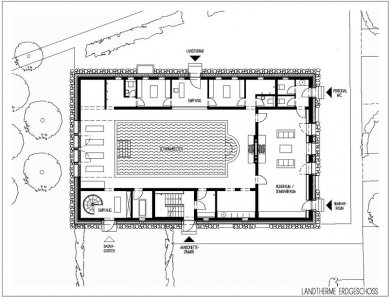
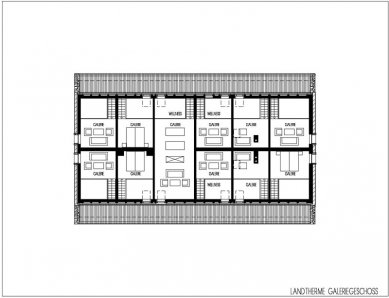
VELUX roof windows are placed almost at the same height as the larch strips, which emphasize the three-dimensional effect of the structure. The ground floor layout of the spa building is similar to that of ancient Roman baths. To minimize heat loss, adjacent rooms were arranged in groups around the pool. As in the other two buildings, the equipment is influenced by the surrounding environment. Walnut wood is used for the floor and fittings, limestone in the Turkish baths. The walls are covered with clay and straw, giving the surface a slightly different, textured luster.
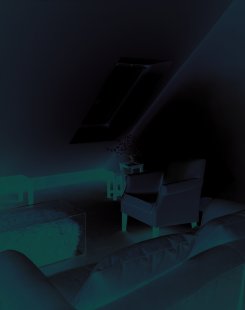
A hay bale, serving as a coffee table in the rooms, expresses the idea of symbiosis between nature and modern furnishings. As a creative element, both natural and artificial lighting were intentionally used in the buildings. Creole lights with reflective mirrors highlight the tables and walls. Roof windows bring light and fresh air into the rooms, completing their unconventional and cozy atmosphere.
> www.velux.cz
> Page of the VELUX company in the catalog
The property “Seehotel am Neuklostersee” used to be a classic agricultural estate. This very peaceful and relaxing spot, surrounded by forests, blooming meadows, and fields, is located just two and a half hours' drive from Berlin. The hotel complex is situated in a protected area next to a lake used for swimming.
In 2004, a spa wing was built to complement the original representative building and two main buildings – a stone house with a restaurant and a hotel. This created a traditional three-wing agricultural estate, typical for this region.
With an emphasis on detail, the individual buildings were furnished with a harmonious combination of old furniture and new, modern equipment and accessories. The mix of history and present gives the entire hotel a special charm. Each of the buildings has its distinctive style.
The stone house bears traces of Southern European architecture – beech parquet floors, light colors, and furnishings characteristic of a modern rustic style. Bright chairs with textile upholstery, white-painted chairs, and tables invite longer stays.
Various materials were used for the decoration of the interiors – the shade of the carpets corresponds with the color of the rooms. The modern built-in cabinets act as sculptural works, and although they contrast with the period furniture, the overall result is very harmonious.
The representative property is suitable for holding conferences, concerts, seminars, or other similar events. Beams and oak staircases harmoniously complement the terracotta floor from old French monasteries. The rooms, which are complemented by winter gardens, are exceptionally well-lit and in direct contact with nature. The winter gardens are connected to the terraces by a path paved with local granite, ensuring the connection between indoor and outdoor spaces.
The architects aimed for the pool building not to appear archaic, which they achieved through many interesting details. The lower part of the front facade is adorned with artificially oxidized steel gutters with climbing ivy. The aging of the construction material was intentionally accelerated to integrate the new building among the existing houses from the very start. The shutters are designed to fully blend into the facade when closed.
VELUX roof windows are placed almost at the same height as the larch strips, which emphasize the three-dimensional effect of the structure. The ground floor layout of the spa building is similar to that of ancient Roman baths. To minimize heat loss, adjacent rooms were arranged in groups around the pool. As in the other two buildings, the equipment is influenced by the surrounding environment. Walnut wood is used for the floor and fittings, limestone in the Turkish baths. The walls are covered with clay and straw, giving the surface a slightly different, textured luster.
A hay bale, serving as a coffee table in the rooms, expresses the idea of symbiosis between nature and modern furnishings. As a creative element, both natural and artificial lighting were intentionally used in the buildings. Creole lights with reflective mirrors highlight the tables and walls. Roof windows bring light and fresh air into the rooms, completing their unconventional and cozy atmosphere.
> www.velux.cz
> Page of the VELUX company in the catalog
The English translation is powered by AI tool. Switch to Czech to view the original text source.