
Invitation to the lecture Space Architecture (ALITER II)
30.9.2010 at 18:00 - Veletržní palác, Dukelských hrdinů 47, Prague 7
On September 30, Prague will host experts from the field of space architecture for the very first time. This will take place as part of a unique lecture held at the Trade Fair Palace, whose main goal is to introduce this new field of architecture to the Czech public and provide them with the opportunity to meet space architects. The lecture is part of the international educational cycle ALITER, which started in July this year in Valencia.
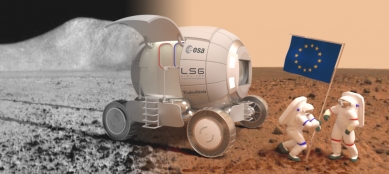
Prominent practicing architect-scientists from around the world, led by Brent Sherwood, an architect from NASA-JPL (National Aeronautics and Space Administration, Jet Propulsion Laboratory), a long-time employee of Boeing, and co-author of the first publication on this topic: "Out of This World - The New Field of Space Architecture," will familiarize listeners with the issues related to human habitation in the extreme environment of space, introduce NASA, ESA (European Space Agency), and ISRO (Indian Space Research Organisation) plans concerning human settlement in space, highlight the unique habitability of Earth’s environment compared to that of space, and lastly, offer insights into the job market in this field and opportunities for study.
"We believe that this lecture will serve as an introduction to further educational events, such as workshops and specially focused courses, through which we aim to gradually familiarize the Czech audience with our work and significant figures in the field. We would like to contribute to the sharing of scientific knowledge and participate in other international projects related to space architecture, whose potential is enormous, especially in connection with space tourism," explains the organizer of the lecture, Ondřej Doule.
Space Architecture
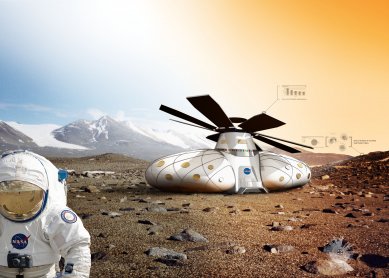
Architects' interest in human habitation in space is connected to both practical and philosophical questions. The current sole orbital habitat (the International Space Station) systemically focuses on human survival in space for the purposes of scientific research. This artificial living environment thus offers humans a minimal degree of habitability, typically determined by technological and spatial possibilities. Humans therefore adapt to the habitat environment.
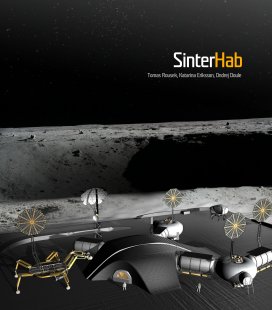
The architect in space strives to create an artificial "interface" that establishes the necessary balance between the environment and humans, fulfilling not only the requirements of human physiology but also psychology. However, parameters of extraterrestrial extreme environments, such as gravity level, absence of breathable atmosphere, extreme temperatures, and dangerous radiation, are significantly different from the properties of naturally habitable environments on Earth. The architect is thus compelled to expand their knowledge in scientific areas that are not normally required for their regular practice in designing a space habitat.
Program:
- Introduction to the lecture (Pištěk, Doule)
- Introduction to space architecture, presentation of the Space Architecture Technical Committee at AIAA (American Institute of Aeronautics and Astronautics) (Sherwood)
- Contribution on the scope of space architecture (Doule)
- Introduction of agency plans and architectural practices
NASA (Sherwood)
ESA (Imhof)
ISRO (Mohanty)
- Information about studying at the University of Houston (Bannova)
- Experiences from foreign internships at NASA and ISU (Rousek)
- New subjects in space architecture in Valencia (Polit)
- Conclusion: open discussion
The lecture will be bilingual (EN/CZ) with interpretation, and admission is free.
The lecture is organized in cooperation with the Architectural Institute in Prague (ARCHIP), People For Net a.s. with financial support from TONIT s.r.o., ISU.
More at www.spacearchitect.cz
Prominent practicing architect-scientists from around the world, led by Brent Sherwood, an architect from NASA-JPL (National Aeronautics and Space Administration, Jet Propulsion Laboratory), a long-time employee of Boeing, and co-author of the first publication on this topic: "Out of This World - The New Field of Space Architecture," will familiarize listeners with the issues related to human habitation in the extreme environment of space, introduce NASA, ESA (European Space Agency), and ISRO (Indian Space Research Organisation) plans concerning human settlement in space, highlight the unique habitability of Earth’s environment compared to that of space, and lastly, offer insights into the job market in this field and opportunities for study.
"We believe that this lecture will serve as an introduction to further educational events, such as workshops and specially focused courses, through which we aim to gradually familiarize the Czech audience with our work and significant figures in the field. We would like to contribute to the sharing of scientific knowledge and participate in other international projects related to space architecture, whose potential is enormous, especially in connection with space tourism," explains the organizer of the lecture, Ondřej Doule.
Space Architecture
Architects' interest in human habitation in space is connected to both practical and philosophical questions. The current sole orbital habitat (the International Space Station) systemically focuses on human survival in space for the purposes of scientific research. This artificial living environment thus offers humans a minimal degree of habitability, typically determined by technological and spatial possibilities. Humans therefore adapt to the habitat environment.
The architect in space strives to create an artificial "interface" that establishes the necessary balance between the environment and humans, fulfilling not only the requirements of human physiology but also psychology. However, parameters of extraterrestrial extreme environments, such as gravity level, absence of breathable atmosphere, extreme temperatures, and dangerous radiation, are significantly different from the properties of naturally habitable environments on Earth. The architect is thus compelled to expand their knowledge in scientific areas that are not normally required for their regular practice in designing a space habitat.
Program:
- Introduction to the lecture (Pištěk, Doule)
- Introduction to space architecture, presentation of the Space Architecture Technical Committee at AIAA (American Institute of Aeronautics and Astronautics) (Sherwood)
- Contribution on the scope of space architecture (Doule)
- Introduction of agency plans and architectural practices
NASA (Sherwood)
ESA (Imhof)
ISRO (Mohanty)
- Information about studying at the University of Houston (Bannova)
- Experiences from foreign internships at NASA and ISU (Rousek)
- New subjects in space architecture in Valencia (Polit)
- Conclusion: open discussion
The lecture will be bilingual (EN/CZ) with interpretation, and admission is free.
The lecture is organized in cooperation with the Architectural Institute in Prague (ARCHIP), People For Net a.s. with financial support from TONIT s.r.o., ISU.
More at www.spacearchitect.cz
The English translation is powered by AI tool. Switch to Czech to view the original text source.

0 comments
add comment