
Industrial buildings are aided by examples from Europe
 |
It will highlight industrial architecture in the Czech Republic and examples of how to seek new life for buildings that have outlived their original purpose from today until Sunday.
After the initial confusion in the 90s, the last seven years have been "crucial" for industrial sites, according to Fragner. It is precisely during these years that this field has been mapped thanks to Fragner's center.
"When comparing, something exceptional always comes to light, and that is highlighted. The inventory also revealed that there are very many industrial sites and areas in our country. And it is shown that this is not only an economic problem but also a cultural one," said Fragner.
He noted that similar approaches have been taken in European countries, where many successful (but also criticized) conversions of industrial sites can be admired today. They all started with mapping the terrain and formulating values. According to Fragner, the awareness of the values of industrial architecture has also been contributed to by the fact that these sites have increasingly been declared monuments. This makes it easier for people to learn about them.
Heritage protection can be a barrier for investors. "But when they take it into account, they realize that it is a value that can be expressed economically in some way," the expert believes.
Of approximately 40,000 immovable cultural monuments today, there are 2,863 technical ones, whereas when the heritage list was created 50 years ago, there were 1,500 technical monuments out of 30,000 protected properties.
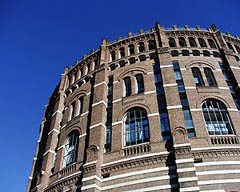
The best example of new uses of monuments that Czech tourists might know from their travels, and which is somewhat a matter of fashion, is nearby Vienna, according to Fragner. "Several rather symbolic and dominant examples of new uses have emerged - for example, the gasometers in Vienna," he stated. Many well-known sites with new uses are in Germany - in Berlin, the entire Ruhr area, and in Britain, London’s Tate Modern probably leads in popularity.
"Some examples are retroactively questioned by experts, claiming they may have disrupted the original structure. Even so, they attracted attention to this topic. And that has significantly impacted the perception of these buildings in our country," Fragner says.
The issue of new uses for industrial sites is interesting in that there is no single model for "how to do it." Industrial heritage encompasses a wide range of buildings of various forms, which are in different technical conditions and can be utilized in many ways - some are interesting because of their location in the city, others due to their architecture.
The answer to how to utilize a building must always be sought according to the specific structure. "And therein lies the difficulty; it requires a bit of imagination, but also a rational approach from the investor. It is not possible to say in advance that I will not take the existing building into account. I must look for a use that is most suitable for what is already there," says Fragner.
The English translation is powered by AI tool. Switch to Czech to view the original text source.
0 comments
add comment