
The new head of heritage conservation in Prague will focus on overseeing renovations
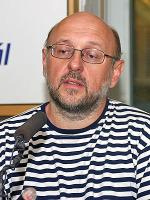 |
"At the right time, a reasonable compromise is sometimes necessary. One of my ambitions is to try to negotiate, seek solutions, and tirelessly present my proposals," said the heritage expert, who has supervised, for example, the renovations of palaces for the Chamber of Deputies, the renovation of the Valdštejn Palace, and worked on the restoration of the Old-New Synagogue, Clementinum, Kinsky Palace, and Charles Bridge.
Šefců wants to dedicate equal attention to both the heritage reservation and sites on the outskirts of the metropolis. "I can't differentiate. To me, a parsonage in a peripheral part of Prague has the same value as a palace in the center, because each of those buildings carries some values," stated the expert who has worked at the NPÚ for 30 years.
According to him, the greatest attention will nonetheless be drawn by major reconstructions in the center. Currently, this primarily concerns constructions around Wenceslas Square - the project of demolition and new construction in the courtyard between Na Příkopě, Jindřišská, and Panská Streets, the completion of the house U Sixtů, or the "strangely utilized" St. Michael's Church, which currently houses a disco. "There's a system of imitation and precedent here; when we approve something, others want the same concession," Šefců noted, expressing that he would not like the capital to become a museum, nor an administrative-commercial center.
He actually welcomes the current activities of developers. "They are people who bring finances into the city. Often they take risks, it is logical that they also want to earn, and the earnings depend on how much volume is built," Šefců said, according to whom investors' approaches have changed in recent years. "We now have a chance to meet with investors who aim to leave behind a building that will one day be registered, perhaps as a cultural monument," the heritage expert added.
The new director of the Prague NPÚ office, who today succeeds Michael Zachar, also wants to improve relations with city hall heritage experts. "There has been a perception among people that there are two heritage care institutions in Prague, and each decides differently," Šefců noted. He wants to replace the duality in decision-making, where the opinions of the city hall and NPÚ varied dramatically, with a two-tier decision-making process. "We come with our expert opinion, which they take and turn around from all sides, but as a state administration body, they evaluate other factors, and we may differ," Šefců explained. The first sign of cooperation between state and city hall heritage experts is a joint methodology for establishing front gardens or combating advertising in public spaces.
Prague heritage experts register about 15,000 requests for expert opinions annually. "Of these, at least 10,000 a year are actual requests where we must contribute some judgment and make a decision," said Šefců, who oversees about 70 people. There are about 30 experts in the field. "I myself started as a field heritage expert and I still feel like one," said the fifty-five-year-old graduate of the Faculty of Architecture at the Czech Technical University, who is a member of the Society for the Technology of Monument Restoration, where he organizes professional seminars. Šefců also publishes expert articles and is involved in drawing historic monuments and urban views.
The English translation is powered by AI tool. Switch to Czech to view the original text source.
0 comments
add comment