
Městské budovy Bulovky potřebují investici zhruba tři miliardy KčThe city buildings of Bulovka need an investment of approximately three billion CZK
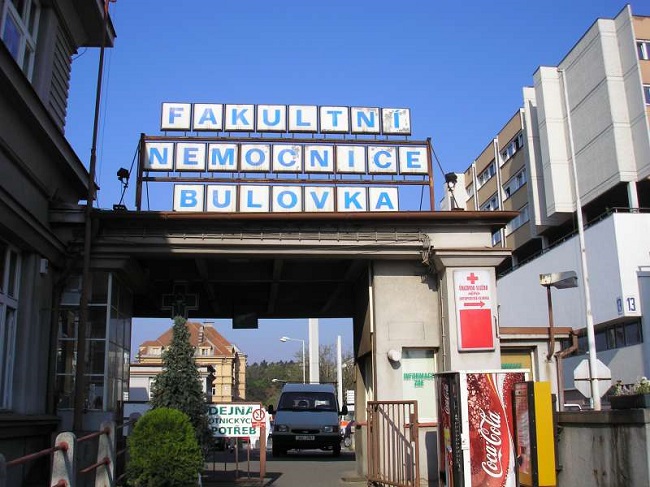 |
Prague - The buildings of the Na Bulovce Hospital, owned by the city, require an urgent investment of approximately three billion crowns. The state does not invest in them because they are owned by Prague. The hospital director Jan Kvaček said this to journalists today. Several specialized facilities operate at Bulovka, such as the national center for AIDS treatment or a specialized unit for the treatment of highly contagious infectious diseases, which is currently treating patients with the new type of coronavirus. According to Kvaček, they are functioning under undignified conditions.
City representatives said they are discussing the hospital's future with its management, considering the pavilions concept as outdated. Currently, preparations are underway to renovate the lower floor of the infectious department, and they want to negotiate with the state about asset exchange so that the entire hospital would belong to the state.
"Neither the hospital nor the state have any influence over them; they only have a lease agreement,” he added. The rent is approximately 28 million crowns annually, with Prague investing a roughly equal amount into necessary repairs and maintenance. Nine of these buildings have acute care beds. "The care provided there is at a top level. However, the question is how much longer it will be possible to provide care in this building,” Kvaček added.
For instance, the surgical clinic building is in a problematic state, with its facade peeling, water leaking into the building, and the windows also in poor condition. "The elevators are so old that it is not worth repairing them,” the director stated. According to the clinic's chief physician Pavla Horák, the first reconstruction of the pavilion from the First Republic was considered as early as the 1970s, afterwards, a model of the renovation was displayed from the 1980s, and a study for a new pavilion was developed around 2004. "The last promise, including the project, is seven or eight years old,” he stated.
The internal department is in a similar situation. In Central Bohemia, many hospitals have closed their internal departments or do not accept patients from the emergency medical service, so the department at Bulovka is crucial for northern Prague and the adjacent Central Bohemian districts. "If there is heavy rain, it also leaks into the patients' rooms,” Kvaček said. The internal department also compensates for the insufficient capacity of the alcohol detoxification station.
Originally, Prague was supposed to have a plan for what to do with Bulovka last summer. "We were assured that it was being created. But we have not moved anywhere. Investments are only going into paperwork, zoning, or studies,” he mentioned. According to him, the project for the reconstruction of the surgical clinic for 500 million crowns and the necessary repair of the wastewater treatment plant have fallen off the table. "We are already being criticized by hygiene for its condition; it is technologically inadequate,” he added.
Deputy Mayor Petr Hlubuček (STAN) stated that the city has prepared a project for the renovation of the lower floor of the pavilion with the infectious department. According to him, the reconstruction should happen as soon as possible. "We agreed with Mr. Director Kvaček that we would work together with architects and urban planners to find a solution that would make sense. Because the current pavilion layout is not advantageous,” said councilor Milena Johnová (Praha Sobě).
In the past, according to councilor Jan Chabr (TOP 09), the city negotiated with the hospital about repairs but without results. The city offered to adjust the rent, and the hospital would repair the pavilions itself. "We also offered that we could repair some of those properties ourselves on the condition of increasing the rent, which Bulovka did not want to accept,” Chabr said.
The situation where two-thirds of the buildings belong to Prague and the rest to the state has not been resolved for a long time. The properties have become a subject of negotiation between Prague and the government in connection with Prime Minister Andrej Babiš’s (ANO) idea of building a civil servant quarter in Letňany. Prague Mayor Zdeněk Hřib (Pirates) stated last October that the state is blocking property exchanges with Prague and the magistrate is investing hundreds of millions annually into healthcare.
The English translation is powered by AI tool. Switch to Czech to view the original text source.
0 comments
add comment