
Hamster: The housing problem for minorities could escalate
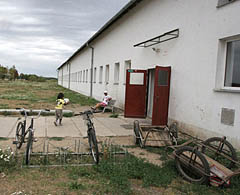 |
| Roma living behind Břeclav |
"Mr. Čunek addressed a situation that no one else is tackling," Křeček said. "His solution is one of the possibilities, but it is certainly not a guide for resolving the situation in other cities," he added. He also warned that equating the problem with racism could further escalate the situation. According to Křeček, the issues concerning these groups of the population are already moving beyond legal solutions.
"If the rules are being violated on a large scale, then the law is failing here, and we cannot resolve these matters legally," said the Social Democratic MP. Křeček admitted that this situation could lead to radical solutions in the form of "civil self-help." "There is a risk that people will take the law into their own hands," Křeček stated. "I can envision that part of the local residents would simply drive those people away because they are not obliged to tolerate it and not obliged to deal with it," he added.
Vojta Lavička from the civic association Romea does not share Křeček's opinion. "It is completely unacceptable when an MP, in other words, calls for civil disobedience and claims that this issue cannot be addressed legally," he told ČTK. "I definitely do not think that there is a danger of people taking the law into their own hands," Lavička added. According to him, Křeček should resign his parliamentary mandate for such statements.
In the autumn of 2006, the Vsetín city hall, then headed by the current chairman of KDU-ČSL Jiří Čunek, evicted all predominantly Roma families from a crumbling tenement house in the city center. Only a few dozen of them were allocated alternative housing by the city, while the remaining approximately one hundred people had to leave Vsetín. Čunek faced criticism from human rights advocates for this approach; however, an analysis showed that it helped him among voters at that time.
The English translation is powered by AI tool. Switch to Czech to view the original text source.
0 comments
add comment