
Farmers in the Highlands are modernizing cattle barns to save labor
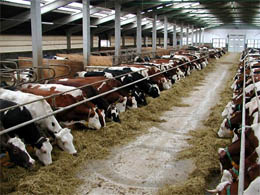 |
Agricultural enterprises in the region raise 215,000 cattle. They are building barns for calves, bull fattening, and for dairy cows. A barn for 200 dairy cows costs up to 30 million crowns. According to data on the internet, new barns should be built or modernized, for example, in Okřešice, Lipnice nad Sázavou, near Malče, in Řečice, or in Chřenovice.
According to breeders, beef is still poorly paid, while the price of milk has recently improved. "We operate in a protected area with many sloping lands that cannot be used for anything other than cattle breeding," justified the investments of the chairman of Agricultural Cooperative Maleč, Vít Šimon. The cooperative, which raises 600 cows, will build one barn and transfer dairy cows from two older buildings. The relocation of one barn is also desired by the residents, as it is located close to residential houses.
"This is probably the most common type of construction we deal with," stated Jan Joneš from the regional environmental department. According to him, there are usually no major objections to the constructions, although problematic locations occasionally arise.
The preparation of documentation for assessing the impact of construction on the environment is handled by Josef Charouzek from Pelhřimov. According to his experience, conditions for animals improve in new barns. The buildings also have better sealing and new waste pits are being built next to them. Modern milking parlors and dairies are being created, and working conditions for employees are improving.
"Hundreds of such reconstructions have already taken place in the region," said Jiří Šulc, director of the Regional Veterinary Administration, to ČTK. In larger farms, barns in which cattle are tied at feed troughs are now rarely found. The economy and lack of good workers have forced enterprises to make such changes. According to Šulc, animals in new barns are doing better, and their health problems are decreasing.
The English translation is powered by AI tool. Switch to Czech to view the original text source.
0 comments
add comment