
Czech base in Antarctica needs technical upgrades
 |
The complex is situated on Ross Island near the Antarctic Peninsula. In winter, temperatures in this area can drop to minus 35 degrees Celsius. The base is used by scientists only seasonally; they travel there each year during the Antarctic summer, which lasts from January to March in the south.
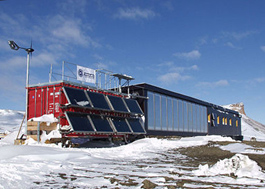
When the base was being built, it was assumed that about 70 percent of the energy would come from renewable sources. So far, these plans have not materialized. A small wind turbine and the current solar panels provide approximately half of the needed energy. The rest must be produced by the polar researchers using diesel and diesel generators.
Old solar panels are not technically adequate, Nývlt explained. The problem was to be resolved in recent weeks. At the end of last year, scientists transported 110 modern and highly efficient solar panels to Antarctica. A icebreaker was supposed to transport them to Ross Island, but the Prince Gustav Strait, where the base is located, was covered with ice. Therefore, the boxes with the panels are waiting in the southern Chilean port of Punta Arenas. The installation should occur during the next expedition, in a year.
The base was built for the accommodation of 15 to 20 people. It draws water from a nearby stream that flows from a glacier. However, there are debris in the creek bed, so the water is pumped into sedimentation tanks. It can only be used after all the sediments have settled.
During the Antarctic summer, the water in the stream resembles "brown coffee," and scientists rely on supplies from the tanks, which last approximately two days. Therefore, it will be necessary to expand the capacity of this facility in the near future.
The base consists of a main building that is 21 meters long and 11 meters wide. Its walls are made of wood chipboard panels, with a thick layer of hardened polystyrene in between. Approximately in eight to nine years, the cladding will need to be replaced. More significant modifications are not necessary. Surrounding the building are smaller containers serving as storage.
Scientists in Antarctica study climatic conditions, modeling harmful UV radiation, research vegetation, parasitology, and volcanology.
The English translation is powered by AI tool. Switch to Czech to view the original text source.
0 comments
add comment