
The destruction of the historic Mecca is a precursor to intolerant Islam
 |
The ceremonies of the Muslim pilgrimage, which is one of the pillars of Islam and must be performed by its adherents at least once in their lifetime, will begin in Mecca on Thursday.
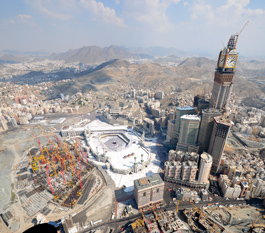
Pilgrims will search in vain for reminders of its history. The city's landmark is not the Great Mosque or the Kaaba shrine, which is the focal point of Islam. Towering above all is the Royal Clock Tower, standing 600 meters tall and ranking among the tallest buildings in the world. Other giant skyscrapers hide other hotels and shopping centers. The skyline no longer features the curves of the hills that once surrounded Mecca. The hills have been leveled, and the city is surrounded by concrete and metal structures in the style of Las Vegas and Disneyland.
The guardians of the holy city - the rulers of Saudi Arabia and the local clergy - harbor a hatred for history. They want everything to appear brand new, it is necessary to increase capacity for the ever-growing influx of pilgrims - in the 1960s, 200,000 arrived; now it can be as many as three million.
The reconstruction of Mecca began in the 1970s, and among the first victims was the Bilal Mosque, built during the life of the Prophet Muhammad. This was followed by the old Ottoman houses with their elegant window grilles and carved entrances. In a few years, Mecca transformed into a modern city with wide, multi-lane streets and complex intersections.
The Royal Clock Tower was built on land where 400 historical houses once stood. Demolition crews arrived in the middle of the night and removed families who had lived there for centuries. A block of toilets now stands on the site of the house of Muhammad's first wife Khadijah. The hotel itself is located on the site of the former Ottoman fortress Ajyad, which protected Mecca from bandits and invaders. The Hilton hotel replaced the house of Muhammad's closest companion Abu Bakr.
The only original part, apart from the Kaaba, is a section of the Great Mosque complex with marble pillars inscribed with the names of Muhammad's companions in calligraphy. They date back to the early 16th century, but there has even been consideration of demolishing them. The only religious building of comparable significance to the mosque is Muhammad's house. For many years it was used for trading livestock. Later, a library was established there, but it is not accessible to the public. However, this is still not enough for many clerics, who demand its demolition. They fear that as soon as access is granted to pilgrims, they will pray not to God, but to the Prophet, which is an unforgivable sin. It is only a matter of time before the proponents of demolition win, and something "modern" - perhaps a parking lot - will be built in its place.
Mecca, unlike Damascus, Cairo, or Baghdad, has never been an intellectual or cultural center of Islam. However, it has always been open to all and allowed dialogue among followers of different schools and interpretations of Islam. Cultural devastation has taken its toll, and today it is a closed monolith in which only a single, literal interpretation of Islam is permitted, and where anything other than the Wahhabi version of Islam practiced in the kingdom is considered wrong. Therefore, every year there are fanatics who attack followers of other currents, such as Shia Muslims, during the pilgrimage.
This development has significantly impacted how the pilgrimage to Mecca looks today. The Arabic term for it - Hajj - means effort, toil. One must overcome the discomfort associated with rituals, yield to others, and find a way to them and to oneself. Today's Hajj is more of an organized trip where the pilgrim sticks with their group, shifts hotels, and comes into closer contact with others only occasionally. It is no longer a lifelong spiritual experience but rather a banal execution of prescribed rituals.
Today's Mecca can also be seen as a microcosm of the contemporary Muslim world. Islam has become a modern and monolithic faith that tolerates no differences, where history is worthless and for which consumption is paramount. It is therefore no surprise that the current Muslim world is dominated by an insistence on literal quotations and a murderous interpretation of Islam.
The English translation is powered by AI tool. Switch to Czech to view the original text source.
0 comments
add comment