In London, the Darwin Center called Cocoon is opening
 |
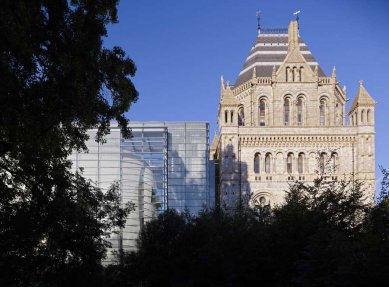
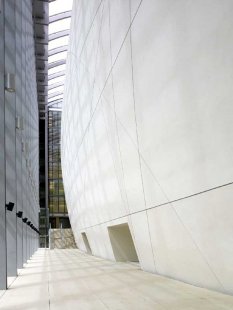
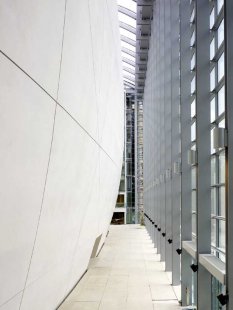
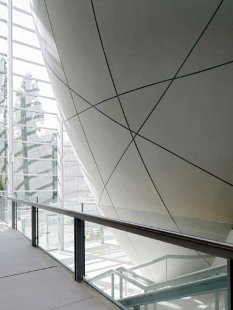
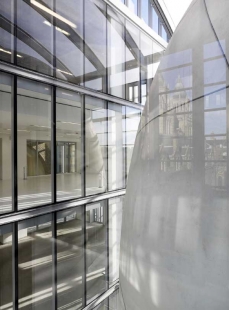
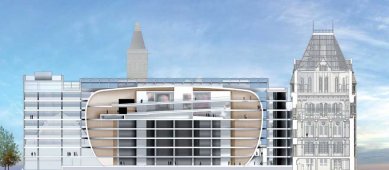
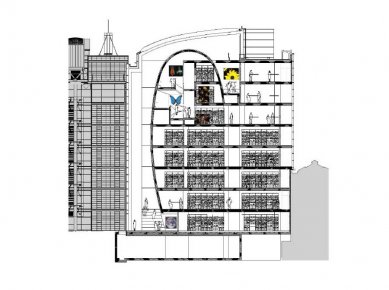
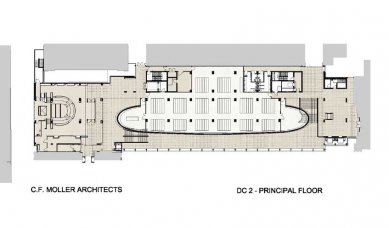
The building cost £78 million (2.27 billion crowns) and attracts attention not only for its scientific collections but also as an architectural masterpiece. The impressive concrete structure, named Cocoon due to its shape, has eight floors and is the work of the Danish architectural firm C.F. Møller.
The Cocoon is the largest expansion of the museum since it opened in 1881 and aims to become as well-known a London landmark as the original Victorian building by Alfred Waterhouse. "The Victorian building is a bold architectural gesture that its creators wanted to highlight the significance of the history of nature. We wanted to make a bold gesture at the beginning of the 21st century to emphasize the future of science," stated Michael Dixon, the director of the Natural History Museum.
He hopes that the new centre, opened in the 200th anniversary year of Darwin's birth, will further increase the museum's attendance, which currently stands at about 3.8 million per year.
 |
Each visitor will also receive a magnetic card with a password on which they can record things they want to learn more about in the individual exhibitions. At home, they can then read further information that they recorded at the museum on the museum's website using their personal code.
"Darwin was a quiet man, but he wanted to introduce the public to science," said Richard Lane, the scientific director of the Natural History Museum. The authors of the Darwin Centre also wanted to bring the work of scientists as close to the public as possible, so visitors can observe scientific research through glass. The Natural History Museum is also a scientific institution, and over 200 scientists work in the Darwin Centre alone.
"It was important for us to connect collections, scientific research, and the public," stated Paul Bowers, the project leader of the Darwin Centre.
In addition, in a hall named after the well-known popularizer of natural sciences, David Attenborough, museum scientists will meet with the public every day and demonstrate, according to their specialization, sea worms from Antarctica, scorpions that fluoresce in ultraviolet light, fossilized dinosaur bones, or a meteorite from Mars that fell in Egypt 80 years ago.
According to the museum's management, local scientists will devote about 80 percent of their time to research and the rest to interacting with visitors and popularizing their work. "Time will tell if it will inspire people," noted Lane.
The Darwin Centre will be open to the public from September 15. Admission is free, just like the rest of the Natural History Museum.
The English translation is powered by AI tool. Switch to Czech to view the original text source.

0 comments
add comment