
BBC: The Swedish town of Kiruna is moving three kilometers to the east
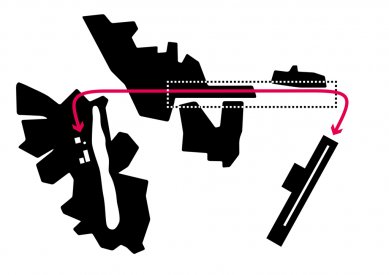
Kiruna (Sweden) - This spring, work will begin on moving the northernmost city in Sweden more than three kilometers further east. Over the next 20 years, 20,000 residents of Kiruna will relocate to new homes that will be built around the new city center. The original one is being gradually consumed by iron ore mining, writes the news server BBC News.
"When people hear that we are designing and building a new city from scratch, they think it's a utopian experiment," says architect Mikael Stenqvist. However, too much is at stake for our work to be considered an experiment, he adds.
More than 3,000 apartment or other houses, several hotels, various offices, a school, and a hospital will be vacated over the next two decades, and their equivalents will be created in the newly designated area.
The old church, which won a voting competition in 2001 as the most beautiful building in Sweden, will be dismantled piece by piece and re-erected. "We want to preserve as much of the existing character of the old city as possible, but high costs and technical difficulties make it impossible to relocate everything," explains Stenqvist.
The fate of the city is dictated by the local iron ore mine, which is the largest deposit of this raw material in Sweden and is also the largest employer in Kiruna. In 2004, the state mining company LKAB sent a letter to the local government explaining that it needed to penetrate deeper into the hill just behind the city, which could cause cracking or subsidence of the ground beneath thousands of apartments and public buildings. A decade later, striking cracks are indeed appearing throughout the city and progressing toward the center.
"Everyone who lives in Kiruna has known for a long time that the city will eventually be relocated - everyone sees that the mines are consuming the city. The only question is when that will happen," says expert in social anthropology Viktoria Walldin, who is collaborating on the city relocation project.
According to Walldin, the residents of Kiruna have been living for nearly 15 years in a state where they are unable to make major life decisions such as buying a house or renovating an old one, having a child, or starting a business.
"Now, finally, it's time for many people who have been in a state of mental stagnation to breathe and say: 'Finally, it's here, I can invest and plan the rest of my life," notes Walldin. "They want to see a new school, a hospital with their own eyes - until it’s built, they will be skeptical. They have been hearing about the relocation of the city from the authorities for ages."
The historic moment for the start of construction of the new Kiruna center has been set for next month. Given that the city is located 145 kilometers north of the Arctic Circle, it is flooded with continuous daylight from May to August and plunges into endless darkness from December to the end of January. Temperatures remain below minus 15 degrees Celsius for much of the year, and frosty weather is accompanied by heavy snowfalls.
"The narrow streets in the designs will better protect against wind and cold. We have specialists studying how to build houses in this climate to minimize energy consumption," states Stenqvist.
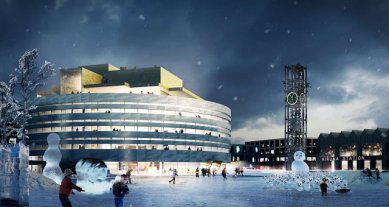
By 2016, the new town hall is expected to be completed, complemented by a square and train station. They will rise on the currently partially utilized industrial land.
One of Walldin's tasks is to find out what people would like to have in the new city and then communicate these wishes to the architects. "The old city has never been very cultural - there were not enough places for people to meet, to have dinner together. We want the new city to offer residents plenty of cinemas, a swimming pool, and soccer fields," she said.
The new city could also solve one of Kiruna's major problems, namely the significant gender imbalance. "It’s a city where men completely dominate. Most young women move away. The new city necessarily needs to be attractive to women as well," warns Walldin.
Local authorities also hope that the new, improved city could attract more tourists to the area, which would help local entrepreneurs. The world-famous Icehotel in nearby Jukkasjärvi attracts over 100,000 visitors each year, but these tourists rarely stop in Kiruna, which is only a quarter of an hour away.
From an anthropological perspective, there is one significant concern, namely the disappearance of old memories. "People who remember their first kiss on one of the benches in town or the birth of their first child in the city hospital will be disappointed when these places completely disappear," warns Walldin. "It is necessary to find a way to respect memories while also taking care of people who have been living in the city in a state of indecision for more than a decade," she says.
"When people hear that we are designing and building a new city from scratch, they think it's a utopian experiment," says architect Mikael Stenqvist. However, too much is at stake for our work to be considered an experiment, he adds.
More than 3,000 apartment or other houses, several hotels, various offices, a school, and a hospital will be vacated over the next two decades, and their equivalents will be created in the newly designated area.
The old church, which won a voting competition in 2001 as the most beautiful building in Sweden, will be dismantled piece by piece and re-erected. "We want to preserve as much of the existing character of the old city as possible, but high costs and technical difficulties make it impossible to relocate everything," explains Stenqvist.
The fate of the city is dictated by the local iron ore mine, which is the largest deposit of this raw material in Sweden and is also the largest employer in Kiruna. In 2004, the state mining company LKAB sent a letter to the local government explaining that it needed to penetrate deeper into the hill just behind the city, which could cause cracking or subsidence of the ground beneath thousands of apartments and public buildings. A decade later, striking cracks are indeed appearing throughout the city and progressing toward the center.
"Everyone who lives in Kiruna has known for a long time that the city will eventually be relocated - everyone sees that the mines are consuming the city. The only question is when that will happen," says expert in social anthropology Viktoria Walldin, who is collaborating on the city relocation project.
According to Walldin, the residents of Kiruna have been living for nearly 15 years in a state where they are unable to make major life decisions such as buying a house or renovating an old one, having a child, or starting a business.
"Now, finally, it's time for many people who have been in a state of mental stagnation to breathe and say: 'Finally, it's here, I can invest and plan the rest of my life," notes Walldin. "They want to see a new school, a hospital with their own eyes - until it’s built, they will be skeptical. They have been hearing about the relocation of the city from the authorities for ages."
The historic moment for the start of construction of the new Kiruna center has been set for next month. Given that the city is located 145 kilometers north of the Arctic Circle, it is flooded with continuous daylight from May to August and plunges into endless darkness from December to the end of January. Temperatures remain below minus 15 degrees Celsius for much of the year, and frosty weather is accompanied by heavy snowfalls.
"The narrow streets in the designs will better protect against wind and cold. We have specialists studying how to build houses in this climate to minimize energy consumption," states Stenqvist.
By 2016, the new town hall is expected to be completed, complemented by a square and train station. They will rise on the currently partially utilized industrial land.
One of Walldin's tasks is to find out what people would like to have in the new city and then communicate these wishes to the architects. "The old city has never been very cultural - there were not enough places for people to meet, to have dinner together. We want the new city to offer residents plenty of cinemas, a swimming pool, and soccer fields," she said.
The new city could also solve one of Kiruna's major problems, namely the significant gender imbalance. "It’s a city where men completely dominate. Most young women move away. The new city necessarily needs to be attractive to women as well," warns Walldin.
Local authorities also hope that the new, improved city could attract more tourists to the area, which would help local entrepreneurs. The world-famous Icehotel in nearby Jukkasjärvi attracts over 100,000 visitors each year, but these tourists rarely stop in Kiruna, which is only a quarter of an hour away.
From an anthropological perspective, there is one significant concern, namely the disappearance of old memories. "People who remember their first kiss on one of the benches in town or the birth of their first child in the city hospital will be disappointed when these places completely disappear," warns Walldin. "It is necessary to find a way to respect memories while also taking care of people who have been living in the city in a state of indecision for more than a decade," she says.
The English translation is powered by AI tool. Switch to Czech to view the original text source.





1 comment
add comment
Subject
Author
Date
Kiruna a R. Erskine
S. Kuchovský
24.03.14 05:27
show all comments