
American libraries enter the age of iPods
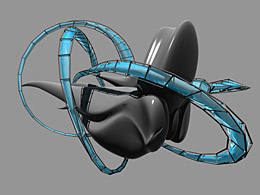 |
| Project "National Library of the Czech Republic" by Tomáš Kozelský (Digital Environment Studio FA VUT) |
In Phoenix, for example, the library department has teamed up to create a digital library consisting of about 50,000 titles of so-called e-books (electronic books), audiobooks, music, and videos that can be viewed and downloaded from any computer.
The offering has proven to be very popular among readers, says Tom Gemberling, a professional librarian from the public library’s electronic media department in Phoenix.
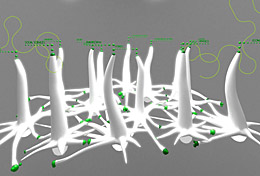 |
| Project "National Library of the Czech Republic" by Pavlína Vokáčová (Digital Environment Studio FA VUT) |
To gain access to the files, one primarily needs a library card, internet, and some of the free available programs, such as Adobe Digital Editions, Mobipocket Reader, or OverDrive Media Console.
After that, you just need to browse the library's website, choose a title, add it to the digital "shopping cart," and click the download button. If the title is not available, it can be later placed in "storage" and uploaded next time.
 |
| Project "National Library of the Czech Republic" by Jana Šipulová (Digital Environment Studio FA VUT) |
One of the most important suppliers of electronic media to libraries is the Cleveland company OverDrive, which collaborates with publishers such as HarperCollins and Random House, as well as music labels like Alligator Records.
The company's marketing director David Burleigh explains that OverDrive manages an inventory of 100,000 titles, collaborates with approximately 7,500 libraries, and their media players have already been downloaded for free by millions of users.
"We also know that this currently concerns only a small percentage of library clients. Everyone we talk to then says something like 'What? You really do this?' Burleigh stated. "It’s like a nice secret that we obviously don’t want to keep to ourselves,” he added.
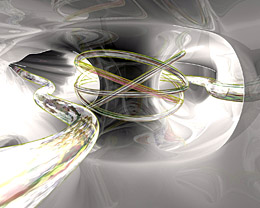 |
| Project "National Library of the Czech Republic" by Bára Srpková (Digital Environment Studio FA VUT) |
A significant advantage for libraries is also the "compactness" of these electronic files. "Many libraries have storage spaces that are completely overcrowded," explains Jim McCluskey from the Sno-Isle Libraries in Washington. "Materials that do not take up space on shelves and are available 24 hours a day, seven days a week.... that is a real lure for libraries,” he added.
The English translation is powered by AI tool. Switch to Czech to view the original text source.
0 comments
add comment