The strength and future of a nation is its nationality - exhibition at UMPRUM

Architecture and Czech Politics in the 19th Century

Source
UMPRUM
Publisher
Tisková zpráva
07.12.2020 10:00
Czech Republic

Prague

December 3, 2020 - February 6, 2021
Gallery UM, UMPRUM, Jan Palach Square 80, Prague 1

Exhibition Author: Jindřich Vybíral
Collaboration: Michaela Janečková, Jan Galeta
Exhibition Curator: Lenka Kerdová
Architectural Solution: Filip Kosek, Jan Říčný
Graphic Design: Tereza Hejmová
Photography: Tomáš Zumr
Production: Dita Pfefferová, Šárka Váňová
Loans: National Technical Museum, National Gallery Prague, National Heritage Institute, Institute of Art History of the Czech Academy of Sciences, Archive of Prague Castle, National Library of Technology, Museum of Art Olomouc, Moravian Land Archive in Brno and State Regional or District Archives Třeboň, Tábor, Šumperk, Litoměřice, Tachov, Děčín, etc.

The exhibition presents one of the outputs of the research project Architecture and Czech Politics in the 19th–21st Century by the Department of Theory and History of Art at the AAAD in Prague. The project was supported by the Ministry of Culture of the Czech Republic under the Applied Research and Development Program for National and Cultural Identity NAKI II (DG18P02OVV041).
How did nationalism manifest in Czech architecture? And how did it reflect the citizens' relationship with the state or the crown? The exhibition at the UM Gallery is the first output of the project Architecture and Czech Politics, which has been worked on for several years by a team of experts from the Department of Theory and History of Art at UMPRUM.
The project examines the role of architecture in the process of integrating the modern Czech nation, but it also presents a broader spectrum of political interests that Czech architecture was meant to serve in the 19th century. "The exhibited works especially show how architecture shaped national cultural identity, how it demonstrated loyalty to the dynasty, or how it contributed to the political and social differentiation of society," briefly summarizes the author of the exhibition, Prof. Jindřich Vybíral.
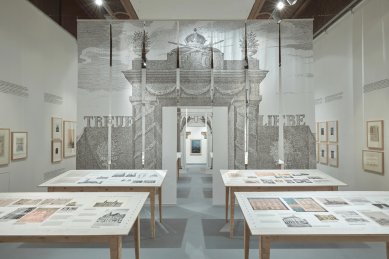
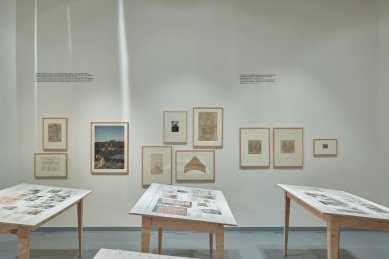
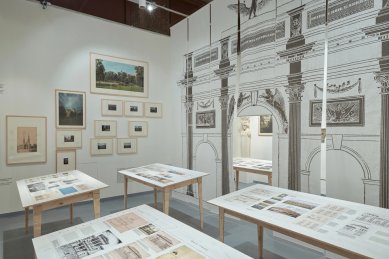
The exhibition itself will be conceived as a studio workshop with work surfaces where visitors can view reproductions of original historical building plans and photographs. In contrast to these materials, a collection of photographs by contemporary photographer Tomáš Zumr will be displayed.
In addition to these materials, the exhibition will offer original drawings borrowed from the National Gallery in Prague and plaster casts of architectural elements from the National Theatre and the National Museum, loaned from the National Technical Museum. A rarity of this exhibition can be designated as the charred part of a chandelier that survived the fire of the National Theatre. Three monumental triumphal arches accompanied by music featuring songs with a national undercurrent represent and illustrate the political situation and its influence on developments in architecture.
The theme of the entire exhibition will be detailed in the book of the same name "The Strength and Future of the Nation is Nationality", prepared by Prof. Jindřich Vybíral and his colleagues. The book, just like the exhibition, explores the various forms of interaction between architecture and politics. It tracks how architectural forms represented ideological and socio-psychological content, or how they co-created power relations and political positions. It also focuses on the function of monumental architecture and its role in building citizens' loyalty to the state or dynasty.
Alongside the exhibition "The Strength and Future of the Nation is Nationality", there is an exhibition "The Spirit that Works" taking place at the House of the Black Madonna, one of the exhibition spaces of the Museum of Decorative Arts in Prague. This exhibition continues the theme of the relationship between politics and architecture in the Czech lands and analyzes the situation from the founding of Czechoslovakia to the end of World War II. Both events have arisen as part of a joint project under the Applied Research and Development Program of National and Cultural Identity NAKI II.

More information >
The English translation is powered by AI tool. Switch to Czech to view the original text source.
0 comments
add comment