
Disconnected. Connected! 2007 - Architecture and Comics
The exhibition Disconnected. Connected! 2007 is an exhibition project by curators Jana Kostelecká, art historian, Igor Kovačević, architect and architectural theorist, and Yvette Vošourková, architect. Following previous exhibitions that dealt with the connection between architecture and animation, architecture and advertising photography, and architecture and DJing, a connection between architecture and comics emerges. For the comic section of the exhibition, curators Tomáš Prokůpek, architect and comic author, and Tomáš Hibi Matějíček, publicist, were invited to the project.
This connection presents a problem for the methods of art history and theory. And that is a good thing. On the one hand, there is the problem of how to conceptualize the connection between art forms, and on the other hand, how to tackle the connection between a genre historically understood as "higher" and a genre perceived, let's say, as popular, simple, consumable.
Fortunately, comic theory has recently been catching up with other art forms; let's remember the monograph on comic theory by Thierry Groensteen The Structure of Comics, as well as the thesis by Helena Žáčková Czech Comics, The Development of the Genre Until 1945, and many other studies are emerging. Comics are simply ceasing to be a matter solely for adventure-seeking kids and embarrassed teenagers. In the Czech lands, this genre has a tradition that is slowly but surely beginning to approach the level of the world through post-revolutionary development. Confidence is filling in themes of action heroes, sci-fi, and adventure topics, the children's comic is strengthening and becoming increasingly diverse, an alternative comic sector is emerging— "fried" comics—but the selection of commercial strip sketches is also expanding.
Each presented author, or rather author duo (architect-comic author), represents a completely different kind of treatment, interpretation of the whole connection, and technique. Each one is undoubtedly very original and of high quality; it is evident that a very careful selection was made among the chosen architectural theses as well as among comic creators.
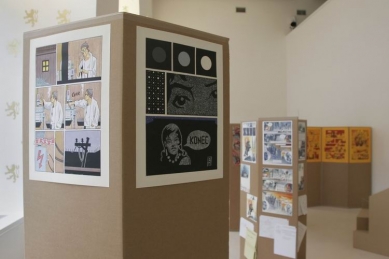
Architecture is not inserted into comics arbitrarily. Often, it is not even primarily related, such as in the case of Stop Karlín, where the associated comic veers away from the stop towards an expressionistic and even dada-like essay. Conversely, a specific selected piece of architecture might inspire a much more general theme, such as grappling with architectural and thus entirely cultural histories and their interpretations. This is the case with the architecture of Petr Horák Institute of Ladislav Klíma; here, Karel Jerie’s comic is technically and thematically based on the classic scheme of time travel with a moral and ethical lesson at the end. The comic is unobtrusively complemented by phases of its creation, highlighting the chosen theme of the passage of time and the development of values and matter. In this case, the comic can respond to architecture a bit ironically, potentially undermining its own idea. Petra Oplatková's project Terrain vague is a futuristic spatial construction of light elements that have an aesthetic effect. Jiří Zimčík's comic narrates in a descriptive, trivial way the story of a man who travels through the landscape until he reaches a booth at a power plant, where he turns on the electric trigger of this architectural application. The imaginative, esoteric, and generous intention of the project is contrasted with this purely practical, simple story in an uncomplicated form.
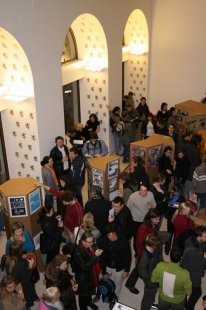
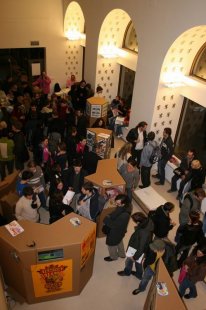
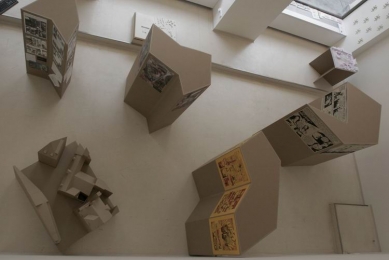
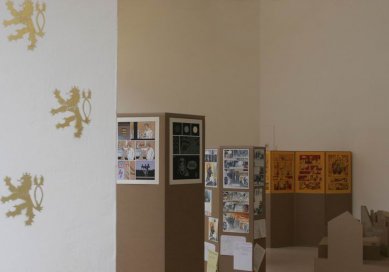
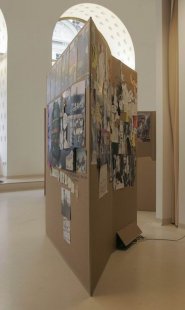
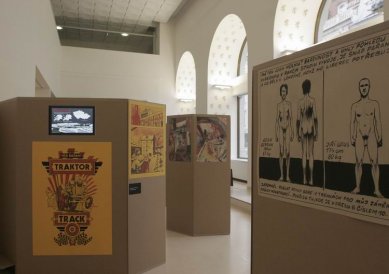
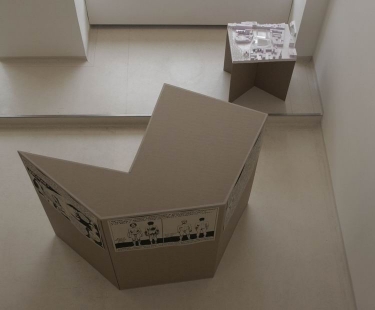
The approach can therefore be varied. The exhibition doesn't pretend to be anything it's not; this is underscored by the very simple installation using cardboard installation objects, which also appears very clean and does not overshadow the strong concept of the exhibition.
The connection between architecture and comics does not come across as tendentious, certainly not self-serving ("let's awkwardly piece it together just to show that it can be connected") and the history of art, along with the criticism based on it, may need to critically reevaluate its rigid classification into boxes that contemporary creation simply does not fit into anymore.
This connection presents a problem for the methods of art history and theory. And that is a good thing. On the one hand, there is the problem of how to conceptualize the connection between art forms, and on the other hand, how to tackle the connection between a genre historically understood as "higher" and a genre perceived, let's say, as popular, simple, consumable.
Fortunately, comic theory has recently been catching up with other art forms; let's remember the monograph on comic theory by Thierry Groensteen The Structure of Comics, as well as the thesis by Helena Žáčková Czech Comics, The Development of the Genre Until 1945, and many other studies are emerging. Comics are simply ceasing to be a matter solely for adventure-seeking kids and embarrassed teenagers. In the Czech lands, this genre has a tradition that is slowly but surely beginning to approach the level of the world through post-revolutionary development. Confidence is filling in themes of action heroes, sci-fi, and adventure topics, the children's comic is strengthening and becoming increasingly diverse, an alternative comic sector is emerging— "fried" comics—but the selection of commercial strip sketches is also expanding.
Each presented author, or rather author duo (architect-comic author), represents a completely different kind of treatment, interpretation of the whole connection, and technique. Each one is undoubtedly very original and of high quality; it is evident that a very careful selection was made among the chosen architectural theses as well as among comic creators.
Architecture is not inserted into comics arbitrarily. Often, it is not even primarily related, such as in the case of Stop Karlín, where the associated comic veers away from the stop towards an expressionistic and even dada-like essay. Conversely, a specific selected piece of architecture might inspire a much more general theme, such as grappling with architectural and thus entirely cultural histories and their interpretations. This is the case with the architecture of Petr Horák Institute of Ladislav Klíma; here, Karel Jerie’s comic is technically and thematically based on the classic scheme of time travel with a moral and ethical lesson at the end. The comic is unobtrusively complemented by phases of its creation, highlighting the chosen theme of the passage of time and the development of values and matter. In this case, the comic can respond to architecture a bit ironically, potentially undermining its own idea. Petra Oplatková's project Terrain vague is a futuristic spatial construction of light elements that have an aesthetic effect. Jiří Zimčík's comic narrates in a descriptive, trivial way the story of a man who travels through the landscape until he reaches a booth at a power plant, where he turns on the electric trigger of this architectural application. The imaginative, esoteric, and generous intention of the project is contrasted with this purely practical, simple story in an uncomplicated form.
The approach can therefore be varied. The exhibition doesn't pretend to be anything it's not; this is underscored by the very simple installation using cardboard installation objects, which also appears very clean and does not overshadow the strong concept of the exhibition.
The connection between architecture and comics does not come across as tendentious, certainly not self-serving ("let's awkwardly piece it together just to show that it can be connected") and the history of art, along with the criticism based on it, may need to critically reevaluate its rigid classification into boxes that contemporary creation simply does not fit into anymore.
Ladislav Zikmund
the author is an art historian and former comic author
the author is an art historian and former comic author
22. 3.-13. 4. 2007
venue of the exhibition: Czech Centre Prague, Rytířská 31, Prague 1
venue of the exhibition: Czech Centre Prague, Rytířská 31, Prague 1
The English translation is powered by AI tool. Switch to Czech to view the original text source.

0 comments
add comment